
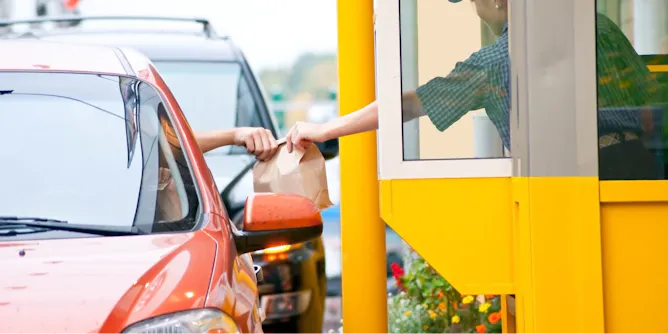
Staff and customers with underlying health conditions are likely to be most at risk at drive-through windows.
Articles on Particulates
Displaying 21 - 40 of 53 articles
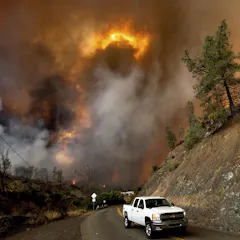
Wildfires blanketing several Western cities are creating hazardous health conditions. Don’t count on cloth masks to protect your lungs.
A new study shows that while fine particle air pollution has declined nationwide over the past 40 years, the health and environmental benefits haven’t been shared evenly.
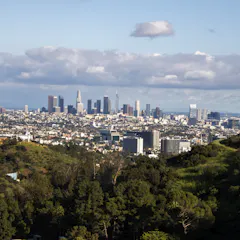
From Nairobi to Los Angeles, pandemic lockdowns have cleared pollution from the skies. But those blue vistas may be temporary, and shutdowns aren’t slowing climate change.

After a 5-year review, the EPA is leaving US standards for fine particle air pollution unchanged, even though recent studies suggest that tightening them could save thousands of lives yearly.

A new study takes an innovative approach to reducing fine particle air pollution and spotlights key sources: factories that burn coal and oil, petrochemical plants and burning wood for home heating.

Pollutants like nitrogen dioxide are a silent killer, but everyone isn’t equally at risk.
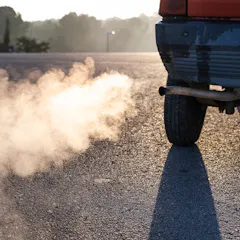
Scientists who were appointed to advise the EPA on air pollution kept meeting independently after the agency dissolved their panel. They say current regulations aren’t strict enough.

Leaving your car running will marginally increase CO2 emissions, but it may massively reduce exposure to the toxic gases and particulates that are shortening thousands of lives.
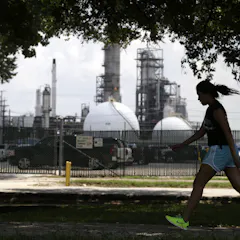
Air quality in the US has improved greatly since 1990, but a new report finds progress stalling in some cities. Meanwhile, the Trump administration is rolling back air pollution controls.

Are health risks from air pollution less serious than we think? Mainstream scientists call this a fringe view, but it’s getting high-level attention at the Environmental Protection Agency.
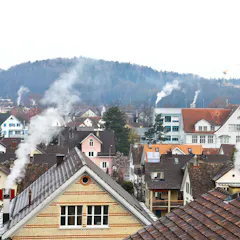
The smoke from wood-burning stoves and fireplaces contributes to air pollution and poor health.

An air pollution expert with years of experience advising federal regulators describes how the Trump administration is speeding up reviews and reducing scientific input.

Haze from Northern California wildfires has drifted as far east as Philadelphia. Wildfire smoke contains many potentially toxic substances, so anyone exposed to it should take basic precautions.
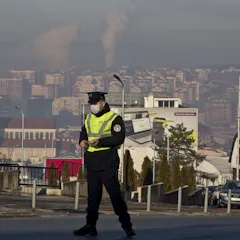
The head of the World Health Organization calls air pollution ‘the new tobacco’ because it causes millions of preventable deaths yearly. Fine particle pollution is especially deadly.
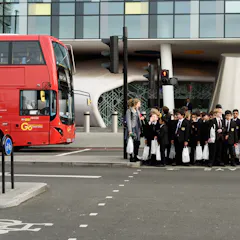
London’s low emission zone has started to reduce air pollution – but not enough to protect children’s lungs.
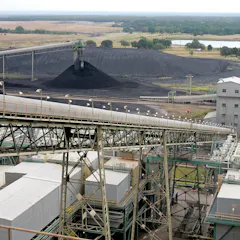
A study of the social cost of carbon emitted by the shrinking fleet of Texan coal plants suggests that closing more of them down would be good for the climate and public health.
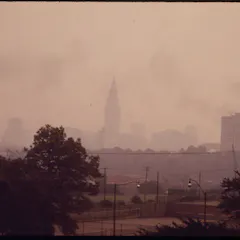
EPA Administrator Scott Pruitt wants to change the grounds for setting US air pollution targets. An environmental lawyer explains why Pruitt’s approach misreads the law and could roll back decades of gains.
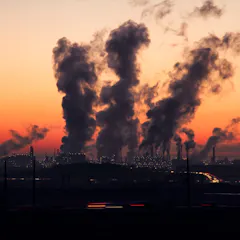
The EPA intends to limit what scientific studies can inform policy – a change long sought by industry. A long-time public health researcher explains the single study at the root of the controversy.
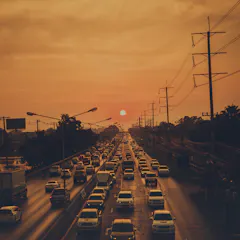
Free public transport could be one way to get more people to ditch the car.
Top contributors
-

Professor of Environmental Engineering, North Carolina State University
-
Professor of Environmental Health Sciences, UMass Amherst
-
Professor of Environmental Sciences and Engineering, University of North Carolina at Chapel Hill
-
Assistant Professor of Economics, University of Virginia
-
Professor of Public Health Science and Community Medicine, University of Connecticut
-
Postdoctoral Associate in Conservation Bioacoustics, Cornell University
-
Professor of Civil and Environmental Engineering, Rice University
-
Conjoint Professor, School of Population Health, UNSW
-
Associate Professor of Public Policy and Economics, University of Virginia
-
Assistant Professor of Environmental Health, Boston University
-
Senior Research Fellow at the Stockholm Environment Institute, University of York
-
Assistant Professor of Computational Materials Chemistry, University of Oregon
-
Professor of Urban Transport and Public Health, The University of Melbourne
-
Associate Dean, Chair Professor of the Atmospheric Environment, City University of Hong Kong
-
Associate Professor of Economics and Public Policy, Carnegie Mellon University