
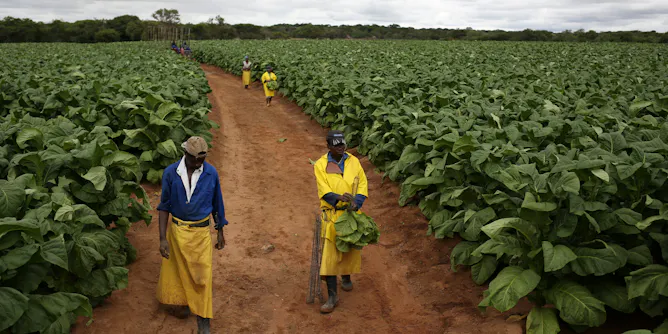
A new land administration system that responds to changed ownership patterns of Zimbabwe’s agricultural land is needed if the country is to harness its farming potential.
Articles on P&S
Displaying 141 - 159 of 159 articles
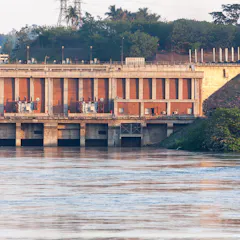
Many countries in eastern and southern Africa rely on hydropower for electricity generation and there are plans for several more dams.

E-learning is both a technological and a social innovation. At its best, it can address problems within a particular social context.
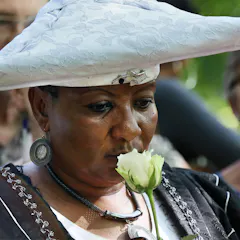
In mid-2015 the German Foreign Office after decades of denial seemingly acceded, in a very informal way, to labelling what had happened in South West Africa as genocide, is now backtracking.

Not much attention has been given to how mothers who want to attend workshops and conferences are supported. This simple intervention can boost the presence of women in science.
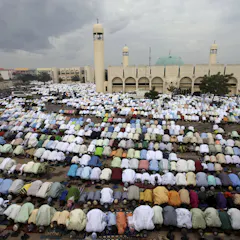
The debate around photos of two Nigerian Salafi clerics taken in London wasn’t a trivial conversation about dress and recreational choices. It was loaded with symbolism.

The study of Cyril Ramaphosa, South Africa’s deputy president and new head of its governing party, is generating a great deal of heat, and not much light.
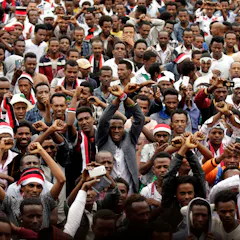
For the first time in years Ethiopia’s ruling coalition faces real political competition from two parties within its own ranks. Can they usher in democracy after nearly 30 years of authoritarianism?
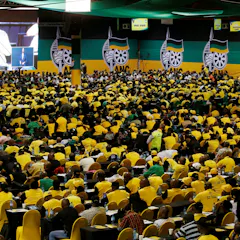
A closer look at the resolution of South Africa’s ruling party, the ANC, show that it won’t undertake a radical economic transformation agenda as suggested by media reports.
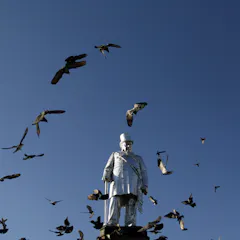
Afrikaners in post-apartheid South Africa struggle with a historical sense of inferiority that reinforces their whiteness.
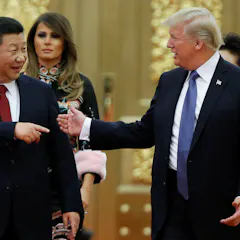
China is stepping into a soft power vacuum created by the new US administration. Since Donald Trump was elected president, the country has eschewed soft power.
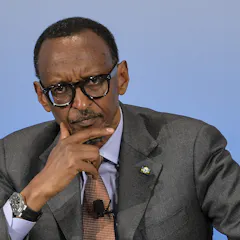
The Rwandan model can’t be replicated easily given that it depends heavily on political dominance and tight, centralised control of patronage networks.
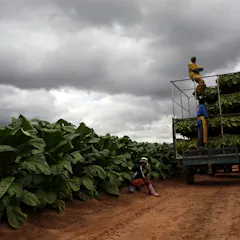
The unresolved compensation of Zimbabwe’s evicted white farmers needs to be settled quickly, as it stands in the way of economic recovery.
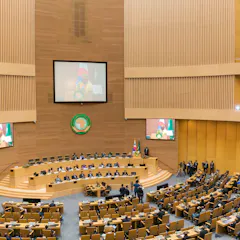
Ghana’s Supreme Court and the African Court, which was established by a Protocol under the African Charter, have the same powers to hear and decide cases. A recent case shows why this is problematic.
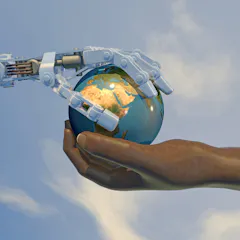
Calestous Juma believed that Africa needed an integrated science, technology and innovation framework. The continent can make this happen.

Finding justice in Ghana is a slow and often frustrating process. To speed things up, the courts in the country need to reform and modernise.
Africa is still witnessing an increase in social turbulence, unrest and protest. Only rapid, inclusive economic growth combined with good governance can make the continent less volatile.
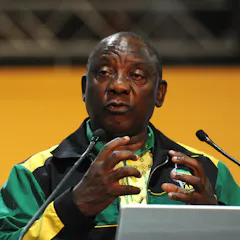
Free university education and land redistribution without compensation have far-reaching implications for South Africa’s economy, and requires exceptional leadership.

Developing country governments need to give attention to the risks associated with new technologies and develop context-specific responses.
Top contributors
-

Honorary Professor of International Relations, University of the Witwatersrand
-
Professorial Fellow, Institute of Development Studies
-
Senior Lecturer of Political Science, Georgia Gwinnett College
-
Professor of Political Studies, University of Johannesburg
-
Visiting Professor at the Business School, University of the Witwatersrand
-
Professor, Institute for Social Sciences and Business, Roskilde University
-
Professor of Democracy, University of Birmingham
-
Associate Professor of International Studies, University of Nottingham
-
Researcher, Sciences Po
-
Professor of Law, New York Law School
-
Visiting professor, University of Saskatchewan
-
Chair of the Board of Trustees and Head of African Futures & Innovation at the Institute for Security Studies. Extraordinary Professor in the Centre of Human Rights, University of Pretoria
-
Associate Professor of Sociology, University of the Witwatersrand
-
Emeritus Professor of African Linguistics, University of Leipzig
-
Professor of Higher Education, Rhodes University, South Africa, Rhodes University