
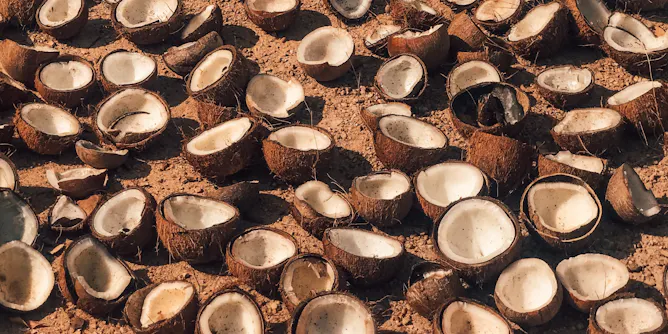
The coconut – an icon of unspoiled tropical idylls – causes more environmental harm than many people realise.
Articles on Palm oil
Displaying 21 - 40 of 63 articles

Microalgae taste like grass and are packed with nutrients.
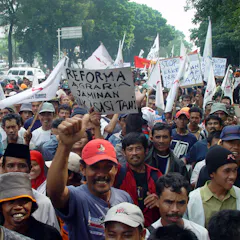
The right strategies, using agrarian or adat justice, can settle conflicts in favour of local people and indigenous peoples.
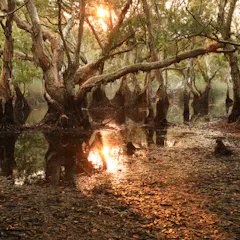
Researchers found that palm oil plantations up to five years old were more harmful to the climate than already established ones.
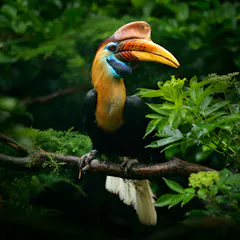
Instead of boycotting palm oil, source it from pastureland and not recently logged forests.
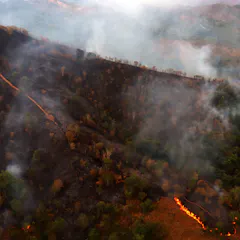
Indonesia’s forest fires forensics, Bambang Hero Sahardjo, receives a prestigious award, John Maddox prize, opening hope for scientists to use scientific evidence for law enforcement.
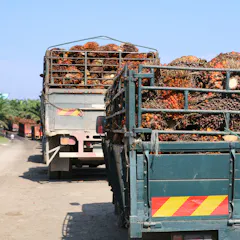
There are studies showing that farmers can have economic benefits from palm oil. However, they can also be impoverished by the commodity.
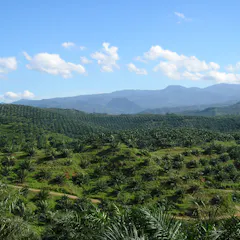
Demand for palm and other vegetable oils is rising sharply, raising questions about which ones will be produced, who will control their production and sale, and where they will be grown.
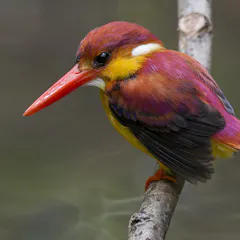
The impact of deforestation for oil palm plantations is well known – and now research has found the replanting process could be additional harm to biodiversity.
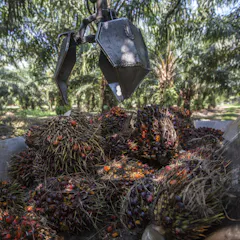
Palm oil production is a leading cause of deforestation in Asia, but an EU ban may make matters worse.
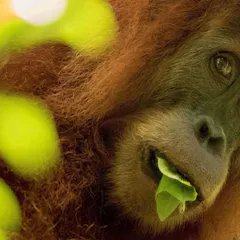
Jokowi’s re-election may put the global biodiversity at risk

Calls to ban palm oil could get a very different response among people who live in the same forests as orangutans.

Boycotting palm oil would increase production of other crops, such as soy, which actually require more land.
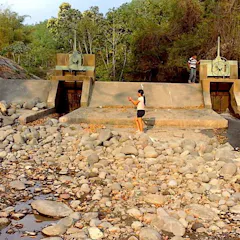
Increased use of renewable energies could help curb climate change, but the water required for their production has dispossessed rural Guatemalans.
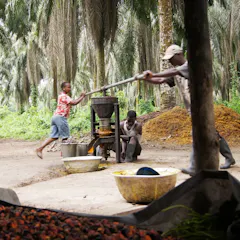
Liberia’s rural communities have long been suffering land grabs by international palm oil producers.

The Environmental Justice Atlas highlights the most pertinent findings of environmental conflicts facing the world today.
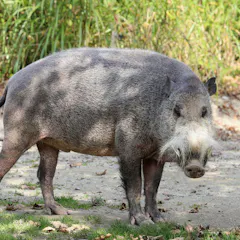
The bearded boar is rarely honoured, yet its role in the forest of this island in the Malay archipelago is as crucial as it is emblematic.
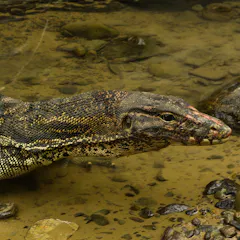
Deforestation has wiped out most other predators, so the lizards have lots of food and little competition.
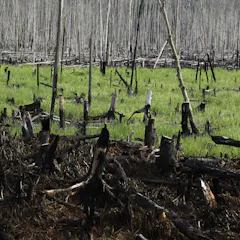
Zero-burning policy could hurt small-holder farmers. The ban on the use of fire for land clearing has raised the costs to prepare their land for planting and to keep it pest-free.
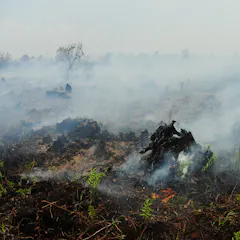
Indonesian peatlands are important to many people: farmers, bureaucrats, businesspeople, and conservationists. But preserving this value for everyone will mean listening to everyone’s concerns.
Top contributors
-

Distinguished Research Professor and Australian Laureate, James Cook University
-
Honorary Professor of Conservation, University of Kent
-
Head of Business and Human Rights at Norwegian Centre for Human Rights, University of Oslo
-
Associate Professor of Geography and Environmental Studies, Texas State University
-
Professor, Faculty of Environmental Sciences and Natural Resource Management, Wageningen University
-
Emeritus Professor of Biotechnology, University of South Wales
-
Adjunct Associate Professor James Cook University and University Fellow Charles Darwin University, James Cook University
-
Indonesia Country Director dan Senior Scientist, Center for International Forestry Research – World Agroforestry (CIFOR-ICRAF)
-
Researcher and consultant on sustainability transition, Wageningen University
-
Lecturer, Humanities and Social Sciences, La Trobe University
-
PhD candidate, Earth System Science, Stanford University
-
Primatologue, Maitre de Conférence du Muséum National d'Histoire Naturelle au Musée de l'Homme et Vice-President de la Société Francophone de Primatologie (SFDP), Muséum national d’histoire naturelle (MNHN)
-
Researcher, International Institute for Environment and Development
-
Research Fellow, University of Oxford
-
Senior Lecturer, Environmental Soil Science, RMIT University