
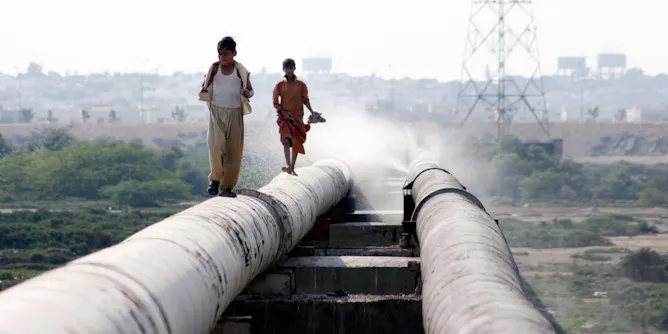
The potential of water to cause conflict is a live issue in Pakistan, with climate change only making matters worse.
Articles on Pakistan floods
Displaying all articles
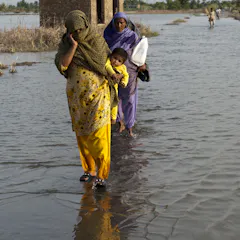
Our expert in disaster recovery and climate change adaptation calls for a longer-term response to conflict zones affected by severe flooding, such as Libya and Pakistan.
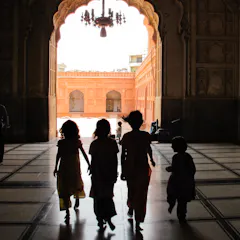
Food prices remain high in both urban and rural areas of Pakistan and achieving food security will remain a challenge for many families.

Millions of people around the world suffered through deadly flooding and long-lasting heat waves in 2022. A climate scientist explains the rising risks.

Extreme weather will continue to disrupt global food systems.
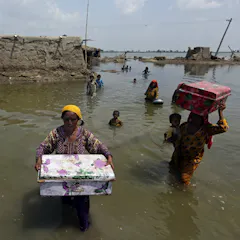
Does the Global North have a moral responsibility to protect and compensate those in the Global South that disproportionately bear the brunt of climate change devastation?
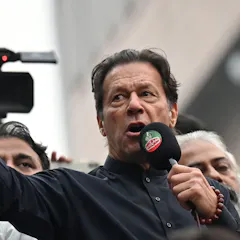
Former prime minister emerges from assassination attempt wounded, but vowing to continue protest against government.
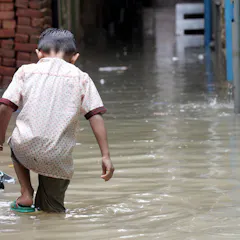
Framing floods as ‘natural disasters’ deflects from the reality that vulnerability must exist before a crisis can emerge.

The culpability for Pakistan’s catastrophic floods rests with the government and wealthy polluter countries.
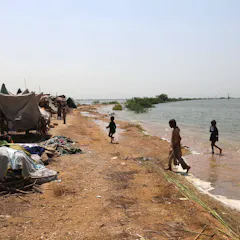
Developing countries want industrialised countries to pay reparations for loss and damage caused by climate change. Even with disasters ramping up, wealthy nations are resisting.
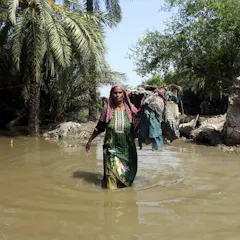
Pakistan contributes less than one per cent of greenhouse gas emissions, but has disproportionately felt the impact of climate change.
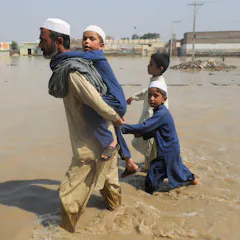
There are three key ways climate change probably made these floods worse.
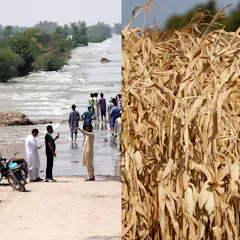
The flooding in Pakistan is the latest in a sequence of exceptional disasters in the Northern Hemisphere. How much is climate change to blame?
Top contributors
-

Professor of Disasters and Health, UCL
-
Associate Principal Research Fellow, Burnet Institute
-
DPhil Candidate in Environmental Research, University of Oxford
-
Lecturer (Assistant Professor), Humanitarian and Conflict Response Institute, University of Manchester
-
Senior Lecturer in Climate Science, Imperial College London
-
Senior Lecturer in Climate Change, University of Waikato
-
Professor of Geology and Environmental Geosciences, University of Dayton
-
ARC Future Fellow and Associate Professor in Climate Science, ARC Centre of Excellence for 21st Century Weather, The University of Melbourne
-
Professor in Regional Transformation and Economic Security, University of Cambridge
-
Visiting professor, Harvard University
-
Research fellow, Australian National University
-
Executive Director, Pacific Water Research Centre, Faculty of Applied Sciences | Director and Professor of Practice, SFU School of Sustainable Energy Engineering, Simon Fraser University
-
Professor of History, Tufts University
-
Senior Research Associate, Institute for Environment and Human Security (UNU-EHS), United Nations University
-
Professor in Critical Geography, King's College London