
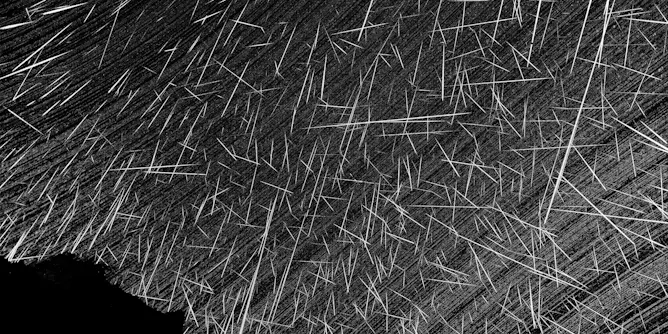
A newly identified meteor shower reveals that intense heat is fragmenting a previously unknown asteroid as it passes too close to the Sun.
Articles on OSIRIS-REx
Displaying all articles
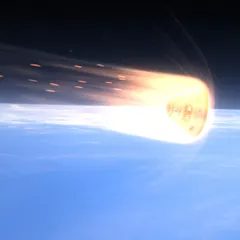
The high-speed, hypersonic and extremely hot re-entry is the last challenge the Artemis II crew will have to endure on their epic 10-day mission.
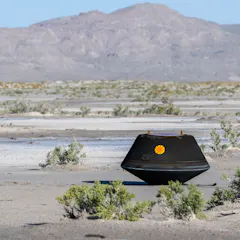
Missions that return asteroid samples bring home more than just very expensive dust. These samples can provide valuable insights for scientists and commercial interests.
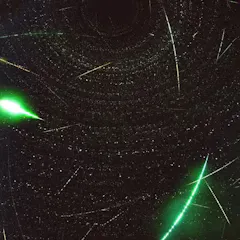
Water-rich meteorites contain key ingredients for life, yet they barely appear in meteorite collections. Recent research using shooting stars may explain why.
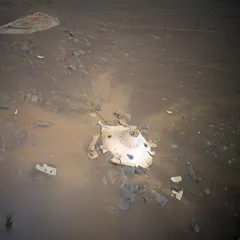
The US wants to put a flag on Mars. But there’s a risk it could carry unwanted stowaways that might compromise future scientific investigations.
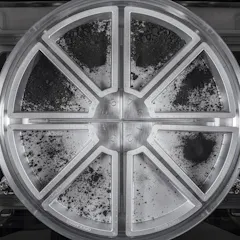
Two new studies show a briny, carbon-rich environment on the parent body of the Bennu asteroid was suitable for assembling the building blocks of life.
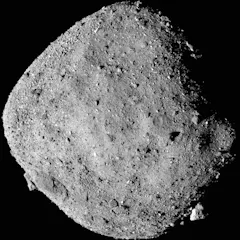
New findings reveal that a NASA mission traveled to an asteroid that may have once been covered in salty lakes containing organic molecules.
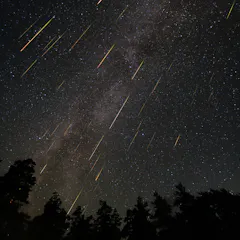
Two new studies show that the majority of meteorites originate from just one family of asteroids between Mars and Jupiter.
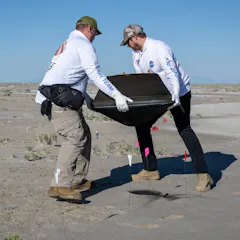
Scientists don’t often have the time to get all their equipment set up to study incoming meteors from space. Instead, they can study capsules from space missions as ‘artificial meteors.’
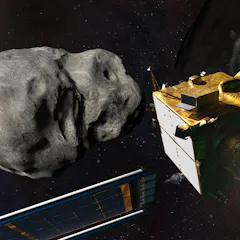
The mission provided details about how to deflect an asteroid should one threaten Earth in future.
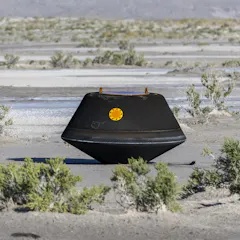
In September 2023, a NASA mission successfully brought samples of an asteroid down to Earth in a sealed capsule. Analysis of these samples may reveal information about the origins of the universe.
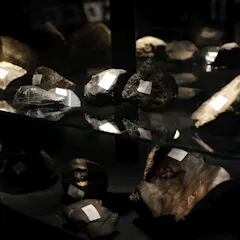
Some space rocks you can get for free – if you know how to identify them. Rarer materials cost more, and the asteroid sample NASA just brought back has a high price tag.
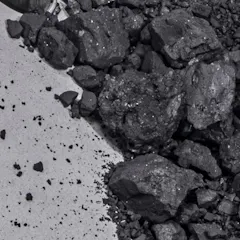
Studying the sample could help answer how water arrived on Earth and how life started.
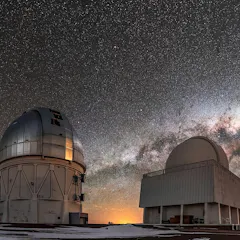
Controlled experiments are impossible in astronomy, as are direct measurements of physical properties of objects outside our solar system. So how do astronomers know so much about them?
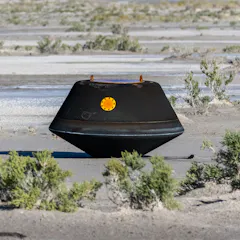
NASA’s OSIRIS-REx mission has delivered pieces of asteroid Bennu, which scientists hope will offer a window into the early era of the Solar System billions of years ago.
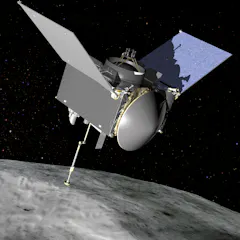
Missions to asteroids are opening up the secrets of the Solar System
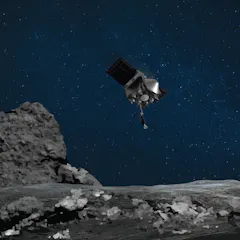
OSIRIS-REx will touch down on asteroid Bennu, collect a sample of the dust and begin its journey back to Earth, where scientists will study it, hoping to learn secrets of the solar system’s origin.
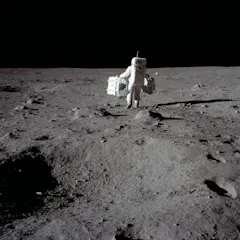
The first humans to land on the Moon, and the team that got them there, get all the glory. But what about the people who laid the foundation for this effort by mapping the Moon? Who were they?
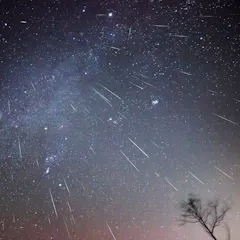
Every day about 50 tons of rocks from space fall on Earth. An examination of these meteorites has inspired a new theory about how exactly these rocks formed.
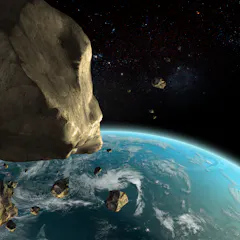
The source of water on Earth, the Moon and planets in our solar system is hotly debated. Some in the planetary science community argued that it came from asteroids and comets. Now they have proof.
Top contributors
-

Associate Professor, School of Earth and Planetary Sciences, Curtin University
-
Supervisory Research Geologist, Smithsonian Institution
-
Professor of Planetary Sciences, Natural History Museum
-
Senior R&D Scientist, Physics, Sandia National Laboratories
-
Associate Professor of Mechanical and Aerospace Engineering, Oklahoma State University
-
Postdoctoral Fellow in Planetary Sciences, NASA
-
Professor of Planetary and Space Sciences, The Open University
-
Professor of Practice for Aerospace and Mechanical Engineering and Senior Vice President for Research & Innovation, University of Arizona
-
Senior Lecturer in Physics, Nottingham Trent University
-
Professor of Physics and Astronomy, Ithaca College
-
Professor of Astronomy, Wesleyan University
-
Research Associate, Curtin University
-
PhD, Earth and Planetary Science and Exploration, Western University
-
Director, Binar Space Program, Curtin University
-
Associate Professor, Faculty of Science and Engineering, Curtin University