

While the current version of Gemini isn’t mind blowing, later iterations are likely to be much more powerful.
Articles on OpenAI
Displaying 121 - 140 of 157 articles
Learning about the world from live events is the next step for AI.

AI research should be open to all.
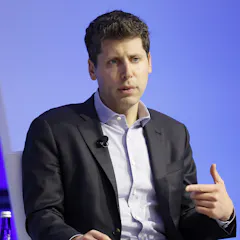
The OpenAI sacking affair highlights ongoing debates over the safety and misuse of AI.

The public release of the chatbot has led to a global conversation about the risks and benefits of AI – a conversation few people were having just a few years ago.
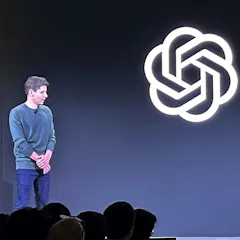
ChatGPT’s interface fueled the technology’s phenomenal rise to prominence. By being good at talking with us, it spoke to us.

Innovations in AI seem to be spurring interest in what is or isn’t real, accurate and human.
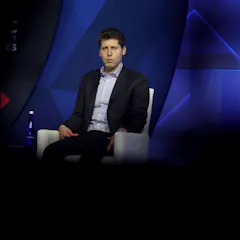
At the heart of Silicon Valley lies a powerful admiration for its ‘genius founders’ – but this comes at the cost of accountability.
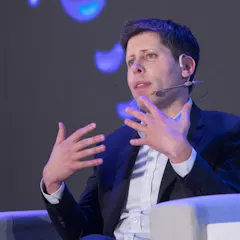
It has been an epic backstabbing scene worthy of the HBO drama Succession.

Authors are furious about finding their works on pirated dataset Books3. Copyright is the usual avenue for redress, but while AI moves at speed, the law is slow – and not designed to combat AI issues.

Meta’s open source strategy contrasts starkly with the more guarded approach of its primary competitor, OpenAI

Worldcoin wants to provide ‘proof of personhood’ in an AI-filled future, but critics and governments are unimpressed
The Federal Trade Commission’s investigation of ChatGPT maker OpenAI shows that the US government is beginning to get serious about regulating AI.

Is it possible to ‘align’ AI systems to human interest? A new plan to build an AI system to solve this problem highlights the limits of the idea.
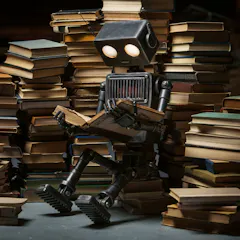
Mona Awad and Paul Tremblay’s lawsuit claims their books were used without their consent. But copyright protection doesn’t apply to ideas – they’ll need to demonstrate the likelihood of economic loss.
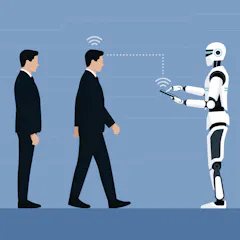
From open letters to congressional testimony, some AI leaders have stoked fears that the technology is a direct threat to humanity. The reality is less dramatic but perhaps more insidious.

Artificial intelligence looks like a political campaign manager’s dream because it could tune its persuasion efforts to millions of people individually – but it could be a nightmare for democracy.

I study artificial general intelligence, and I believe the ongoing fearmongering is at least partially attributable to large AI developers’ financial interests.

The latest warning by AI experts is bound to create alarm, so its authors should be more specific and clarify their concerns.
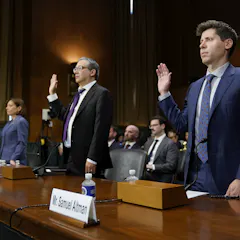
Figuring out how to regulate AI is a difficult challenge, and that’s even before tackling the problem of the small number of big companies that control the technology.
Top contributors
-

Senior Lecturer, School of Engineering, Australian National University
-
Professor of Philosophy and Director of Applied Ethics Center, UMass Boston
-
Professor in Business Information Systems, University of Sydney
-
Professor of Computer Science, University of California, Berkeley
-
Professor of AI, Research Group Leader, UNSW
-
Guest Research Fellow, School of Computing and Information Systems, The University of Melbourne
-
PhD Student, School of Computing, Australian National University
-
Professor of Design and Innovation, Nottingham Trent University
-
Director of Sydney Executive Plus, Business School, University of Sydney
-
Professor of Management, University of Essex
-
Assistant Professor, Faculty of Business, University of New Brunswick
-
Interim Pro Vice-Chancellor (Regional & Metro), University of Wollongong
-
Senior Research Fellow in AI Accountability, Queensland University of Technology
-
Professor of International Business, The Fletcher School & Tisch College of Civic Life, Tufts University
-
Lecturer in Artificial Intelligence, King's College London