

Children under 14 would be banned from social media, while teens aged 14–15 would need parental consent. But this law will be challenging to implement.
Articles on Online safety
Displaying 41 - 60 of 109 articles
In a new project, researchers looked at how to teach high school students to be safer with their phones.
Meta wants Apple and Google to force parents to approve apps on their child’s phone. A better solution would be for the tech giants to cooperate.
The online games platform has nearly 80 million daily users and primarily targets children. However, like many large platforms, it has trouble moderating harmful content.
Users must learn to understand and navigate digital environments critically.

Parents and governments are already concerned about children’s safety online – as part of this we need to look more closely at how students’ images are being used by schools.

Parents need to understand how algorithms work. These can drive misogynistic content towards boys and young men and can make extreme views seem normal.

The government says the online safety framework infringed on free speech. But some of the world’s biggest tech companies have said they aren’t opposed to some form of regulation.
Our new report has produced the world’s first estimate of the scale of online child sexual exploitation.

The Australian government will test tools to shield kids from inappropriate material online. Even though there’s no one easy fix, these checks could help.
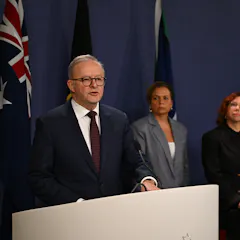
The government will introduce legislation to ban deepfake pornography and devote $925.2 million over five years to establish permanently a program with those eligible able to receive up to $5000.

The billionaire owner of X (formerly Twitter) has taken aim at Australia’s eSafety Commissioner over being told to remove videos from his site. It’s just the tip of the legal iceberg.

The invisible threat of deepfake porn now pervades the lives of women and girls

Congress is considering bills to protect kids online. Some of what’s in those bills could help, but some elements could be harmful.

Africa holds the world’s largest untapped digital growth potential.

With doxing suddenly on the national agenda, here’s what you need to know.

Social media companies have come under intense pressure to do more to protect teens, but there’s another concern – they could go too far.
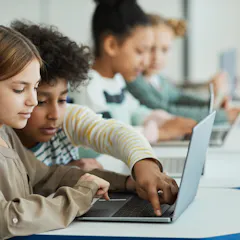
Canada needs to take action immediately to protect children online from exposure to age-inappropriate material. More stringent age verification measures need to be in place.

Cyber-scams tend to ramp up at this time of year, with criminals and scammers eager to exploit people’s generosity and excitement.
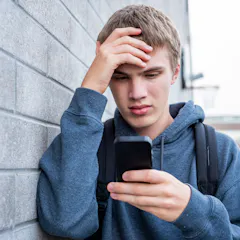
The tragic case of a 12-year-old boy who experienced sextortion highlights the importance of practical advice for parents on having conversations about sex, sextortion and healthy device habits.
Top contributors
-

Professor of Information Sciences & Director, Social Change Enabling Impact Platform, RMIT University
-
Professor of IT Ethics and Digital Rights, Bournemouth University
-
Researcher, Digital Wellbeing, Western Sydney University
-
Sexologist & Lecturer and Research Fellow in Communications & Culture, Edith Cowan University
-
Professor in Human-Computer Interaction, ARC Future Fellow, University of Sydney
-
Professor of Cyber Security Practice, Edith Cowan University
-
Adjunct Associate Professor, School of Law; Academic Co-Lead, CSAM Deterrence Centre, University of Tasmania
-
Professor of Media and Communication and Chief Investigator, ARC Centre of Excellence for Automated Decision-Making + Society, Swinburne University of Technology
-
Associate Professor Digital Technologies for Learning | ARC DECRA Fellow, University of Wollongong
-
Professor of Cybersecurity, School of Computing and Information Systems, The University of Melbourne
-
PhD candidate researching children's play in digital games, The University of Melbourne
-
Senior Lecturer in Digital Technologies for Learning, University of Wollongong
-
Lecturer, Monash University
-
Associate Professor, School of Behavioural and Health Sciences, Australian Catholic University
-
Docteur en sciences de l'information et de la communication, chercheur associé laboratoire DICEN Ile de France, Université Gustave Eiffel