

We still have much to learn about many aspects of COVID-19 — including its lingering health effects and the mechanics of its endless mutations — but we do know one thing: we can’t let our guard down.
Articles on omicron BA.5
Displaying all articles

Canada’s new COVID-19 testing requirement for travellers arriving from China is unlikely to prevent the spread of new subvariants.
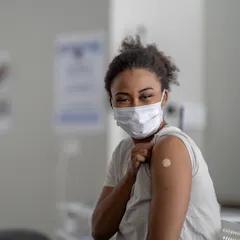
Early on, public health messaging focused on the need for vaccines to combat COVID-19. But far less attention has been given to the role of boosters in preventing deaths and reducing inequities.
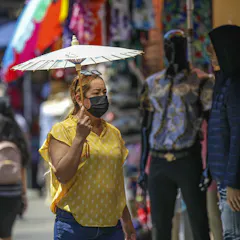
Face masks are still an effective way to help stop the spread of the BA.5 subvariant.

We published an article earlier this month that contained incorrect estimates for the basic reproduction number (R0) for COVID subvariants BA.4/BA.5 and BA.2. We have now corrected the error, but I wanted…

According to a letter from Biden’s doctor, the president has a runny nose, mild fatigue and a slight cough. The letter also noted that Biden began taking an antiviral drug the morning he tested positive.

A combination of seasonal factors, under-diagnosis and under-reporting could explain why rates of COVID hospitalisation and death are rising faster than cases.
BA.4 and BA.5 are more transmissible than previous variants and subvariants, and are better able to evade immunity from vaccines and previous infections. Here’s what we know about them so far.

Omicron variants BA.4 and BA.5 are behind an increasing wave of infections in the UK. So what happens now?
At this stage of the pandemic complacency is likely to lead to an increase in cases, hospitalisation, morbidity and mortality.

Repeated resurgences of SARS-CoV-2 transmission are expected in the years to come.

With the relaxation of mask-wearing mandates, there’s even more need to know how much over-the-counter tests help.
Top contributors
-

Professor of Biostatistics and Epidemiology, Adelaide University
-
Research Fellow, Pandemics & Borders Project, Simon Fraser University
-
Canada Research Chair in Aging & Immunity, McMaster University
-
Research Fellow in Global Health, Boston University
-
Research fellow, Pacific Institute on Pathogens, Pandemics and Society, Simon Fraser University
-
Director: SACEMA, South African Centre for Epidemiological Modelling & Analysis (SACEMA)
-
Associate Professor | Schlegel Chair in Clinical Epidemiology & Aging | Canada Research Chair in Integrated Care for Seniors, McMaster University
-
Adjunct Professor: Department Internal Medicine, University of Pretoria
-
Senior Research Fellow in the Sheffield Alcohol Research Group, University of Sheffield
-
Assistant Professor of Medicine, UMass Chan Medical School
-
Professor and Department Chair of Infectious Diseases and Microbiology, University of Pittsburgh
-
Research Assistant in the Department of Global Health, Boston University
-
Assistant Professor of Sociology, University of Minnesota
-
Director: Modelling and Simulation Hub, Africa (MASHA), University of Cape Town
-
Associate Professor of Molecular Medicine, UMass Chan Medical School