
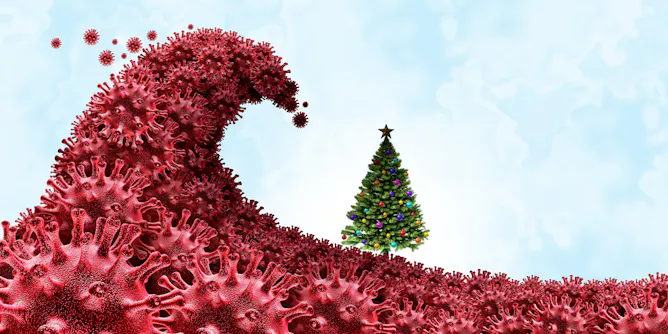
For some, the current peak of the wave has passed. For others, it’s more a slow rise in cases. Here’s what we can expect as the festive season approaches.
Articles on Omicron variants
Displaying all articles

Yet another new COVID booster has recently been approved by the TGA. Here’s what to know about the JN.1 shot.
The JN.1 variant has become dominant in Australia and around the world, causing large waves of infections. Here’s what we know about it so far – and why it’s so important.
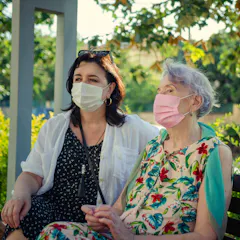
Another year, another COVID wave. Here’s what we know about what the virus is doing around the country.

As the virus continues to mutate, COVID vaccines are updated. This brings us to the latest announcement about the new ‘monovalent’ vaccines.
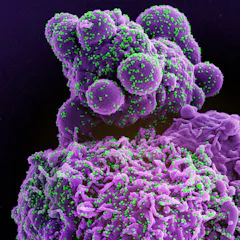
COVID-19 remains a global public health threat despite its current non-pandemic status.

Researchers still don’t know how well BA.2.86 will evade immunity or whether it will cause more severe disease than its predecessors.
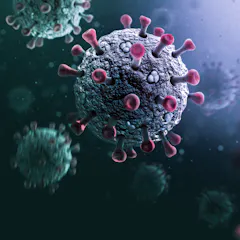
With the emergency phase of the COVID-19 pandemic in the rearview mirror, at least for now, we look back on a handful of stories that provided sharp insights at key moments in the pandemic.
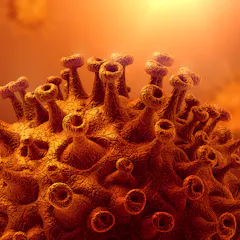
This variant seems to be causing a new symptom not commonly seen with earlier COVID strains.

XBB.1.5 and other subvariants do signal a change in how the virus is mutating. Here’s what this means for Australia and globally.

Many questions remain about next steps for US vaccine policy. But the FDA advisory panel’s hearty endorsement of a single-composition COVID-19 vaccine represents a pivotal step.

Data suggests the bivalent boosters are working well against omicron.

After a year of omicron variants, will we ever see a new variant of concern?
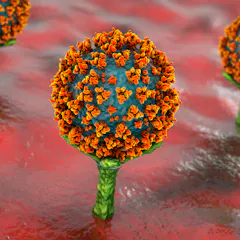
Reports from China indicate BF.7 is quicker to transmit and has greater capacity to escape prior immunity than other omicron subvariants. But we shouldn’t be alarmed at this stage.

New Zealand’s proportion of reinfections is now at 17% of new cases. As new variants continue to proliferate, vaccine boosters would protect those most vulnerable and reduce the risk of long COVID.

Case numbers are falling in all age groups, including over-70s. This is good news as case rates in older people have been a key driver of the steep rise in hospitalisations and deaths in this wave.

We published an article earlier this month that contained incorrect estimates for the basic reproduction number (R0) for COVID subvariants BA.4/BA.5 and BA.2. We have now corrected the error, but I wanted…

According to a letter from Biden’s doctor, the president has a runny nose, mild fatigue and a slight cough. The letter also noted that Biden began taking an antiviral drug the morning he tested positive.

SARS-CoV-2 is not the first virus to cause unexplained chronic illness, but the sheer size of this pandemic means more people will develop long COVID.
Top contributors
-

Professor of Public Health, Te Kunenga ki Pūrehuroa – Massey University
-
Senior Lecturer, Medical Microbiology, University of Westminster
-
Professor of Pathology, Microbiology and Immunology, University of South Carolina
-
Adjunct Professor of Epidemiology, University of Texas Health Science Center at Houston
-
Epidemiologist, Epidemiological Modelling Unit, School of Public Health and Preventive Medicine, Monash University
-
Senior Research and Policy Officer, Burnet Institute
-
Senior Lecturer, University of Auckland, Waipapa Taumata Rau
-
Professor in Applied Mathematics, University of Canterbury
-
Personal Chair of Immunopathology, University of Edinburgh
-
Professor and Webster Family Chair in Viral Pathogenesis, University of Otago
-
Assistant Professor of Infectious Diseases, University of Virginia
-
Professor and Department Chair of Infectious Diseases and Microbiology, University of Pittsburgh
-
Associate Professor, Monash University
-
Virology Research and Teaching Fellow, School of Molecular and Cellular Biology, University of Leeds
-
Director and CEO, Burnet Institute