
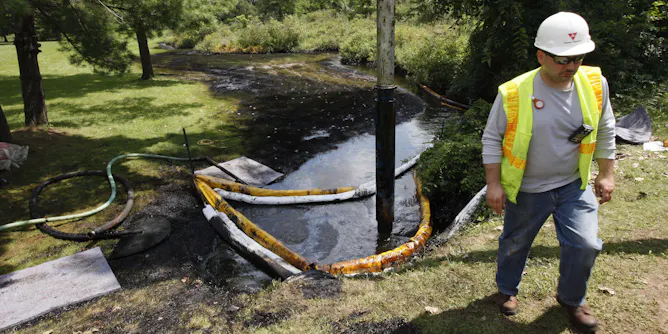
No one wants an oil spill in their backyard. Yet to understand the real-world fate and effects of diluted bitumen — a Canadian oil sands product — that’s exactly what some scientists did.
Articles on Oilsands
Displaying 21 - 38 of 38 articles
Villain, victim or hero? It all depends on who’s telling the story. When an audience is aware of how a story is framed, it can focus on the arguments, not the frame.
The oil and gas industry was in trouble before the pandemic hit, but now it faces potential collapse. A majority of Canadians want the federal government to invest in a ‘green recovery.’
Canadian companies depend on the international marketplace, which is demanding cleaner energy products. Without significant change, Canada’s energy sector risks being left behind.
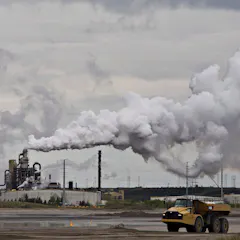
Alberta has modified its environmental rules, becoming the first to do so during the COVID-19 pandemic.
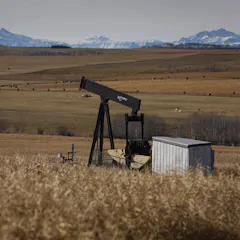
It is in Canada’s national interest to remain a significant player in the oil and gas production.
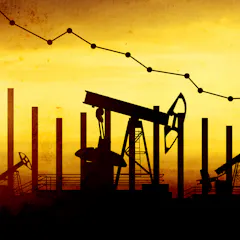
COVID-19 is a huge challenge for the whole world, and Canadian oil producers, already suffering from long-term market trends, will be particularly badly hit.
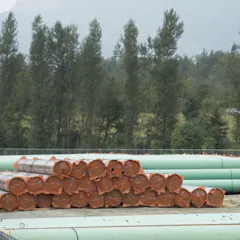
Project Reconciliation is a direct response to one of the Truth and Reconciliation Commission’s calls that Indigenous communities ‘gain long-term sustainable benefits from economic development projects.’
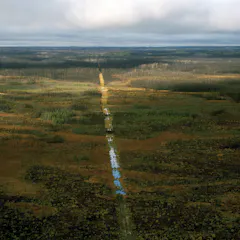
Petroleum exploration in Alberta has disturbed more than 1,900 sq. km of wetlands in Alberta, boosting emissions of methane: a potent greenhouse gas.
Oil prices have little to do with supply or demand or even economic forces. Instead, it’s all about politics.

When the Canadian government announced its pending ownership in the Trans Mountain pipeline expansion, it entered the complex business of pipeline infrastructure.

Is Canada ready for a scenario where the North American Free Trade Agreement is scrapped? The tense negotiations with the United States are a chance for Canada to diversify its trade partnerships.

The Trans Mountain Pipeline Expansion is fast becoming one of the most divisive issues in Canadian politics in years. Here’s how a compromise can be reached.

The decision of the Canadian government to purchase the $4.5 billion Kinder Morgan pipeline expansion project doesn’t exactly instil confidence in Canada’s investment climate.

The Trudeau government’s decision to buy the Trans Mountain pipeline from Kinder Morgan is incredibly risky. Here’s why.
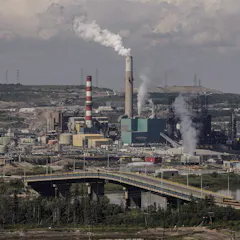
A recent study suggests that divesting in fossil fuels not only allows investors to address their climate change concerns, it also reduces financial risks and increases financial returns.

Alberta Premier Rachel Notley is fighting British Columbia’s efforts to stop the Trans Mountain pipeline expansion. Here’s what she’s got wrong.
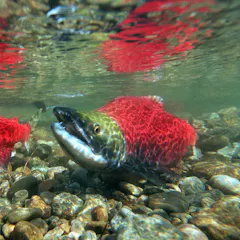
Pacific salmon are ingrained in the culture and economy of Canada. They are also a key link between ocean and land. But what happens if a pipeline failure contaminates their habitat?
Top contributors
-

Research Fellow, Public Economics, The Parkland Institute, University of Alberta
-
Senior Fellow, Centre for Free Expression, Toronto Metropolitan University; York University, Canada
-
Director, Queen's Institute for Energy and Environmental Policy, Queen's University, Ontario
-
Professor of International Business, Rotman School of Management, University of Toronto
-
Professor of Sociology, University of British Columbia
-
Assistant Professor in Real Estate and Infrastructure, York University, Canada
-
Faculty Professor, Adult Learning, Werklund School of Education, University of Calgary
-
Professor, Department of Philosophy, University of Victoria
-
Professor of Chemistry, Queen's University, Ontario
-
Project Manager, Monitoring and Impact Measurement, University of Waterloo
-
Professor of Sustainable Finance and Banking, University of Waterloo
-
Associate professor, University of Guelph
-
PhD Candidate, Department of Geography, Environment and Geomatics, University of Guelph
-
John M. Thompson Chair in Information Technology and Innovation and Professor, Western University
-
Canada Research Chair in Regional Innovation, University of Saskatchewan