
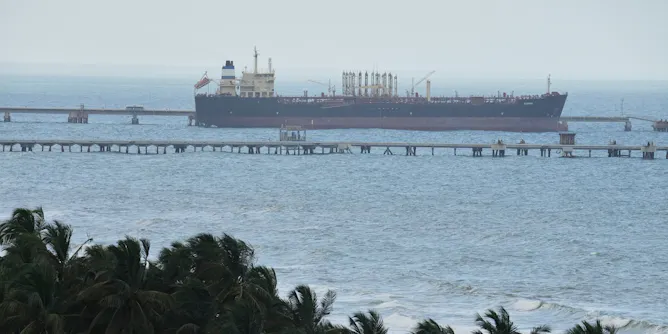
Canada and Venezuela compete in the same heavy-oil regional and global markets, so shifts in supply from Canada to Venezuela would widely reverberate across the Canadian economy.
Articles on Oilsands
Displaying 1 - 20 of 38 articles
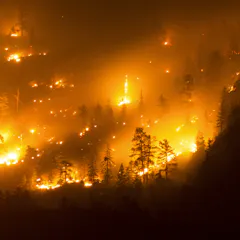
Climate action no longer seems to be a priority for Prime Minister Mark Carney, despite his previous activism. This is bad news for Canadians and the climate.

Creating sustainable jobs that are regionally accessible, locally meaningful and economically desirable is the next big hurdle for Canadian policymakers aiming for a net-zero energy economy.

If Alberta prepares to transition from oil and gas to solar energy, the workforce will need retraining. New research shows that this will cost less than expected.

Newly elected Alberta Premier Danielle Smith is likely to chart a course forward that involves brawls with Ottawa. Here’s what that means for Canadian Confederation.
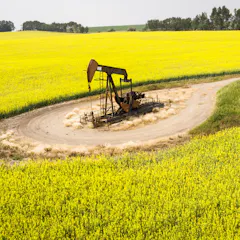
Canada has no choice but to adapt its energy sources and industries in a ‘just transition.’ If it doesn’t, the inevitable transition will be much more disruptive — and much less just.

The Alberta government is failing to ensure environmental liabilities are adequately accounted for and that progress is being made to address the province’s massive tailings ponds.

Sen. Rosa Galvez has called for ambitious and coherent government intervention to address the risks financial institutions pose to climate. Here’s why Canadians must rally around her.
Four companies contribute about 20 per cent of Alberta’s total revenue, giving them an enormous amount of control over the province’s finances and, by extension, politics.

The quality of asphalt binder — the glue that holds roads together — influences their condition. Binder made from Alberta bitumen is low in waxes and could extend pavement lifespan.
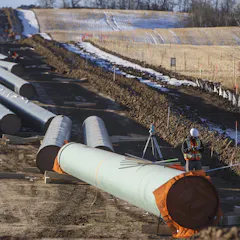
The recently released Emissions Reductions Plan aims to put Canada on track to reduce emissions by up to 45 per cent from 2005 and reach net-zero emissions by 2050. It will do neither.
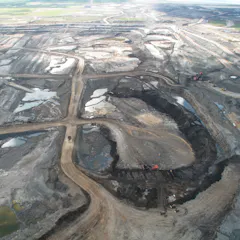
Oilsands producers can expect banks to do extensive reviews of their creditworthiness over the next several months.

As one of the few countries to have enshrined net-zero into law, Canada has earned praise for its climate leadership. Yet an independent report calls out its continued failures to reduce emissions.

If Canada chooses to keep its oil in the ground, it doesn’t mean turning off the tap overnight. Skilled trades will be key to winding down the industry and building up new lines of work.
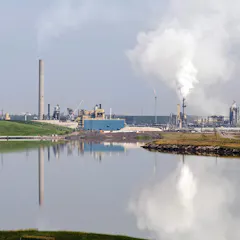
Solutions to some of the globe’s most daunting environmental challenges may be closer than you think. Scientists are harnessing nature to clean up toxic chemicals and mining waste.

A web of local environmental action campaigns launched against oilsands pipelines a decade ago helped bring an end to Keystone XL.
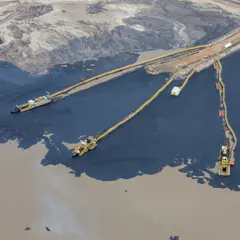
A new nature-based approach to managing oilsands tailings shows promise in the lab and may soon be tested in the field.
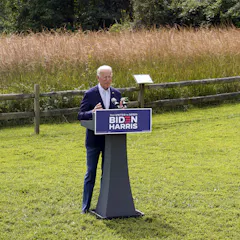
Biden’s strong climate change position doesn’t appear to have hurt him in the key swing state of Pennsylvania or in the general election more broadly. Here’s what it means for Canada.
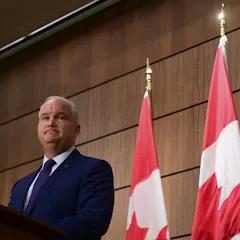
Recent industry reports indicate that we may be approaching peak global demand for oil. If that’s the case, the federal Conservatives may need to rethink their electoral strategy.
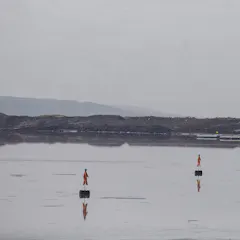
New regulations will allow oilsands companies to release 1.3 trillion litres of liquid waste into the Athabasca River in 2022. A new technology could clean the wastewater before it’s let go.
Top contributors
-

Research Fellow, Public Economics, The Parkland Institute, University of Alberta
-
Senior Fellow, Centre for Free Expression, Toronto Metropolitan University; York University, Canada
-
Director, Queen's Institute for Energy and Environmental Policy, Queen's University, Ontario
-
Professor of International Business, Rotman School of Management, University of Toronto
-
Professor of Sociology, University of British Columbia
-
Assistant Professor in Real Estate and Infrastructure, York University, Canada
-
Faculty Professor, Adult Learning, Werklund School of Education, University of Calgary
-
Professor, Department of Philosophy, University of Victoria
-
Professor of Chemistry, Queen's University, Ontario
-
Project Manager, Monitoring and Impact Measurement, University of Waterloo
-
Professor of Sustainable Finance and Banking, University of Waterloo
-
Associate professor, University of Guelph
-
PhD Candidate, Department of Geography, Environment and Geomatics, University of Guelph
-
John M. Thompson Chair in Information Technology and Innovation and Professor, Western University
-
Canada Research Chair in Regional Innovation, University of Saskatchewan