

Email is as much about performing competence as actually communicating information. What happens if humans leave the system?
Articles on offices
Displaying all articles

The pace of US business investment has fallen by about 50% over the past 50 years. Idle capacity, not cautious executives, explains the decline, research suggests.
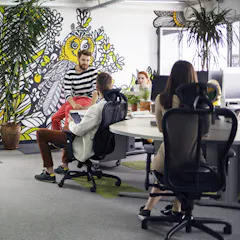
Going to the office doesn’t have to be a chore. Here’s how:

WeWork’s bankruptcy casts doubt on hype that the boundaries between physical space and computer technology are dissolving.

It’s not that demand has disappeared altogether – it’s just in transition.

The race to build the tallest timber building makes the news, but mid-rise construction is where using timber can make the biggest sustainability impact.

Plus why your genes determine how you deal with cold temperatures. Listen to episode 8 of The Conversation Weekly.
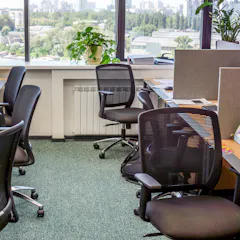
If a return to the office is on the cards, both employers and employees have a role to play in minimising the risk of COVID-19 spread.
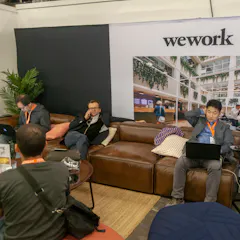
Adam Neumann both controlled and managed the co-working company he founded in 2011. A finance scholar explains why that can be a serious problem in venture capital-backed startups.

And how companies can let dogs in without scaring off any humans.

Workplaces the world over tune their thermostats to 22C, because this supposedly optimises mental performance. But the factors that underpin a productive office are much more complicated.

Many of our offices are filthy, which doesn’t just trigger a sense of disgust but can make us sick.

Our study found that office workers performed just the same, whether the air conditioning was set at 22°C or 25°C. But making that tweak can cut energy use by 18%.
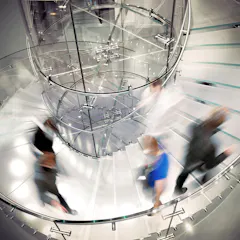
Research shows that corporate wellness programs don’t really work. If companies want to boost employee health they should consider designing the workplace to encourage the right behaviour.
Top contributors
-

Senior lecturer, Griffith University
-
Associate Professor of Organisational Behaviour, Bond Business School, Bond University
-
Senior Lecturer, University of Sydney
-
Professor of IT, Southern Cross University
-
Professor of Psychology, Civil and Environmental Engineering, and Industrial Engineering and Management Systems, University of Central Florida
-
Management Professor, McGill University
-
Associate Professor in Strategic Public Sector Finance and Urban Adaptation, Northumbria University, Newcastle
-
Senior Lecturer in Environmental Health, CQUniversity Australia
-
Associate Professor, History of Modern Architecture, University of Toronto
-
Lecturer in Human Resource Management, Edinburgh Napier University
-
Director, Indoor Environmental Quality Laboratory, University of Sydney
-
Postdoctoral Research Fellow, Muscle Physiology, Karolinska Institutet
-
Lecturer in Structural Timber Engineering, The University of Queensland
-
Lecturer, Environmental Health, CQUniversity Australia
-
PhD Candidate in Anthropology, UCL