
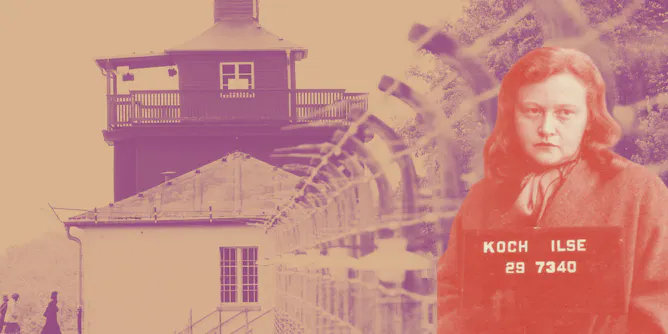
Ilse Koch’s husband was commandant of Buchenwald, one of Germany’s first and largest concentration camps. As the only woman among 31 people indicted for crimes committed there, she became infamous.
Articles on Nuremberg trials
Displaying all articles
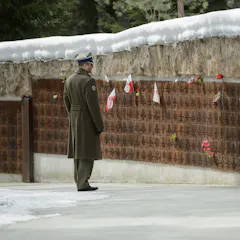
Soviet Russia had a policy of denying its responsibility for war crimes. It looks as if Putin’s Russia may be following suit.

The value of the rule of law is to challenge and constrain power. In this sense, the legacy of Habré’s trial and conviction is mixed.
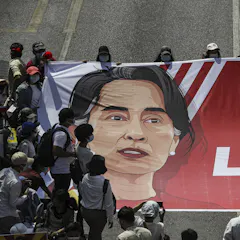
‘Show trials’ by dictatorships have repeatedly been shown to have no basis in law.

The US faces many of the same problems Germans faced after World War II: how to reject, punish and delegitimize the enemies of democracy. There are lessons in how Germany handled that challenge.
When faced with US rejection of international criminal justice, today’s supporters of the ICC often invoke the country’s Nuremberrg leadership. However, this notion is based on a distorted image of the 1945-46 trials.
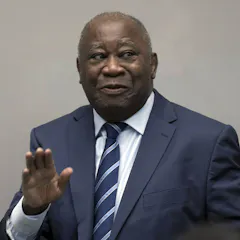
The recent acquittals should be seen as a vindication of the ICC as an independent and impartial judicial institution.
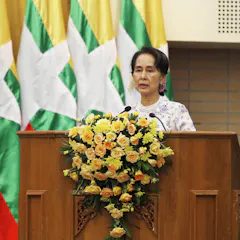
Human Rights Day might not be a reason for celebrations. But it’s a useful reminder of what’s been achieved over 70 years.
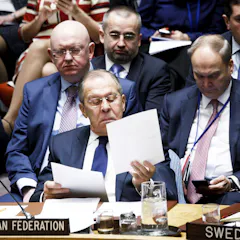
Despite its reputation, Russia has contributed much more to international law than it’s sometimes given credit for.
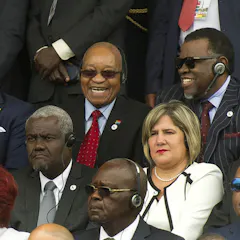
Raising the status of the African languages to that of official languages in South Africa post-1994 led to an explosion of translation and interpreting work in local and foreign languages.
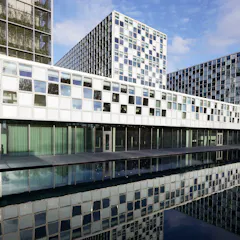
Why would the US and UK want to suppress the work of a post-war human rights effort?
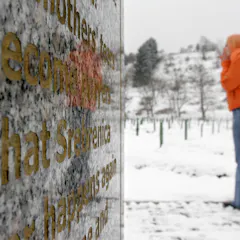
How long does it take to make peace? Decades after the end of the Bosnian war, just one in six residents felt that country had reached reconciliation.
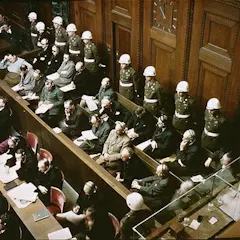
The trials weren’t perfect, but the Allies had wanted to shoot the defendants, so at least the world learned something about justice.
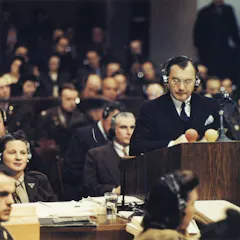
Set up between the Hiroshima and Nagasaki bombings, the Nuremburg Trials founded an entire legal system the world now takes for granted.
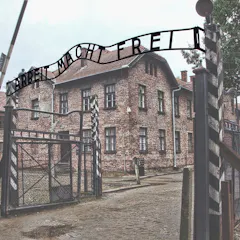
The horror of the human experiments by Nazi doctors led to the Nuremberg Code but the international declaration it inspired was watered down for political purposes.
Top contributors
-

Lecturer in History of Medicine/Life Science, The University of Melbourne
-
Professor of Political Science, University of Maryland, Baltimore County
-
Lecturer in Modern Eurasian History, UCL
-
Director:Language Centre, Stellenbosch University
-
Associate Professor of Russian Politics, UCL
-
Lecturer, Department of Digitalization, Copenhagen Business School
-
Professor at the Centre for International Studies and Diplomacy, SOAS, University of London
-
Senior Lecturer in Law, Northumbria University, Newcastle
-
Extraordinary Professor, Department of Political Sciences, University of Pretoria
-
Associate Professor International Law, Roskilde University
-
Professor, Lancaster Law School, Lancaster University
-
Professor of Law, Swansea University
-
Professor in Law, Griffith University
-
Professor of Teaching of History, Wayne State University
-
Associate Professor, Department of European Studies, Lund University