

When I talk about my anthropological fieldwork, many Americans are shocked to learn that “living on a nuclear test site” is even a logical statement.
Articles on Nuclear testing
Displaying all articles
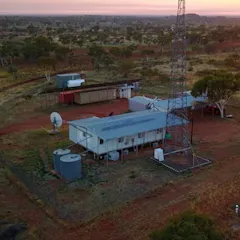
As the United States and Russia signal a return to nuclear testing, Australia’s remote monitoring station plays a crucial role in global verification.

Over a 40-year period, up to 1989, the Soviet Union detonated 456 nuclear weapons in present-day Kazakhstan. A new documentary sees three generations of women speak about wounds and healing.

Once protected by its nuclear umbrella, America’s closest allies are now threatened by it and contemplating their own nuclear weapons.
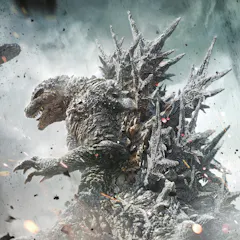
Like the Japanese atomic survivors who were awarded the 2024 Nobel Peace Prize, Godzilla has a message to share.
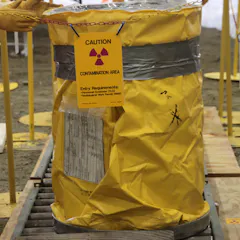
Nuclear weapons production and testing contaminated many sites across the US and exposed people unknowingly to radiation and toxic materials. Some have gone uncompensated for decades.
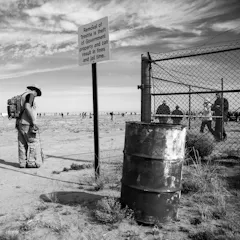
The Christopher Nolan film ‘Oppenheimer’ is set to become a summer blockbuster. But one of the featured sites in the movie is a sobering reminder of the horror of nuclear war.

Putin’s announcement to Russia will no longer participate in the New START pauses the last remaining nuclear weapons agreement between the U.S. and Russia.
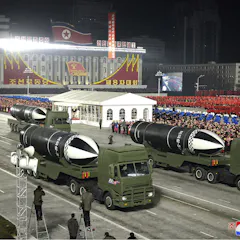
Sanctions are clearly not deterring North Korea’s nuclear ambitions. But alternative strategies have huge risks, too.
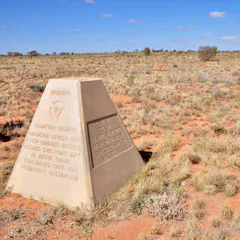
The British atomic tests at Emu Field in South Australia pre-dated Maralinga by three years. Largely forgotten, they remind us the costs of harmful political decisions are borne by the most powerless.
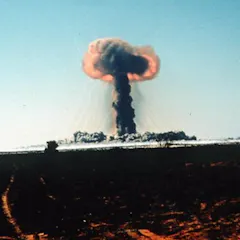
Radioactive pollution left over from British nuclear tests in South Australia may steadily be leaching into the environment.
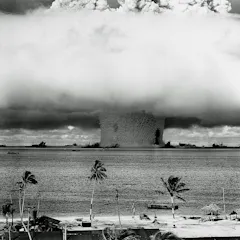
In 1946, the US began its nuclear testing on Bikini Atoll in the Marshall Islands – a terrifying thought for many Australians. Some 75 years on, the evidence shows their fears were well-founded.
Top contributors
-

Professor of Law, University of Waikato
-
Professor of International Relations, Munk School of Global Affairs & Public Policy, University of Toronto; USC Dornsife College of Letters, Arts and Sciences
-
Professor and head of professional development GRS, James Cook University
-
Professor Emeritus of Communication, North Carolina State University
-
Associate Professor of Disaster and Emergency Management, York University, Canada
-
Faculty Member, Asian Studies Program, Georgetown University; Visiting Fellow, Department of Pacific Affairs, Australian National University., Georgetown University
-
Professor of Synchrotron Geosciences, Monash University
-
Research Officer, School of Earth, Atmosphere and Environment, Monash University
-
Associate Professor, Monash University
-
Professor, Head of Geophysics, Director of Warramunga Array, Australian National University
-
Teaching Professor of Management and Organization, University of Notre Dame
-
Assistant Professor of East Asian Languages and Cultures, University of Notre Dame
-
Associate Professor of Political Science, St. Francis Xavier University
-
Associate Professor of Political Science, St. Francis Xavier University
-
Assistant Professor, Department of English, University of Toronto