
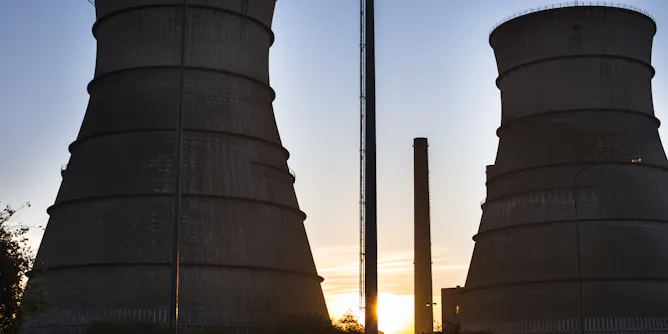
South Africa’s nuclear plans have been put on hold. In light of recent events in the country, pressure is being put on the government to halt the process.
Articles on Nuclear power plants
Displaying 81 - 100 of 108 articles

The meltdown at the Chernobyl Nuclear Power Plant in 1986 exposed 572 million people to radiation. No other nuclear accident holds a candle to that level of public health impact.

How do we measure long-term impacts of nuclear accidents? Studies at Chernobyl and Fukushima show that radiation has harmed animals, birds and insects and reduced biodiversity at both sites.
Chernobyl’s liquidators have come up with some intriguing ways of dealing with what they’ve gone through – without directly confronting painful memories.
Engineers have devised an innovative way to dismantle Chernobyl’s reactor while preventing further radiation escaping.
Recent terrorist attacks have heightened concerns about the security of nuclear plants. A former top U.S. nuclear regulator says security is weak at many sites worldwide.

Evidence suggests that the threat is not being taken seriously enough.
Small nuclear reactors are one step closer to powering the UK’s future energy requirements.
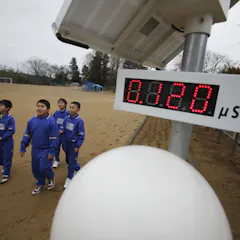
Remediation will never get radiation to zero in the area affected by the 2011 meltdown at the Fukushima-Daiichi nuclear power plant. Rather than safety, the conversation should focus on acceptable risk.
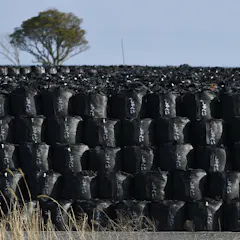
The nuclear operator was nowhere near adequately covered for the disaster. And it’s not just a Japanese problem.
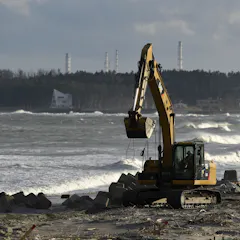
Scientists are setting Japan on the road to recovery, using data to protect against future disasters.
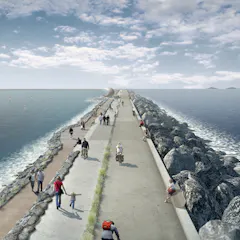
Celebrate the shift to renewable energy with bold designs that add to the landscape.

Recently released secret documents reveal the chilling extent of Cold War planning for a nuclear holocaust.

South Africa has plans to build new power stations despite many calling for no nuclear energy in the country.
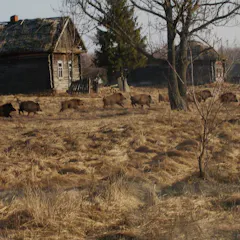
Elk, deer and wolves are becoming increasingly common in Chernobyl.
The search for alternative ways to boost energy supply – or reduce demand.
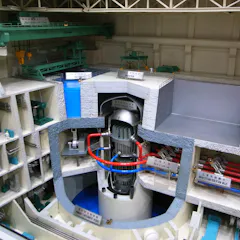
The UK government looks set to allow EDF to build a new kind of nuclear reactor at Hinkley Point. But are there better nuclear technologies we could use?
The UK’s first new nuclear power station since the 1990s is coming at the expense of renewable energy and leaving us unnervingly in hock to the Chinese.

The nuclear deal South Africa signed with Russia is set to be massively expensive and comes with a fair amount of risks.
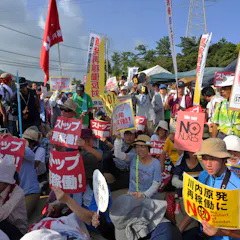
The restart of Japan’s nuclear reactors is good news for climate change. But there are still large psychological barriers to overcome.
Top contributors
-

Professor of Physics, University of Johannesburg
-
Professor of Engineering and International Relations, University of Southern California
-
Simons Chair in Disarmament, Global and Human Security at the Liu Institute for Global Issues, University of British Columbia
-
Professor, Environmental and Urban Change, York University, Canada
-
Sociologue, IMT Atlantique – Institut Mines-Télécom
-
Professorial Fellow, University of Canberra
-
Timothy J. Jorgensen is a Friend of The Conversation.
Director of the Health Physics and Radiation Protection Graduate Program and Professor of Radiation Medicine, Georgetown University
-
Lecturer in International Studies, University of Washington
-
Professor, Mathematical Sciences Institute and School of Computing, Australian National University
-
Honorary Senior Research Associate, UCL Energy Institute, University College London, UCL
-
Professor, School of Economics, The University of Queensland
-
Reader in Energy Policy, University of Aberdeen
-
Director of Energy Studies, University of Florida
-
Directeur du Centre de recherche sur les risques et les crises et chercheur au sein du Collège des Sciences Navales, Mines Paris - PSL
-
Professor of Civil and Environmental Engineering, Rice University