
The submarine announcement is sure to trigger a new round of debate on whether nuclear energy is right for Australia. But let’s be clear: the technology makes no sense for Australia.
Articles on Nuclear power
Displaying 121 - 140 of 292 articles
A US laboratory has announced an exciting new leap forward in nuclear fusion, but it may be several decades before we see this form of energy come to fruition.
Scientists are working on ways to make lots of energy by converting matter into energy. The trick is keeping the process under control. One possibility is nuclear fusion – the Sun’s power source.
Fifteen years ago electric power generation was the largest source of US greenhouse gas emissions. Now the power sector is leading the shift to a clean energy economy.
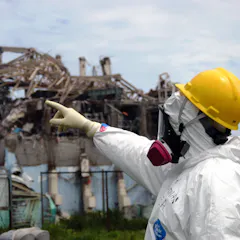
On the 10th anniversary of the Fukushima nuclear disaster, two experts explain why human choices are more important to nuclear safety than technology, and why the job is far from finished.

Heat waves, droughts and deep freezes can all strain the electric grid, leading utilities to impose rolling blackouts. Climate change is likely to make these events more common.
Good news for large, small and advanced nuclear reactors.
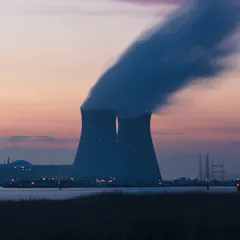
Don’t count nuclear energy out – it may be our best hope of reaching net-zero emissions within the time we have left.
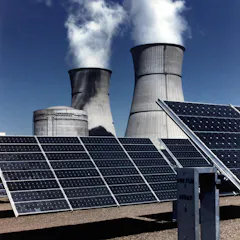
Low-carbon energy sources aren’t all equally well-suited to getting us to net-zero emissions.
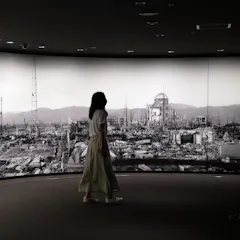
What if there was another nuclear incident in the US? A disaster management scholar looks back at the history of nuclear events to assess the risk.
Anthony Albanese has proposed negotiations for a bipartisan agreement on an energy policy framework to create greater certainty for investment.
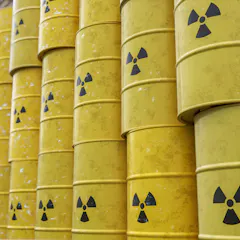
In my ten years working with and researching it, I’ve encountered lots of myths.
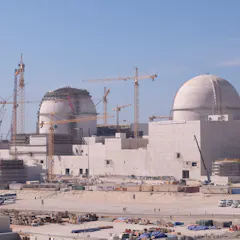
A new nuclear plant called Barakah is nearing completion in the UAE. But it risks further stabilising the volatile Gulf region.
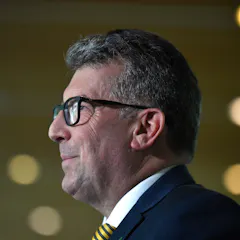
Keith Pitt on the Murray-Darling Basin, the Northern Australia Infrastructure Facility, and Nuclear Power in Australia
Keith Pitt, minister for resources, water, and Northern Australia, discusses the NAIF, climate policy, nuclear energy, and the Murray-Darling Basin scheme with Michelle Grattan.
Energy-efficiency initiatives are consistently identified as the lowest impact and most cost-effective means of meeting energy needs. Why isn’t Ontario focusing on them?
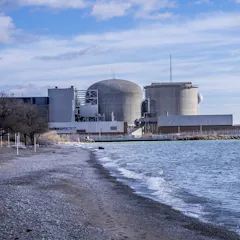
A nuclear alarm was issued on Jan. 12, 2020. The alarm had been mistakenly sent during a training exercise and was retracted, but the impact will erode trust in public safety efforts.
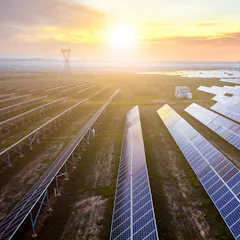
Investing billions in refurbishing nuclear generating stations doesn’t make economic sense as the cost of renewables fall dramatically.
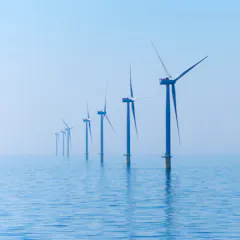
Britain greets a new decade with substantially cleaner electricity, but challenges lie ahead to decarbonise its transport and heating.
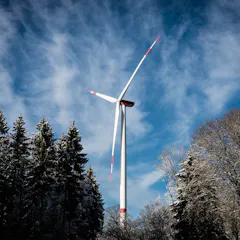
Nuclear power isn’t needed to meet Ontario’s electricity needs. And the absence of nuclear power won’t have any impact on emissions in Ontario’s energy sector.
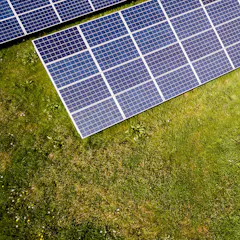
The presence of an active and dynamic Green Party would be vital in helping to keep Labour on track.
Top contributors
-

Professorial Fellow, University of Canberra
-
Professor of Physics, University of Johannesburg
-
ARC Australian Laureate Professor, University of Tasmania
-
Doctoral student, Adelaide University
-
Professor, School of Economics, The University of Queensland
-
Emeritus Professor, School of Environment and Science, Griffith University
-
Professor of Engineering and International Relations, University of Southern California
-
Simons Chair in Disarmament, Global and Human Security at the Liu Institute for Global Issues, University of British Columbia
-
Honorary Associate Professor, UNSW
-
Professor of Energy, The Open University
-
Nuclear Physicist, UNSW
-
Visiting Fellow, School of Global Studies, University of Sussex; University of Tartu; Utrecht University
-
Lecturer in International Studies, University of Washington
-
Research and Knowledge Transfer Manager, Department of War Studies and the Centre for Science and Security Studies, King's College London
-
Professor of Science & Technology Policy, SPRU, University of Sussex Business School, University of Sussex