

A whistleblower has raised safety concerns about working inside Porton Down, which has a long history of conducting dangerous biochemical research.
Articles on Novichok
Displaying 1 - 20 of 21 articles
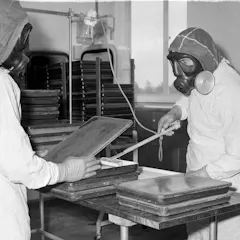
Porton Down’s archive was opened up
for a study into the health of the human volunteers in the nerve agent testing programme.
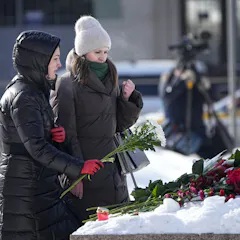
Alexei Navalny’s successors — not western leaders — are best placed to carry on the fight for Russia’s future. But they’ll only succeed if Navalny’s cause isn’t seen as anchored to western ideals.

Claims Russia has used chemical weapons in Ukraine will be difficult if not impossible to verify.
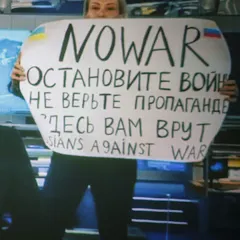
‘Vranyo’ is the Russian word for a lie that you tell to make yourself look good, whether people believe it or not.
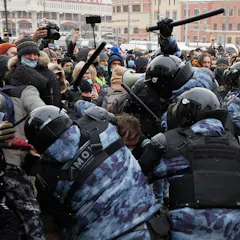
Poisoning Russian opposition leader Alexei Navalny didn’t get rid of him. He survived the attack, and now the Kremlin must deal with a reinvigorated reform movement led by Navalny.
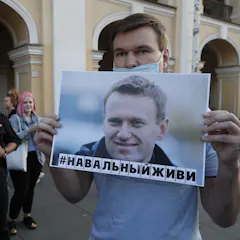
Vladimir Putin is a standard-bearer, rather than a pioneer in the history of Soviet and Russian political assassination.
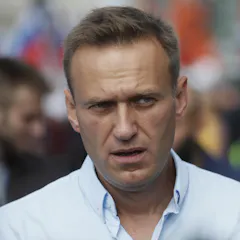
It’s all about the dose.

The use of chemical weapons has shifted from the battlefield to attacks on civilian targets. Time to rethink the convention that prohibits their use.
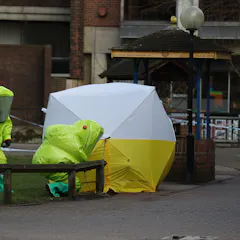
The UK has become surprisingly willing to brief the press about possible use of cyber attacks, including against Russia in response to the Skripal attack.
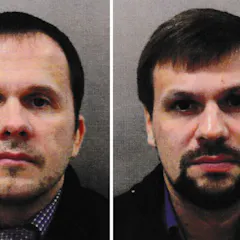
The Skripal case shows how Russian intelligence services have the confidence to carry out shoddy operations, seemingly unconcerned about whether or not they will be discovered.
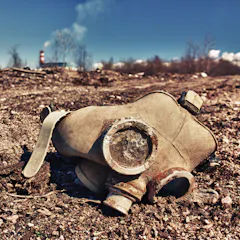
Five years after the first chemical weapons attacks in Syria that killed more than 1,400 people, a team at MSU may have solved the problem of getting nerve agent antidotes inside the brain.

Novichok are a set of molecules that are some of the most deadly nerve agents ever developed. They are almost impossible to detect and clean up.

The same deadly nerve agent used against a former Russian spy and his daughter could be linked to a second poisoning that killed a 44 year old woman in the UK.

Former Russian spies Alexander Litvinenko and Sergei Skripal were both poisoned – one polonium, the other by Novichok. Now that there’s been another nerve agent case, what’s the difference?
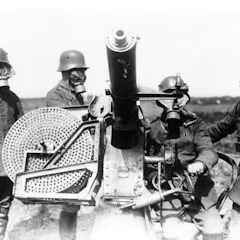
The spectacle of thousands of soldiers gassed to death in France announced to the world that a new class of weapons had arrived.

CC BY-ND20.1 MB (download)
An audio version of an in depth article on the story of how the nerve agent used in an attack on former Russian spy Sergei Skripal was developed.
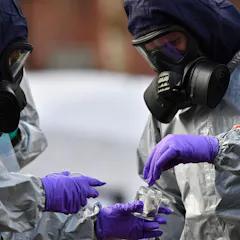
A long read on how nerve agents were developed – and used in an attack on a former Russian spy on the streets of Salisbury.
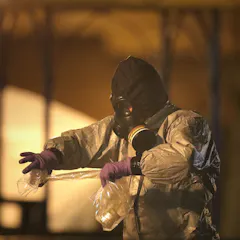
International law on chemical weapons fails without mutual trust and transparency.
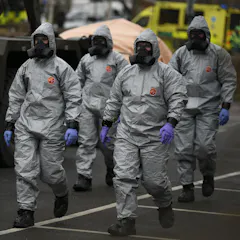
Hundreds of people have been warned after former Russian spy Sergei Skripal was poisoned with Novichok nerve agent.
Top contributors
-

CBRN defence scientist, Charles Darwin University
-
Professor (Emeritus) of Environmental Toxicology, University of Leeds
-
Professor, Centre for Research into Topical Drug Delivery and Toxicology, University of Hertfordshire
-
Senior Lecturer in Epidemiology, Lancaster University
-
Professor of Pharmacology and Toxicology, Michigan State University
-
Senior Lecturer in International Relations, University of Portsmouth
-
Professor, College of Veterinary Medicine; Director, Center for Environmental Health Sciences, Mississippi State University
-
Professor of Political Science, Indiana University
-
Associate Professor of Chemical Engineering, The University of Melbourne
-
Director Center Holocaust and Genocide Studies, United States Military Academy West Point
-
Associate Professor of History, United States Military Academy West Point
-
Professor of Russian and Slavonic Studies, University of Sheffield
-
Associate Professor of International Relations and National Security Studies and Graduate Program Director for National Security Studies, Park University
-
Professor of Intelligence and International Affairs, King's College London
-
Associate Professor and Edward and Emily McWhinney Professor in International Relations, Simon Fraser University