

The use of chemical weapons has been outlawed for nearly a century.
Articles on Chemical weapons convention
Displaying all articles
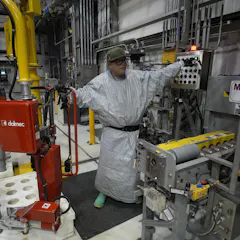
When it comes to chemical weapons, American condemnation, even if hypocritical, is still valuable.

There are unconfirmed reports that Russia has used chemical weapons in Ukraine. Syria’s recent chemical weapons use offers context for understanding this tactic. Chemical weapons terrify civilians.
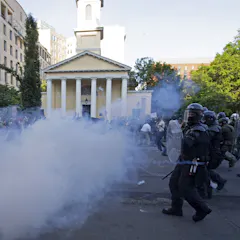
The chemical weapon, tear gas, was used in Washington DC, Los Angeles, Orlando and several other cities to control crowds protesting the death of George Floyd. But what is it? Does it cause harm?

The use of chemical weapons has shifted from the battlefield to attacks on civilian targets. Time to rethink the convention that prohibits their use.
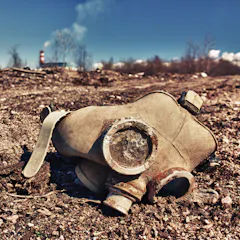
Five years after the first chemical weapons attacks in Syria that killed more than 1,400 people, a team at MSU may have solved the problem of getting nerve agent antidotes inside the brain.
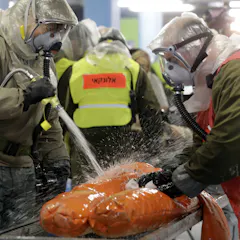
A decades-long policy of ambiguity means that Israel’s chemical arsenal remains the subject of speculation.

CC BY-ND20.1 MB (download)
An audio version of an in depth article on the story of how the nerve agent used in an attack on former Russian spy Sergei Skripal was developed.
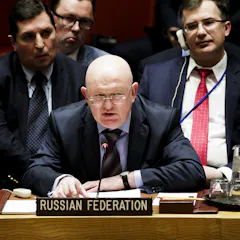
A legal expert explains why Russia’s accusations that the UK breached international law are unfounded.

International law on chemical weapons fails without mutual trust and transparency.
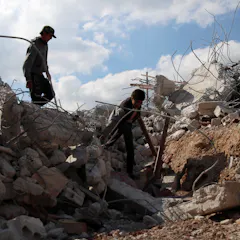
The recent American airstrike in Syria has created a new norm in international law sanctioning the unilateral use of force to punish those who deploy chemical weapons against their own people.

Using nerve agents is banned under the Chemical Weapons Convention, but North Korea is not a party to it.
Top contributors
-

Professor, College of Veterinary Medicine; Director, Center for Environmental Health Sciences, Mississippi State University
-
Professor of International Law and Director, Sydney Centre for International Law, University of Sydney
-
Lecturer, Department of Digitalization, Copenhagen Business School
-
PhD Researcher, SOAS, University of London
-
Associate Professor of Public International Law, University of Exeter
-
CBRN defence scientist, Charles Darwin University
-
Senior Lecturer in Pharmacology, Adelaide University
-
Professor (Emeritus) of Environmental Toxicology, University of Leeds
-
Professor and Program Chair Nonproliferation and Terrorism Studies, Middlebury College
-
Professor of Philosophy, Public Policy and Governance, University of Washington
-
Associate Professor (Teaching) in International Security & Conflict Resolution, UCL
-
Assistant Professor, Institute of Security and Global Affairs (ISGA), Leiden University