
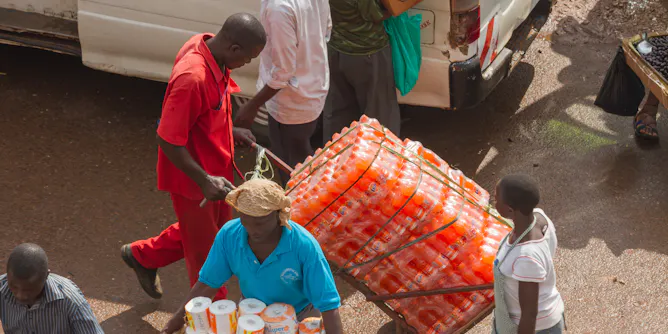
Implementing a sugar-sweetened beverage tax in all African countries will require sufficient political will and support from civil society.
Articles on Noncommunicable diseases
Displaying 21 - 40 of 42 articles

The results are in: South Africa’s ground-breaking health promotion levy, introduced in 2018, is working.

A disruption of societal norms created by industry interference is urgently required to create a shift in the food system.

Workplace-based interventions could make a substantial contribution to reducing the burden of noncommunicable diseases in the country.
Cardiovascular risk factors like diabetes and hypertension are preventable or relatively easy to treat with inexpensive medication.
Interventions using apps show promise as they could improve care for patients with chronic conditions. But patients can’t benefit from innovations unless they accept them and use them effectively.

South Africa faces high levels of noncommunicable diseases such as diabetes and hypertension. The NHI is likely to battle to cope with treating large numbers of sick people.

Two thirds of South African women are overweight or obese and their babies are three times more likely to become obese themselves.
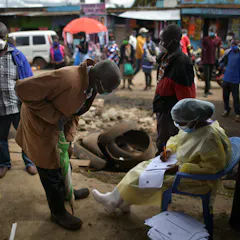
As COVID-19 cases continue to increase in Kenya, there is a looming threat for escalated disease and death due to the many people with chronic conditions.

Cardiac rehabilitation is not available in many African countries and the way forward may be to focus on patients rather than specific diseases.

Rapid population ageing has prompted researchers to study disease trends in older South Africans. The aim is to understand the role that specific health conditions play in ageing among rural people.
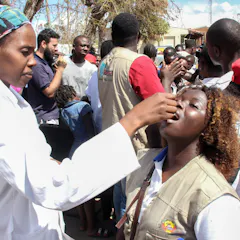
The flood waters caused by Cyclone Idai have receded. But in some ways, the problems for many of the countries affected, are just beginning.
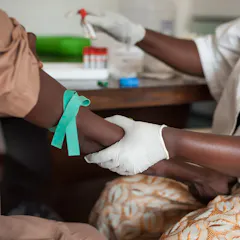
Gene sequences can be manipulated to prevent certain diseases and improve public health.

Data suggest that people are living many years in poor health in Africa.

The leading causes of death in sub-Saharan Africa for adults 15 to 49 years were AIDS, tuberculosis, malaria, maternal disorders, and road injuries.
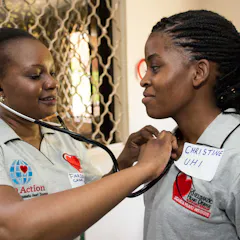
Noncommunicable diseases are a growing problem in Africa. Among women, heart disease is a particular concern. Medication to treat it can interfere with pregnancy, making women undesirable partners.

There are differences in the smoking patterns of rural and urban communities. These must be recognised and included in tobacco control interventions to reduce use.

As government representatives meet at the WHO global conference on noncommunicable diseases in Uruguay this week, their focus should be on reducing the health impacts of trade deals.

This week, I had the pleasure of sitting with Jessica Renzella - an Australian PhD student with Oxford University and a budding global health shaper. She told me about a new social campaign she’s leading…

Would you pay A$9 for six mushrooms in inner-city Melbourne? Or A$4.50 for one small piece of broccoli or cauliflower in Sydney? Probably not – but this is what rural Australians are being asked to fork…
Top contributors
-

Professor and Programme Director, SA MRC Centre for Health Economics and Decision Science - PRICELESS SA (Priority Cost Effective Lessons in Systems Strengthening South Africa), University of the Witwatersrand
-
Postdoctoral fellow, Johns Hopkins University
-
Associate Professor, Melbourne School of Population and Global Health, The University of Melbourne
-
Chairperson, Diabetes Alliance; Co-founder, Diabetes Research Centre, University of Pretoria
-
Senior Researcher Rural Health in Transition and Agincourt Research Unit, University of the Witwatersrand
-
Professor of Population Health and Nutrition, Adelaide University
-
Extraordinary Professor, Global Health, Stellenbosch University; South African Medical Research Council
-
Researcher, SAMRC/Centre for Health Economics and Decision Science- PRICELESS SA, University of the Witwatersrand
-
Project Head, Tshwane Insulin Project, University of Pretoria
-
Associate professor, University of Pretoria
-
Associate Professor and Director of the SAMRC/Wits Centre for Health Economics and Decision Science - PRICELESS SA (Priority Cost Effective Lessons in Systems Strengthening South Africa), University of the Witwatersrand
-
Senior Research Fellow, University of Oxford
-
Cardiology Fellow Physician, Stanford University
-
Research fellow, George Institute for Global Health
-
Professor: Health and Population Division, School of Public Health, University of the Witwatersrand