
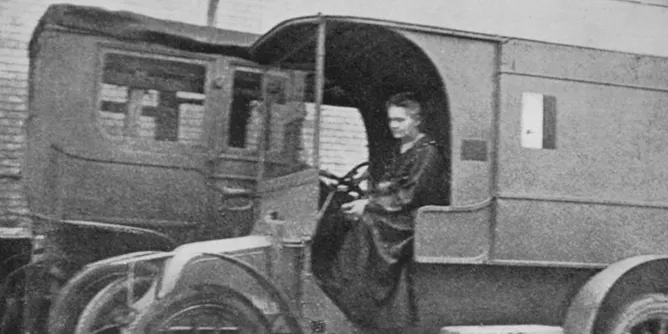
During World War I, Marie Curie left her lab behind, inventing a mobile X-ray unit that could travel to the battlefront and training 150 women to operate these ‘Little Curies.’
Articles on Nobel Laureates
Displaying 21 - 34 of 34 articles
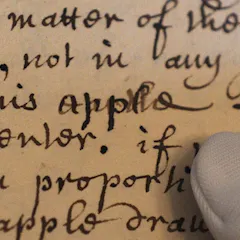
Isaac Newton and Albert Einstein would have bridled under today’s research funding bureaucracy. It’s time to allow scientists to indulge their curiosity again.

Journal Impact Factors are unreliable and may be gamed. But can they still offer value?
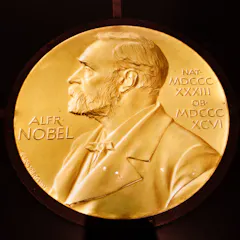
Immigrants have contributed to America’s great success at the Nobel. Of the 350 Nobel winners from the United States, more than 100 have been immigrants.
Peter Doherty’s Nobel Prize-winning insights proved crucial for understanding how viral infections are controlled.
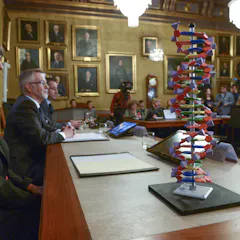
Without natural DNA repair processes we wouldn’t be here. This year’s Nobel Prize winners in Chemistry helped us crack how it all works.
One of tiniest particles in physics has won the biggest prize in science – for the fourth time.
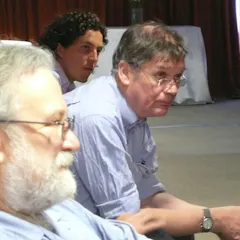
Hunt’s resignation as honorary professor at University College London must not be the end of the debate over gender in science.
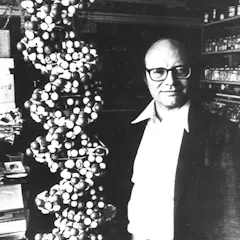
Walter Gilbert won the Nobel Prize in 1980 in Chemistry for his contribution to sequence DNA, or “determination of base sequences in a nucleic acid”. Mohit Kumar Jolly, researcher at Rice University and…
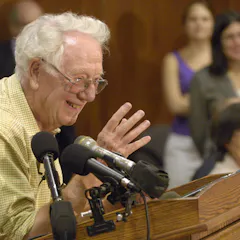
Oliver Smithies won the Nobel Prize in Physiology or Medicine in 2007 “for discoveries of principles for introducing specific gene modifications in mice by the use of embryonic stem cells”. Mohit Kumar…
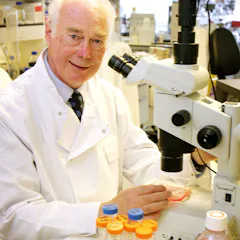
Martin Evans received the Nobel Prize in Physiology or Medicine in 2007 “for discoveries of principles for introducing specific gene modifications in mice by the use of embryonic stem cells”. Mohit Kumar…
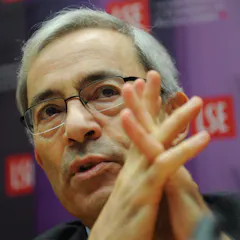
One of the most exciting things about working at the LSE is that we get to hear some of the world’s top thinkers and policymakers. One occasion that I recall vividly is the visit of two great Europeans…
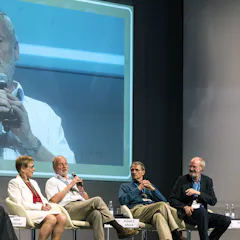
Hartmut Michel won the Nobel Prize in Chemistry in 1988 “for the determination of the structure of a photosynthetic reaction centre”, which helped reveal details of one of nature’s most useful processes…
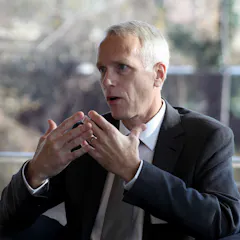
Brian Kobilka won the Nobel Prize in Chemistry in 2012 for his work on G protein-coupled receptors (GPCRs), which are main targets for making new drugs. Akshat Rathi, science and technology editor, and…
Top contributors
-

Professor and Lincoln Professor of Ethics in Public Affairs, Arizona State University
-
Lecturer in African and African Diasporan Literature, University of Lagos
-
Associate professor in Cultural Studies and English, Hebrew University of Jerusalem
-
Professor and Director, Max Planck Institute for Biophysics
-
Post-doctoral researcher, Hebrew University of Jerusalem
-
Professor of Neuroscience, Royal Veterinary College
-
Professor of Toxicology, Equity and Inclusive Practice, Director of Impact and Innovation, University of East London
-
Head of School for Physics, University of Sydney
-
Senior Lecturer in Literature, University of Essex
-
Chair, The Conversation Media Group
-
Professor, Harvard University
-
Melbourne Laureate Professor, University of Melbourne; Director, The Peter Doherty Institute for Infection and Immunity
-
Former PhD Student, Durham University
-
Professor of International Relations, Boston University
-
University of North Carolina at Chapel Hill