

Established drugs – such as heroin, cocaine and methamphetamine – continue to demand attention. Here’s what else the latest drug trends tell us.
Articles on Nitrous oxide
Displaying 1 - 20 of 36 articles

There are ways to reduce emissions without sacrificing yield. A new study shows how, and looks at a technique billed as ‘climate-friendly’ that makes emissions worse.

Development banks have spent over US$1 billion on factory farming in Africa, locking in high greenhouse gas emissions. Natural farming systems are a better choice.

The low cost and easy availability of recreational nitrous oxide makes it an easy drug of choice, particularly for young people.

We spoke to young people who didn’t know about the risks, even when they reported side effects including brain fog and seizures.

We wanted to find out how much carbon and nitrogen is being released from the northern permafrost. Here’s the region’s first full greenhouse gas budget covering CO₂, methane, and nitrous oxide.

Knowing which parts of Africa best help to store carbon means funding and policy efforts can be directed to protecting and increasing this carbon ‘land sink’.

People are becoming more aware of the health risks of laughing gas, but fewer people realise it’s a potent greenhouse gas.

The Advisory Council on the Misuse of Drugs says sale and possession of laughing gas for recreational use should not be banned.

Two neurologists report on the rising cases of paralysis due to nitrous oxide abuse they have encountered in recent times.

Drug use among young people continues to fall, but harmful use among a minority continues.

In 2001, the average age of death from a volatile substance was 28. By 2020, it had risen to 46.
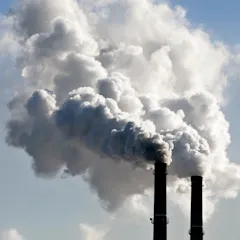
Targets for reductions in methane and other greenhouse gases should be guided by science, and set in line with the Paris deal.

A new study provides a detailed way to calculate the climate impact of food production, which could lead to more sustainable farming policies and methods.
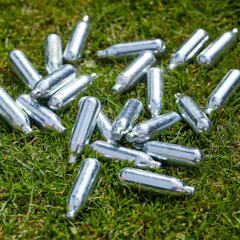
The home secretary, Priti Patel, has ordered a review of nitrous oxide. But is this the right drug to get ‘tough’ on?

If the G7 is serious about stopping global warming, it could start by acknowledging who and what is causing it.
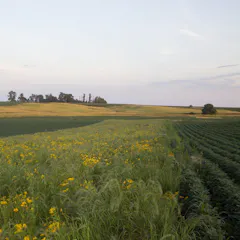
Farmers can help slow climate change by mixing native grasses into croplands, restoring wetlands and raising perennial crops. These strategies also conserve soil and water and build new markets.
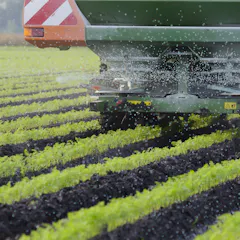
Agriculture is the dominant cause for the increasing N₂O concentrations. Emissions must be reduced if we hope to stabilise Earth’s climate.

If we had not altered the composition of the atmosphere at all through emitting greenhouse gases, particulate matter and ozone-destroying chemicals, the average temperature would have remained stable.

Globally, emissions from air travel account for only about 3% of the warming human activities are causing, but aviation affects our climate in a number of ways.
Top contributors
-

Honorary Fellow, Department of Health Sciences, University of York
-
Chief Research Scientist, CSIRO Environment; Executive Director, Global Carbon Project, CSIRO
-
Professor in Substance Use, Liverpool John Moores University
-
Director and Institute Professor, Center for Earth System Science and Global Sustainability, Boston College
-
Research Group Leader, CSIRO
-
Professor, Mental Health and Addiction, Rural Health Research Institute, Charles Sturt University
-
Senior Scientist, Norwegian Institute for Air Research
-
Honorary Fellow, CSIRO
-
Principal Research Scientist, CSIRO
-
Chief Research Scientist, Food Systems and the Environment, CSIRO
-
Visiting Lecturer, Liverpool John Moores University
-
Research Project Assistant, University of Vermont
-
Maître de conférences, Université de Lille
-
Professor of Law (consumer protections and credit law), The University of Melbourne
-
Postdoctoral Fellow, Technical University of Munich