
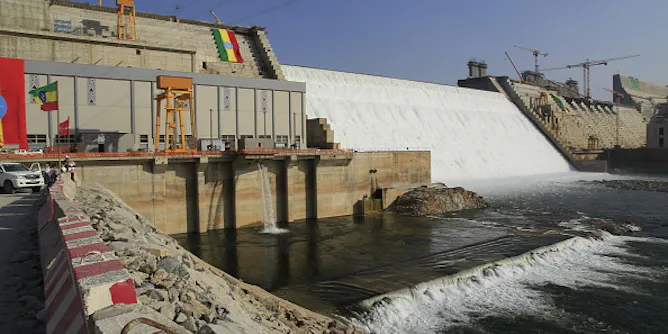
The Nile Basin states are keen to see what kind of deal Ethiopia reaches with Egypt and Sudan.
Articles on Nile basin
Displaying all articles
The mega dam in Jinja was meant to give Uganda energy independence, but this was constrained by Britain’s agricultural interests in Egypt.
The dam has helped to shift longstanding power relationships and could pave the way for more cooperation among all the countries that depend on the Nile.
Communicating scientific findings is a potential route to reach common ground and avoid political tensions in the Nile region
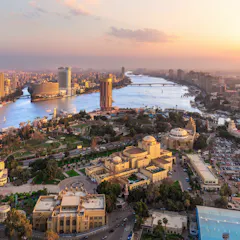
Treaties are needed to govern water resource allocation in the Nile basin region. For this to happen it’s critical to have accurate data on how much water there is.
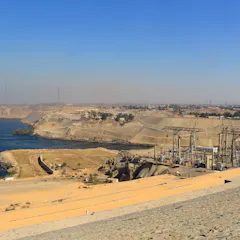
An historical perspective on the politics, dominance and conflicts over the dams on the Nile is useful.
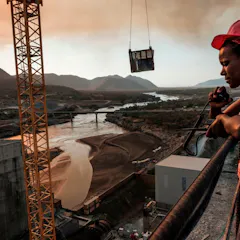
Egypt wants a guarantee that the filling and operation of the Renaissance Dam will not affect the rights it got in 1959.
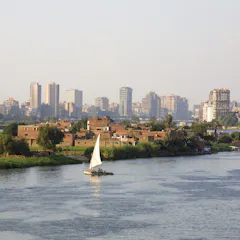
Instead of allocating the Nile waters based on a fixed, perpetual water supply Ethiopia, Sudan, and Egypt must consider changes in weather patterns, among other factors.
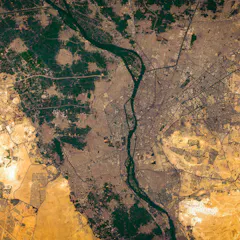
Despite more rainfall, devastating hot and dry spells are projected to become more frequent in the Upper Nile basin in the future.
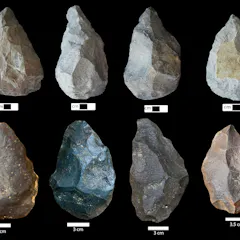
There’s almost no place on earth that doesn’t hold traces of humanity. But which routes did our ancestors follow first?
The threat to use force to defend Egypt’s right to water from the Nile has been a common theme through successive governments.
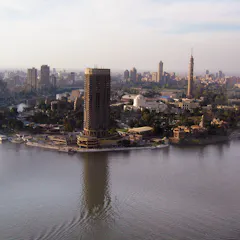
The urgency of an agreement to reasonably and equitably share benefits on the Nile Basin can’t be overstated. It would create a a transparent atmosphere in the countries that depend on the Nile.
Top contributors
-

PhD candidate, University of the Pacific
-
Professor, Weber State University
-
PhD in Civil and Environmental Engineering, University of Washington
-
Professor, Vice president for Academic Affairs and Provost, at Illinois State University, Illinois State University
-
Professor of Peace and Conflict Research, Uppsala University
-
Assistant Professor of Geography, Dartmouth College
-
Assistant Professor, College of Arts. Department of Tourism & Archaeology, University of Ha'il
-
Visiting Adjunct Professor, School of Governance, University of the Witwatersrand
-
Assistant Professor, Deptartment of Humanities and Social Sciences, Indian Institute of Science Education and Research Mohali
-
Associate Professor, Department of Anthropology, University of Louisville
-
Neukom Institute Postdoctoral Fellow, Dartmouth College
-
Head of Political Science Department, College of Law and Politics, University of Human Development, Iraq
-
Assistant Professor, Energy Meteorology, Vrije Universiteit Brussel
-
Director, International Waters Governance Initiative IAR, University of British Columbia
-
Postdoctoral Researcher in Remote Sensing Hydrology, Binghamton University, State University of New York