

Sixty years after political independence, it is clear that Nigeria has not fulfilled its huge potential, but with a supportive public culture it can transform that into success.
Articles on Nigerian health
Displaying all articles
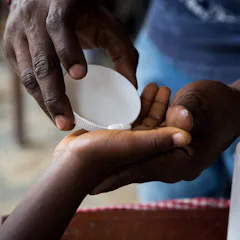
Corruption in Nigeria’s health sector can be eliminated by the implementation of a few simple strategies.

Many women in African countries who are medically required to have caesarean sections aren’t able to access them due to weak health systems and a lack of resources.

Street hawkers are transient, resilient and adaptive. Any attempt to evict them, they will keep changing their strategies, location and mode of operation as it is economically motivated.

A new polio outbreak in Nigeria has hampered the country’s efforts to be declared polio free by 2017.

They not only bear the heaviest burden of malaria on the continent: Nigerians are also paying the most for services related to the disease.

In many parts of Nigeria, children are branded as witches and suffer abuse and even abandonment. Religion and poverty are thought to play a role.
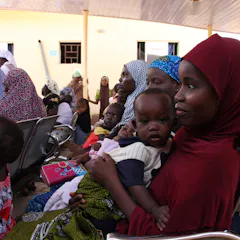
Antiretroviral treatment has been free at Nigeria’s health facilities. But the other costs involved for those living with HIV, such as transport and food, have been problematic.

Several indigenous child-rearing practices have helped babies develop strong immune systems to ward off allergies. These should be actively promoted.
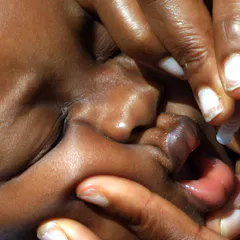
Despite Nigeria’s success in eradicating polio, it is struggling to get a grip on mother and child vaccinations.

Newly appointed Nigerian Health Minister Isaac Adewole is focused on providing primary healthcare services.

Women in northern Nigeria are not going for cancer screenings early enough. There are myriad social, cultural and economic reasons for this. But early detection would save their lives.
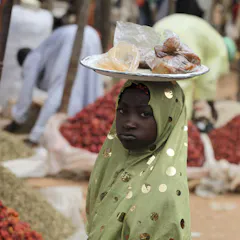
Children who hawk goods on their heads on Nigeria’s streets face an array of health hazards and physical dangers. The government must take steps to reduce this practice.
Top contributors
-

Professor of Health Economics and Policy and Pharmaco-economics/pharmaco-epidemiology in the Departments of Health Administration & Management and Pharmacology and Therapeutics, College of Medicine, University of Nigeria
-
Cardiff Metropolitan University
-
Board Certified Internal Medicine Physician and Public Health Scientist, MidMichigan Health, University of Michigan
-
Researcher at the Department of Social Work and the Health Policy Research Group, University of Nigeria, University of Nigeria
-
Professor of Global Surgery, University of Cape Town
-
Research associate at Health Policy Research Group, University of Nigeria, University of Nigeria
-
Associate Professor in Anthropology and Public Health, London School of Hygiene & Tropical Medicine
-
Research Fellow/Research Uptake Officer of the Health Policy Research Group, University of Nigeria
-
Research associate at Health Policy Research Group, University of Nigeria
-
Fellow, Nigerian Academy of Science
-
PhD researcher, Cornell University
-
PhD Student, Cardiff Metropolitan University
-
Medical Doctor, Epidemiologist and Biostatistician, University of the Witwatersrand
-
Professor in Health Systems and Policy, London School of Hygiene & Tropical Medicine
-
Lecturer, University of Nigeria