
Australia is being called a ‘loser country’ over the News Bargaining Incentive. Will we stand our ground?
Articles on News media bargaining code
Displaying 1 - 20 of 51 articles

While setting up new revenue streams for struggling newsrooms is a welcome move, the laws themselves are far from perfect.

The government and opposition have reached a deal on the hotly debated News Bargaining Incentive.

The News Media Bargaining Code was world-leading. The government’s new plan, the News Bargaining Incentive, will build on past progress to protect journalism.

The government’s latest attempt to make big companies pay for the journalism that bolsters their profits has benefits, but also risks.

If Washington decides this proposal is a digital services tax in disguise, Australia could face renewed diplomatic friction with the Trump administration.

Big Tech and Big Pharma are complaining about Australian laws – and it could lead to more tariffs.
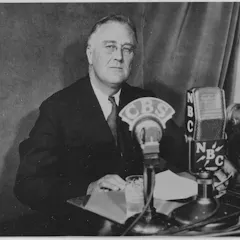
Section 891 has never been used. But it gives the US president sweeping powers, which could have profound effects on existing global tax agreements if used.

The government has been playing ‘four-dimensional chess’ to work out how to drag big tech back to the bargaining table with news publishers. So, will this new scheme work?

The new plan follows the Morrison government-era system known as the news media bargaining code, which saw companies such as Google and Meta (which owns Facebook) pay news organisations.

Implementing a levy on companies like Google and Meta to pay for news media would be difficult. But there is a way forward.

A new report shows Alphabet, Google’s parent company, is worth more here than News Corp and Nine combined.

A tech tax on companies like Google and Meta might be another way to make them pay for the news they use to win customers and make money.

Meta, the parent company of Facebook, has already switched news off in Canada. Australia could easily be next – here’s what that might lead to.

In a statement on Wednesday the commissioner, Julie Inman Grant, said she had decided to discontinue the federal court proceedings and instead welcomed the opportunity for an independent review.

Put to the test in 1970, Australia’s radio industry abandoned the record labels that wanted them to pay more. The labels backed down.

Australia needs to prioritise finding new funding to support journalism, particularly in remote and regional areas.

Meta is getting out of the news business to avoid paying for journalism under the Australian Government’s News Media Bargaining Code - but no one is surprised.
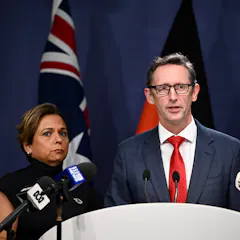
Meta’s announcement it will stop paying for news poses a threat. High-quality news is expensive, but important. Do we need economic measures that somehow get the public to pay for it?
The news page on Facebook will go, and with it, the flow of money to some Australian media outlets. But will the news content disappear too?
Top contributors
-

Senior Research Associate in Media and Communications, University of Sydney
-
Associate Professor of Digital Communication, RMIT University
-
Associate Professor, School of Media and Communication, RMIT University
-
Enterprise Professor, Melbourne Institute of Applied Economic and Social Research, The University of Melbourne
-
Senior Lecturer in Discipline of International and Public Affairs, Columbia University
-
Professorial Fellow, University of Canberra
-
Director, News & Media Research Centre, University of Canberra
-
Professor, Journalism, RMIT University
-
Professor, Digital Media Research Centre, Queensland University of Technology
-
Professor of Communication, Charles Sturt University, and Honorary Associate, Discipline of Media and Communications, University of Sydney, University of Sydney
-
Professor of Journalism, The University of Melbourne
-
Professor (Communication), Deakin University
-
Professor of Political Communication; Director CAJ, The University of Melbourne
-
Professor of Communication, Deakin University
-
Adjunct Associate Professor of Communication, University of Canberra