
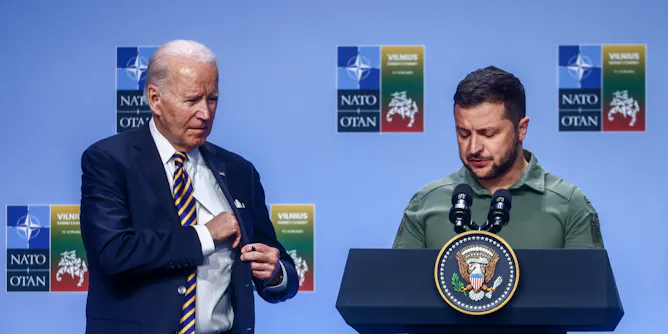
An analysis of over 1,000 headlines shows key differences in how US media portray the aggressors and victims in the two conflicts.
Articles on News
Displaying 61 - 80 of 205 articles

A new study of digital news consumption shows Canadians are avoiding the news more and trusting it less —especially in English Canada.

A hundred years ago, civic organizations of all stripes came together to demand a new Canadian approach to media policy. Canada has done it before — it must do so again.

During Cooper’s long tenure as a senior executive, general manager and executive director, he changed the Associated Press and the news its readers and listeners depended on, in major ways.

Local media ownership brings a level of accountability to the news business and offers benefits to communities by increasing voter turnout, reducing polarization and saving communities money.
The newspaper confounded critics with its contextually relevant and informative stories.

News reports about accidents can deliver important moral lessons and remind us to value life.
Teaching students about information literacy can help them determine what kinds of practices make news reports trustworthy.

There’s no evidence that news outlets are worse off because of Google, Facebook and other aggregators. If anything, evidence shows that, overall, news outlets would be in worse shape without them.
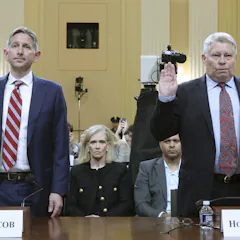
Today’s media landscape is a far cry from the days of Watergate. A media scholar looks at the challenge the Jan. 6 committee faces in getting the hearings to break through in the age of TikTok.

Doomscrolling through the news needn’t be negative – if it’s done right.

Members of the key 18-to-34 demographic finds the format stale, the hosts unrelatable and the topics patronizing.
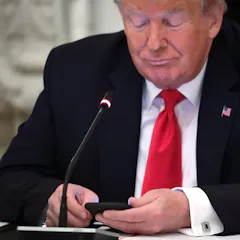
Analysis of Trump’s post-Twitter communications suggest that the former president has not moderated his messaging style. So what does that mean if he were to go back on Twitter?

Kibaki’s goals were to expand access to education, and to make universities more efficient and self-sustaining.
The system behind apps like Facebook, Twitter, YouTube and WhatsApp isn’t neutral. It encodes political communication, influencing what users see.

You don’t have to switch off the news entirely in order to support your mental health.

Their social media feeds contain images of tanks, bombs and war-style propaganda. Here’s how to help them navigate social media ‘news’ content about war, while minimising any distress.

If bad or irrelevant news has you considering avoidance, a suggestion: just as we’ve been taught that moderation is the key to so many habits, it’s the same for news.

Budgets on their own don’t solve structural issues. But they do provide some insight into government plans for addressing its broader developmental priorities.

While promoting better risk reduction is always sensible, it leads to a tendency for disaster management systems to lean heavily on experience and systems designs of other countries
Top contributors
-

Adjunct Associate Professor of Communication, University of Canberra
-
Director, News & Media Research Centre, University of Canberra
-
Director of Undergraduate Studies, School of Journalism, Media and Cultural Studies, Cardiff University
-
Professor, Digital Media Research Centre, Queensland University of Technology
-
Senior Lecturer in Journalism, Auckland University of Technology
-
Professor in Digital Media, Western Sydney University
-
Professor, Digital Media Research Centre, Queensland University of Technology
-
Postdoctoral Fellow, News & Media Research Centre, University of Canberra
-
Professeure/Professor, Directrice/Director, Centre d'études sur les médias, Université Laval
-
Associate Professor of Visual Communication & Digital Media, RMIT University
-
Associate Professor, Co-Director of the Research Centre for Journalism, Media and Democracy, Auckland University of Technology
-
Co-Director, Centre for Media Transition, University of Technology Sydney
-
Carolyn S. Chambers Professor in Journalism, University of Oregon
-
Senior Lecturer, Faculty of Law, Centre for Media Transition, University of Technology Sydney
-
Assistant Professor of Communication and Political Science, The Ohio State University