
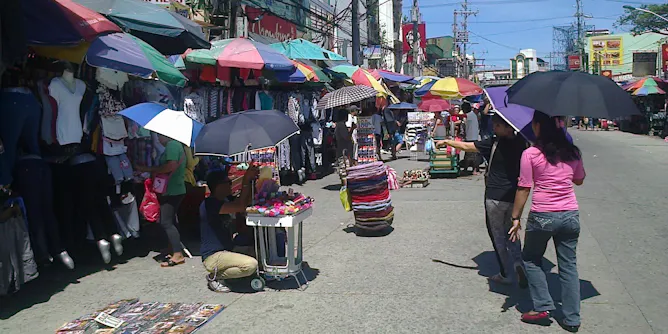
Street vendors are the most visible of the people who work in the informal sector – up to half the urban workforce in cities like Manila – but whose needs and rights receive no official recognition.
Articles on New Urban Agenda
Displaying all articles
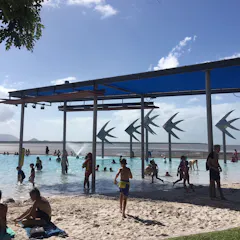
There’s no such thing as a one-size-fits-all plan for sustainable, healthy urban living. Urban diaries help identify what works – and doesn’t work – for tropical cities like Cairns or Townsville.
Australia and other United Nations member states signed up to the New Urban Agenda more than a year ago. But how well is health being integrated into sustainable urban development?
By drawing on common values, faith communities can take a lead in making cities fairer, safer, accessible and affordable for all.
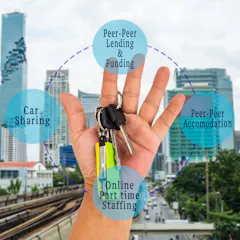
In cities dominated by globalised market forces, how can we achieve social equity and justice? For any sharing economy idea, we need to ask what will it do to fix the big problems confronting us all.

Developing principles to create cities that are good for all is not easy. Who decides what is good? And for whom? We desperately need a big and general public discussion about this.

Urban green spaces are most effective at delivering their full range of health, social and environmental benefits when physical improvement of the space is coupled with social engagement.
Planning for the future of our cities can no longer ignore growing social, economic and environmental issues that are all exacerbated by wealth and income inequalities.
The increasing global focus on essential services and public space as a key combination for successful city-making is relevant to fast-growing Australian cities too.
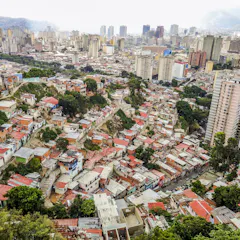
Informal settlements are often undocumented or hidden on official maps, but they house about a billion people worldwide. Their existence demands a more sophisticated approach to urban development.
Our cities need to become much more efficient not just to conserve precious resources but to improve the economy, wellbeing and resilience to environmental change and disasters.

Nation states, UN bodies and civil society gathered in Quito for Habitat III to adopt the New Urban Agenda. So how will the UN’s new global urban roadmap transform our cities over the next 20 years?
As many as 30,000 delegates gathered to decide the future of cities for the next 20 years – here’s how it played out.
Over the next 20 years, one global strategy will help to shape our cities. Here’s what it says about women.
Three researchers examine the big challenges of urban development: from city leadership to lock-ins.
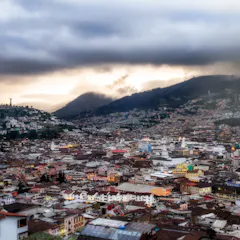
This global conference will set out how cities should develop over the next 20 years, tackling some of humankind’s toughest issues.
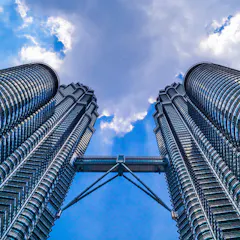
Like a 5D movie on speed, the city today defies conventional boundaries. This raises new questions about what we imagine to be ‘the city’ – and how we as a democratic community can shape it.
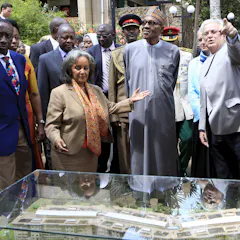
Two years of marathon negotiations have finally yielded agreement in last-minute meetings in New York on the New Urban Agenda to be adopted at the Habitat III summit in Quito in October.
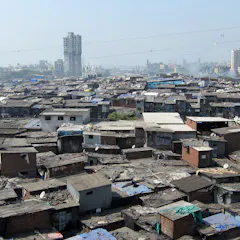
More than 25,000 delegates will meet in Quito in October to set out a New Urban Agenda for the UN, to be implemented over the next 20 years. But Australia is yet to play a major role in the process.
Top contributors
-

Associate Director (International) - Melbourne Centre for Cities, The University of Melbourne
-
Associate Professor in Construction and Environmental Performance, The University of Melbourne
-
Monash University
-
Senior Lecturer, Crawford School of Public Policy, Australian National University
-
Vice-Chancellor's Senior Research Fellow, RMIT University
-
Associate Deputy Vice Chancellor in Research & Innovation, RMIT University
-
Research Associate, Urban Institute, University of Sheffield, UCL
-
Professor Sustainability and Urban Governance, RMIT University
-
Head of the Department of Architecture, Monash University
-
PhD Candidate, Swinburne University of Technology
-
Professor of Geography, Queen Mary University of London
-
Senior Lecturer – Environmental Health, James Cook University
-
Project Officer – Ecocity, Melbourne Sustainable Society Institute, The University of Melbourne
-
Paul James is a Friend of The Conversation.
Professor of Globalization and Cultural Diversity, Western Sydney University
-
Lecturer and Researcher, Urban Design and Town Planning, University of the Sunshine Coast