

In The Twilight Before the Storm, global strategist Viktor Shvets charts the shift from the fractured 1930s to today’s crisis culture.
Articles on Neoliberalism
Displaying 1 - 20 of 218 articles

The reluctance to use written legal documentation isn’t primarily rooted in Confucian values, as scholars have commonly argued. It’s a response to structural inequality.

In our age of ‘hyperpolitics’, what does meaningful change look like? Anton Jäger’s buzzy new book has some answers – but could go harder on neoliberalism.

There’s a widening divide between two Canadas: one marked by working-class misery and homelessness; the other by the unprecedented prosperity of the uber-wealthy. This wealth gap is unsustainable.

We Should Be So Lucky is a missed opportunity to analyse the contradictory effects of the neoliberal revolution – and its challenge to founding Australian ideals.

A look at the 1960s founding vision for Ontario’s college system should inspire calling on leaders to support a truly public system of higher education, accessible in all regions.
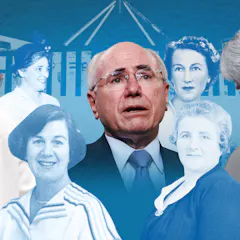
The Liberal Party used to lead the way on female representation and socially liberal policies. History shows us where the party’s “women problem” began.
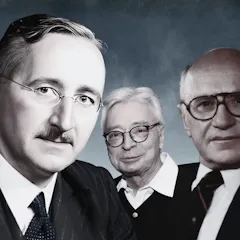
When the Cold War came to an end, neoliberals appealed to nature in order to justify inequality.

As Canada continues to welcome international students, it’s essential to uphold their rights.

Austerity sounds like it should be about governments cutting costs and spending less. But it’s more about who controls ever-expanding public spending – and who doesn’t.

Part of a eugenic logic is the ongoing belief that erasing disability and people with disabilities is a desirable and commonsense objective.

We observed a strong link between a neoliberal worldview and lack of support for the climate policies in our study.

Neoliberalism encourages us to see ourselves as isolated individuals, responsible for our own success or failure.
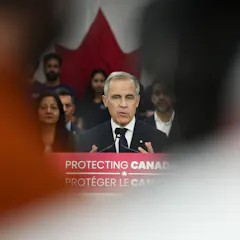
Canada faces interconnected challenges of climate instability and social inequality, and our current economic approach may be part of the problem.
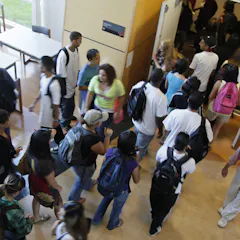
Only by considering conditions specific to post-secondary education today can educators reimagine more engaged and critical learning.

As Trump prepares for his inauguration, the world is preparing itself as it enters the beginning of the second Trump Revolution.

In contrast to other critiques of capitalism that tend to highlight the players behind the scenes, ‘Squid Game’ Season 2 unearths why people play along with the system in the first place.

The US and others have been shifting the rules of the global free trade system for years. New Zealand can’t ignore the risks much longer.

Certain ideas have shaped the success and optimism of state-led development in Ethiopia and Rwanda in the first two decades of the 21st century.

The most important value, Joseph Stiglitz argues, is freedom. But his is a broadened concept of freedom.
Top contributors
-

Distinguished Reserach Professor, Southern Centre for Inequality Studies, University of the Witwatersrand
-
Emeritus Professor of Law, University of Auckland, Waipapa Taumata Rau
-
Lecturer in Politics, Te Kunenga ki Pūrehuroa – Massey University
-
Professorial Fellow, Jumbunna IHL, University of Technology Sydney
-
Emerita Professor of Politics, Adelaide University
-
Professor of Political Economy, University of the Witwatersrand
-
Professor of Organisational Studies, University of Sydney
-
Assistant researcher, University of Sydney
-
Senior Lecturer in Economics, Bournemouth University
-
Scientia Professor of Economics, UNSW
-
Associate Professor in American & Canadian Studies, University of Nottingham
-
Professor of Public Affairs, Tshwane University of Technology
-
Professor of Global Politics, University of Southampton
-
Postgraduate Associate at the Institute of Latin American Studies, La Trobe University
-
Dean, Institute of Human and Social sciences, Scuola Normale Superiore, Florence