

The Pilgrims repeatedly thanked God for their good fortune. But without two earlier developments, the entire undertaking at New Plymouth would have likely failed.
Articles on Nature
Displaying 301 - 320 of 382 articles
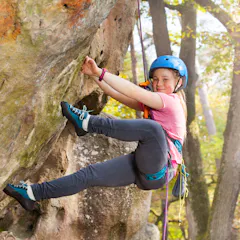
Women and adolescent girls say that being outdoors in nature offers opportunities to gain confidence in physical activity.
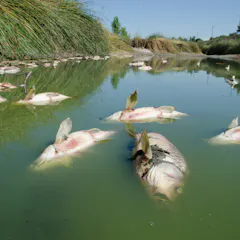
A new report by the WWF finds 60% losses in vertebrate populations since 1970.
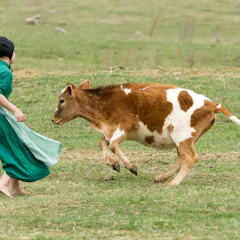
Many Americans view the Amish as living simply and in touch with the land, but their views about the environment are complicated and not always ‘green.’
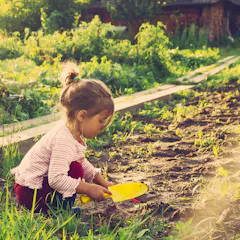
Being outside helps kids learn. Here are some ways to get them to spend more time in nature.
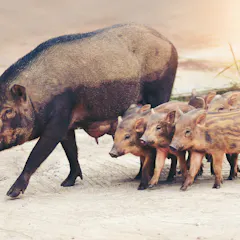
Seems humans aren’t the only ones moving into cities in ever greater numbers.

From wealth, to the natural world, to genes and intelligence, a podcast exploring the theme of inheritance.

Our use of social media platforms such as Instagram is changing our relationship to nature, and – at least for now – not necessarily for the better.

Faced with a drought, it’s tempting for cities to reduce the amount of space that needs water. But this is not a good idea.
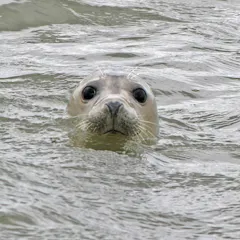
Social media data can reveal where people are watching nature – and consequently where animals may be under pressure.

A natural view of the world appealed to Albert Einstein.

Parks should service a variety of needs, not just cater to one group of people.

Why do whale sharks come together at just 20 locations around the globe?

Many studies have shown that time outdoors is good for our physical health. Three wilderness education experts explain why periods alone in nature also provide mental and spiritual benefits.
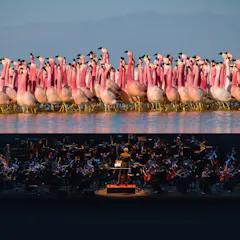
Planet Earth II Live fuses footage from the BBC series with live orchestration. Despite some narrative flaws, it’s a stirring call to look after our environment.

In an increasingly urban world, trees can make a major difference. One study found that, for every dollar invested in planting, megacities saw a $2.50 return on their investment.
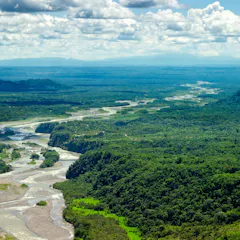
A mythical Amazonia of lost tribes or lost cities is easy to challenge on a factual basis, but such objections appear rather feeble in the face of the power of cliché.
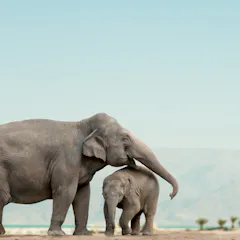
Capuchin monkeys understand fairness, sheep recognise their friends, rats make sacrifices for buddies. Yes, animals are sentient. Here’s the science.

Robots, like drones, are filtering the natural world through algorithms and turning the world into data.
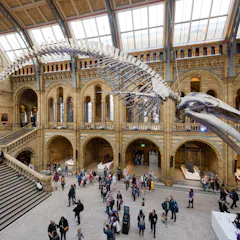
Museums are not apolitical, and they are not entirely scientific. As such, they don’t really represent reality.
Top contributors
-

Principal Lecturer in Psychology, University of Brighton
-
Professor in Wildlife Ecology and Conservation, School of Life & Environmental Sciences, Deakin University
-
Professor of Applied Ecology, University of Reading
-
Professor, Urban Ecology and Biodiversity, The University of Melbourne; RMIT University
-
Visiting Fellow, The Media School, Bournemouth University
-
Professor, School of Life and Environmental Sciences, University of Sydney
-
Postdoctoral Research Associate at the School of Biosciences, Cardiff University
-
Principal Lecturer in Wildlife Conservation, Nottingham Trent University
-
Adjunct assistant professor, North Carolina State University
-
Professor of the Psychology of Time, Liverpool John Moores University
-
Assistant Director of the University Museum of Zoology, Cambridge, University of Cambridge
-
Professor of Architecture, University of Hawaii
-
Honorary Associate Professor, Forest Measurement and Management, Fenner School of Environment and Society, Australian National University
-
Senior Lecturer in Applied Mathematics, Cardiff University
-
Professor of Global Politics and Director of UCL Global Governance Institute, UCL