
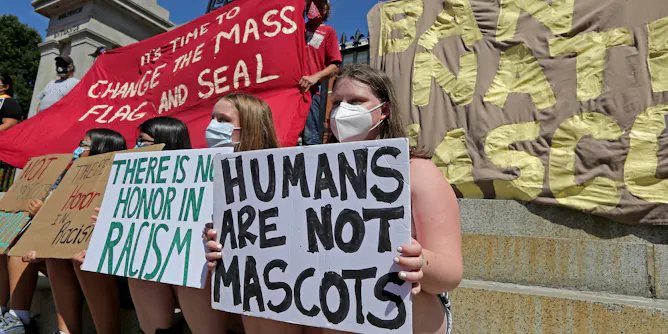
Native Americans are slowly ridding America of demeaning caricatures. It’s unclear whether Massachusetts will do the same and remake its flag that now glorifies violence committed by colonizers.
Articles on Native Americans
Displaying 81 - 100 of 220 articles

Access to voting materials in a citizen’s native language helps boost involvement and voter turnout.
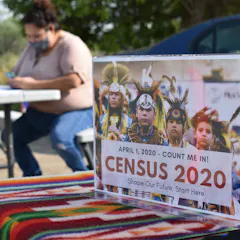
They’re called ‘pretendians’ – people who long identified as white but are now claiming to be Native American. In the last US Census, the number of Native Americans almost doubled because of them.
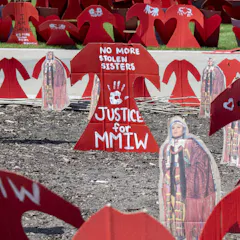
Thousands of cases of missing and murdered Native Americans remain unsolved. A scarcity of reliable data is only part of the problem, a tribal justice scholar explains.
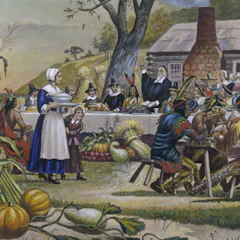
The communion between Native Americans and the Pilgrims makes for a compelling narrative. But it masks the suspicions and brewing violence that were far more representative of the era.
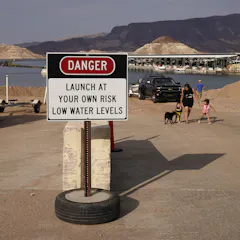
A Western scholar proposes allocating water from the Colorado River based on percentages of its actual flow instead of fixed amounts that exceed what’s there – and including tribes this time.
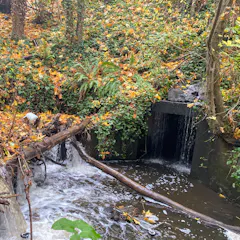
Salmon migrate thousands of miles from inland streams to the ocean and back. The newly enacted infrastructure bill includes funding to help salmon and other wild species on their way.
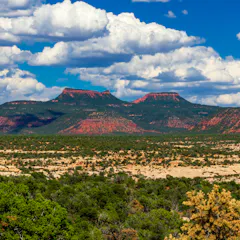
The Biden administration is restoring full protection to three national monuments that President Trump sought to cut down drastically.
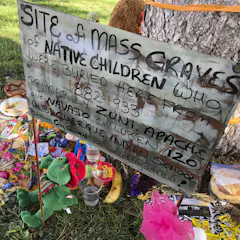
For Indigenous Peoples Day, a scholar of Native American studies explains why understanding the tragic history of Indian boarding schools is important for healing to take place.
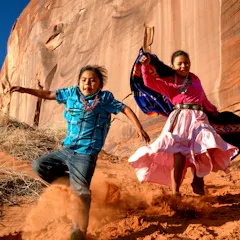
A growing number of states are recognizing Indigenous Peoples Day on what has traditionally been Columbus Day. An education scholar weighs in on what this means for America’s schools.
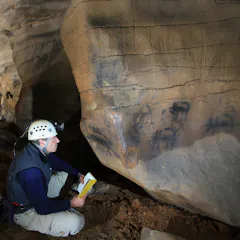
For thousands of years, Native Americans left their artistic mark deep within caves in the American Southeast. It wasn’t until 1980 that these ancient visual expressions were known to archaeologists.
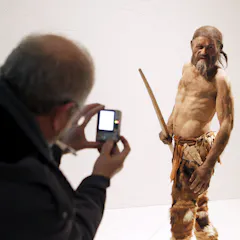
When the 5,300-year-old mummy of Ötzi the Iceman was found 30 years ago, researchers found 61 tattoos on it. A scholar explains how tattoos have been a sacred part of many cultures across the world.
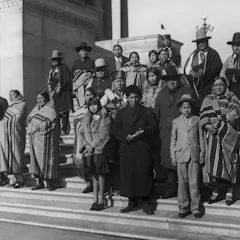
The discovery of oil and gas made members of the Osage Nation among the richest people in the world. But it also made them targets for exploitation.
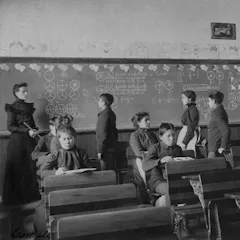
Ernest Knocks Off was 18 when he arrived at the Carlisle boarding school in 1879. He was one of many young Native people who fought – in his case, to the death – to retain their language and culture.

The Tongass National Forest in Alaska, a focus of political battles over old-growth logging and road-building in forests for decades, has received new protection from the Biden administration.
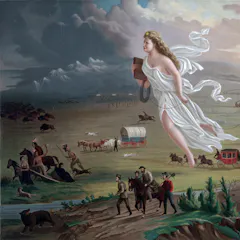
Government investment in roads, railroads and other public services has always involved social programming, both for good and for ill.
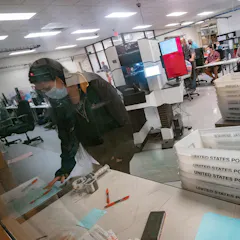
In Brnovich v. DNC, the court will decide whether two Arizona rules unfairly hurt poor, minority and rural voters. The ruling could determine the fate of many states’ restrictive new voting laws.
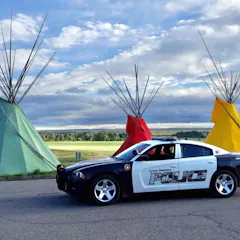
A defendant who is not a Native American claimed tribal police had no power over him, even on tribal land. The Supreme Court disagreed.
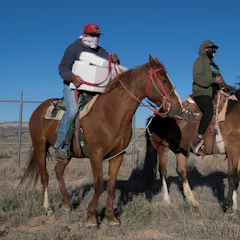
Indigenous people in the US have high rates of food insecurity and dietary-related health problems. Any attempts to address the problem must start with land justice, argues a scholar of Native health and food.
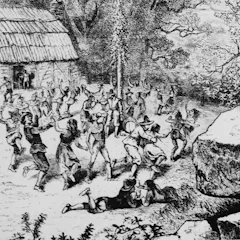
The Puritans had little tolerance for those who didn’t conform to their vision of the world.
Top contributors
-

Professor of History, University of Illinois Urbana-Champaign
-
Distinguished Professor and Professor of the Humanities, USC Dornsife College of Letters, Arts and Sciences
-
Professor of Law and Adjunct Professor of Political Science, Wayne State University
-
Associate Research Professor of Anthropology, University of Colorado Denver
-
Assistant Professor, History, Coventry University
-
Associate Professor of Indigenous Literatures, University of Dayton
-
Associate Professor of Native American and Indigenous Studies, San José State University
-
Assistant Professor of Anthropology, Florida State University
-
Assistant Curator for History and Culture, National Museum of the American Indian, Smithsonian Institution
-
Indigenous Governance Program Manager and Professor of Practice, University of Arizona
-
Professor of English and Literary Arts, University of Denver
-
Professor of Environment and Sustainability, University of Michigan
-
Associate Professor in Modern US History, University of Bristol
-
Executive Director, American Indian Policy Institute, Arizona State University
-
Lecturer, Post-1945 US History and Transatlantic Relations, University of Stirling