
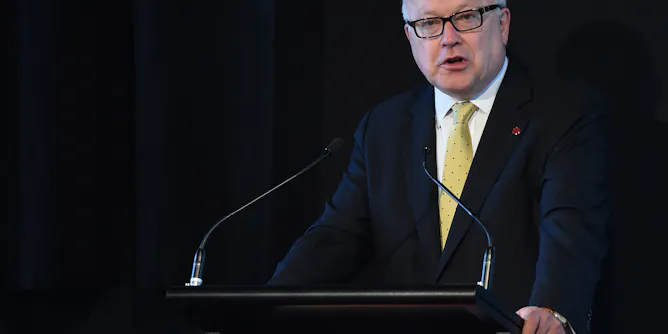
In its rush to deny overseas fighters their Australian citizenship, the government must ensure it doesn’t end up endorsing the very thing it wants to repudiate.
Articles on National security
Displaying 381 - 400 of 482 articles
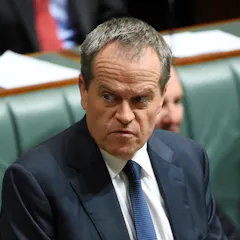
When Bill Shorten was asked by the Royal Commission into union corruption to appear before it, he said he wouldn’t be commenting on allegations about his time as an Australian Workers Union official until he gave evidence.
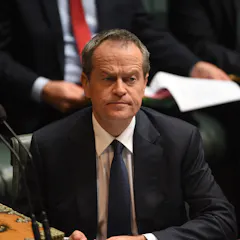
Bill Shorten’s July 8 appearance before the royal commission into union corruption is crucial for his credibility and has major implications for his leadership.
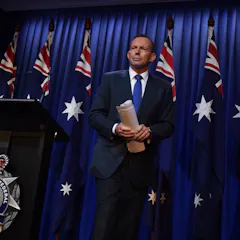
If governments are to maintain public support for their military ventures, war narratives must be kept simple and consistent. The underlying message must not change: the West is always the innocent victim of terrorism, never its perpetrator.
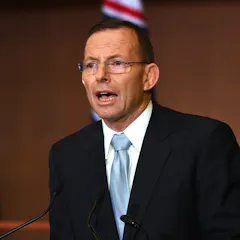
The Abbott government’s anti-terrorism pitch is tapping into and feeding a deep vein of national security fear in the Australian population.
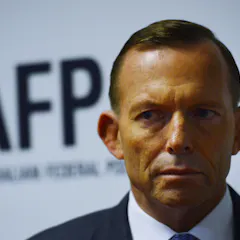
The government goes into the parliamentary session’s final fortnight on the back foot over two highly contentious issues: its citizenship legislation and Indonesia’s demand to know whether Australia paid…
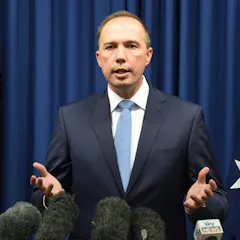
Simply having judicial review for the contentious power to strip citizenship from dual nationals suspected of involvement with terrorism – without independent merits review – is far from reasonable.
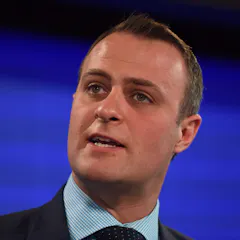
It’s awkward for the government – but very good for the public debate – that the Coalition’s citizenship-stripping initiative coincides with the 800th anniversary of the Magna Carta. Next Monday’s birthday…

Most of the government’s discussion paper is devoted to framing citizenship in a way that is conducive to its proposal to strip dual nationals involved in terrorist activities of their citizenship.

Liberal backbencher Craig Laundy, who won the marginal seat of Reid from Labor in 2013, this week started making videos that he’s promoting as “spin-free”.

Almost 1000 years after their ruler demanded every detail of serfs’ lives, the digital age and mass surveillance are creating a new and undemocratic imbalance between citizens and those with power over them.
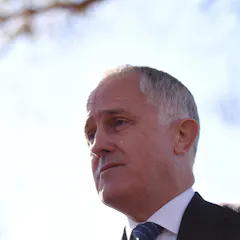
Malcolm Turnbull has laid down some fundamental principles for the citizenship debate in an intervention that seems driven by conviction and wanting to explain his position rather than a view to self-interest…
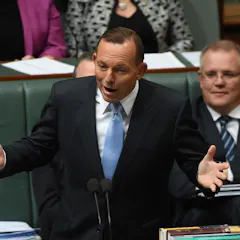
Quizzed about last week’s sensational cabinet leak, Tony Abbott says people around Parliament House want to focus on “process but the public want the government to focus on "outcomes”.
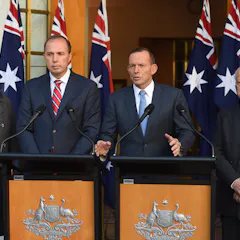
A number of countries – including Canada, France, the US and the UK – allow for the deprivation of citizenship on national security grounds. But the scope of ministerial discretion varies significantly.
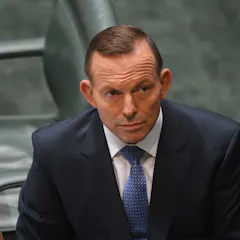
The Abbott government desperately tries, but nearly always fails, to run to a tight script.

Simplistic views of terrorist recruitment focus on online messages to Western youth. Foreign fighters are coming from many other countries, lured by many means, and we need more sophisticated responses.
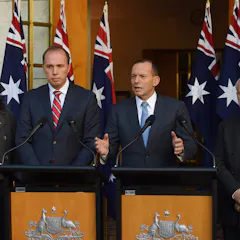
The government will soon introduce legislation to give the immigration minister wide discretionary power to strip Australian citizenship from dual nationals involved in terrorist activities.

The Second Circuit Court of Appeals went beyond striking down the NSA’s metadata surveillance program; the court also created a road map for Congress to balance privacy and security issues
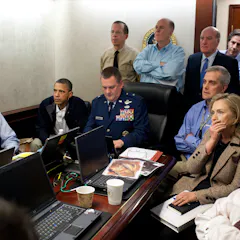
Memories of the killing of Osama bin Laden are fading, but the legacies of al-Qaeda and the war on terror’s many ‘own goals’ haunt us in the form of multiplying threats and lost civil liberties.
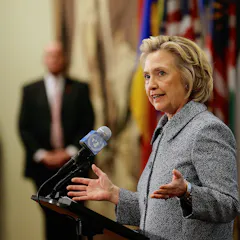
The idea of the right to know as the ‘lifeblood of democracy’ is a surprisingly modern development. And in an age when transparency is prized, privacy and secrecy can still be justified in many cases.
Top contributors
-

Professorial Fellow, University of Canberra
-
Associate Professor, Griffith Criminology Institute, Griffith University
-
Senior Research Associate, Andrew & Renata Kaldor Centre for International Refugee Law, UNSW Law School, UNSW
-
Associate Professor, TC Beirne School of Law, The University of Queensland
-
Visiting Fellow, Department of Political and Social Change, The Philippines Institute, Australian National University
-
Assistant Professor in Public Law and Human Rights, Durham University
-
Vice-Chancellor and President, University of Canberra
-
Professor, Strategic and Defence Studies Centre, Australian National University
-
Associate Professor, Law School, The University of Western Australia
-
Senior Lecturer in Politics and International Relations, University of Notre Dame Australia
-
Teaching Professor of Computer Science and Electrical Engineering, and Associate Director, UMBC Cybersecurity Institute, University of Maryland, Baltimore County
-
Senior Research Fellow, Centre for Advancing Journalism, The University of Melbourne
-
Chair in Global Islamic Politics, Alfred Deakin Institute for Citizenship and Globalisation, Deakin University
-
Research Fellow, Griffith University
-
Professor of the Practice of Political Science and International Relations, USC Dornsife College of Letters, Arts and Sciences