

There is still much we do not know about lone-wolf terrorism. But what we do know may provide investigators with a sort of detection system to prevent attacks from taking place.
Articles on National security
Displaying 361 - 380 of 482 articles

Should Australia’s law enforcement agencies be allowed to use images supplied for driving licenses, passports and other identification documents as part of a facial recognition search for criminals?
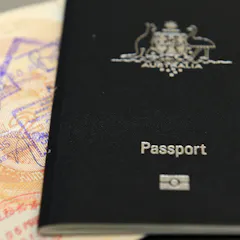
A parliamentary committee report recommends several welcome improvements to the government’s citizenship-stripping bill. However, several important concerns remain.
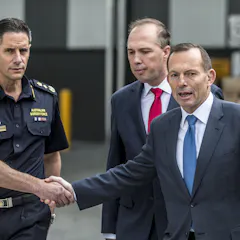
While the Australian Border Force’s Operation Fortitude caused an outcry, people might be surprised at the extent of official powers to check their immigration status in a range of circumstances.
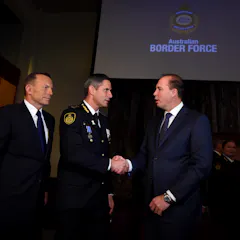
The Australian Border Force represents a significant departure from earlier ways of managing the border.
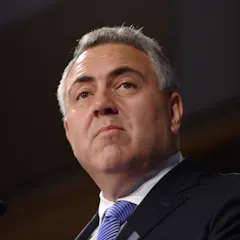
There’s an ad on TV that starts: “If you were me, what would you do next?” If I were Tony Abbott, I’d scheme to get a new treasurer without the existing one blowing me up.
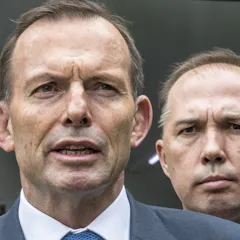
Many commentators on climate change articles in this publication have abandoned hope that effective action on climate change will happen under an Abbott government. The only solution for those concerned…
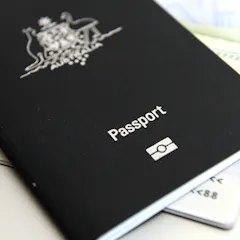
Multiple concerns have been raised about the citizenship-stripping bill’s inattention to human rights, its differential impact upon dual and sole nationals, and its potential application to persons who commit relatively minor crimes.
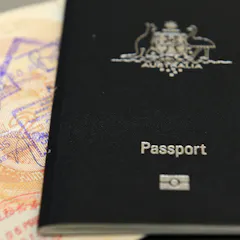
The shift to Immigration and Border Protection – and the creation of the Australian Border Force – is the most profound change in the Department of Immigration’s history.
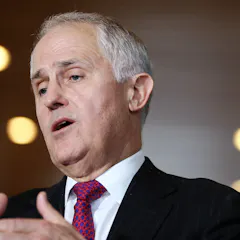
The continual use of colourful language when talking about terrorism exaggerates the threat in Australia and could play into the hands of Islamic State’s sophisticated recruitment strategies.
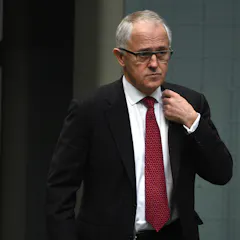
Malcolm Turnbull has warned against overestimating the Islamic State threat and amplifying its significance, in a speech contrasting sharply with Tony Abbott’s declarations.

Australia should learn from the UK’s mistakes if taking a leaf out of its book on citizenship reform.

Whatever we think of the family of foreign fighter Khaled Sharrouf or their circumstances, they enjoy the right to return on the same footing as every other Australian citizen.
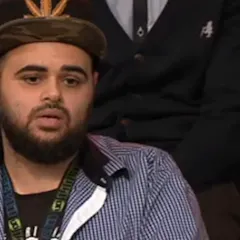
It is important that we do not entirely dismiss Zaky Mallah’s comments on Q&A. He sheds light on a seductive mechanism for young Muslims that is real.
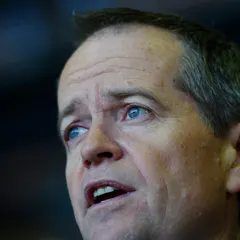
The parliamentary budget session has ended with Tony Abbott having reason to feel a good deal more confident than Bill Shorten.
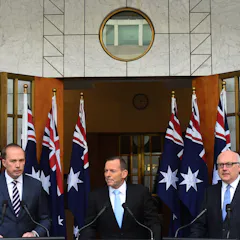
Should the bill be enacted in its current form, Australian citizenship will be able to be stripped from dual nationals by bureaucratic determination for conduct that is defined with reference to the criminal law.

Zaky Mallah, the former terrorism suspect at the centre of the Q&A storm, travelled to the studio in a free bus the program puts on to take audience members from Sydney’s western suburbs
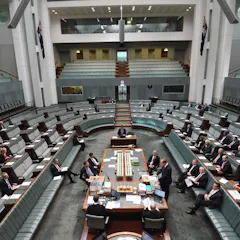
No-one is inclined to refer to human rights in public debate in Australia when its leaders either avoid the idea or attack it, and the news media are silent on it.
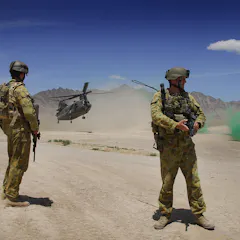
Nations such as the United States have treated climate change as a major security threat for years. The Australian government’s forthcoming Defence White Paper cannot afford to ignore the issue.

Foreign fighters have always posed a dual challenge: how to stop them going and what to do if they return. History offers lessons on managing these problems, including that it’s hard to stop them leaving.
Top contributors
-

Professorial Fellow, University of Canberra
-
Associate Professor, Griffith Criminology Institute, Griffith University
-
Senior Research Associate, Andrew & Renata Kaldor Centre for International Refugee Law, UNSW Law School, UNSW
-
Associate Professor, TC Beirne School of Law, The University of Queensland
-
Visiting Fellow, Department of Political and Social Change, The Philippines Institute, Australian National University
-
Assistant Professor in Public Law and Human Rights, Durham University
-
Vice-Chancellor and President, University of Canberra
-
Professor, Strategic and Defence Studies Centre, Australian National University
-
Associate Professor, Law School, The University of Western Australia
-
Senior Lecturer in Politics and International Relations, University of Notre Dame Australia
-
Teaching Professor of Computer Science and Electrical Engineering, and Associate Director, UMBC Cybersecurity Institute, University of Maryland, Baltimore County
-
Senior Research Fellow, Centre for Advancing Journalism, The University of Melbourne
-
Chair in Global Islamic Politics, Alfred Deakin Institute for Citizenship and Globalisation, Deakin University
-
Research Fellow, Griffith University
-
Professor of the Practice of Political Science and International Relations, USC Dornsife College of Letters, Arts and Sciences