
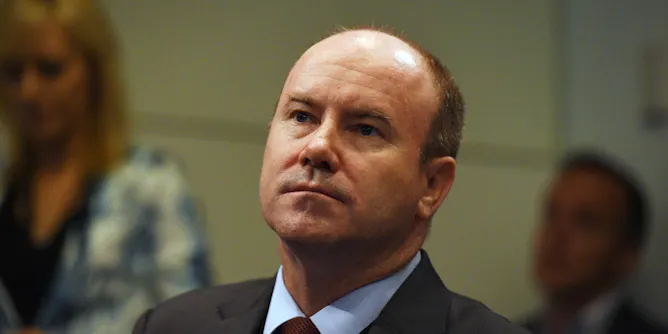
The scheme will seek to identify people not on the radar of counter-terrorism authorities.
Articles on National security
Displaying 321 - 340 of 482 articles

That Australia has not suffered a successful terrorist attack on its aviation industry is testament to the resilience of our security system.
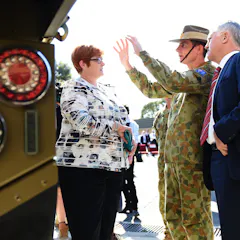
The stakes around Australia’s defence appear higher and the urgency greater than at any time since the height of the Cold War.

Violent Islamist extremism appears to have reached a crisis point in Europe with a “perfect storm” of circumstances, Malcolm Turnbull has said.
The Australian Law Reform Commission has given George Brandis a report that does all that it reasonably could, while falling well short of what it was asked to do.

In an era of ever-increasing counter-terrorism powers, what is Andrew Nikolic’s appointment to a powerful parliamentary committee likely to mean for its scrutiny of national security legislation?
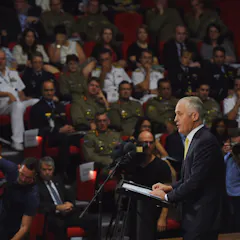
The Turnbull government’s defence white paper identifies key risks to Australia’s security environment in the next two decades.
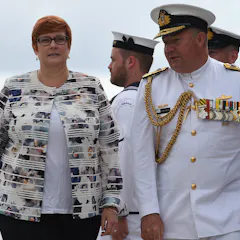
The defence white paper will pledge an additional $29.9 billion in defence spending over the coming decade and support for businesses to innovate in areas such as cyber security and aeronautics.

A ‘draft’ cabinet document suggests the idea that refugees are a potential source of terrorism and radicalisation will soon shape Australia’s humanitarian resettlement policy.

Federal networks need stronger cybersecurity measures than most organizations, but have not yet gotten the budget or staffing commitments that would protect them properly.

Until a public interest exemption is included in Section 35P, the offence will continue to impact press freedom and have a chilling effect on media organisations’ ability to report on ASIO’s activities.
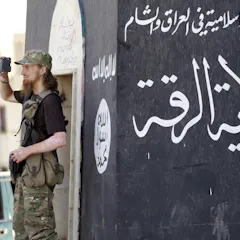
Islamic State uses propaganda to coax its enemies into misguided politico-military and strategic communications efforts.
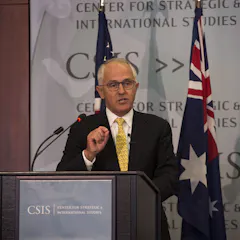
Malcolm Turnbull has called for the campaign against Islamic State to considerably improve its use of social media.
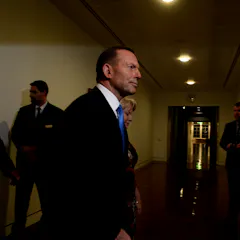
2015 started as it finished, with terrorist atrocities, intractable conflicts and political upheavals that toppled several leaders, including Australia’s prime minister, Tony Abbott.
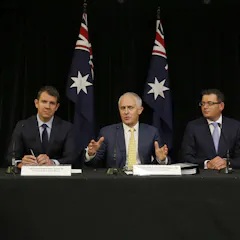
Detaining persons convicted of terrorist offences for lengthy periods after they have served their time could risk radicalising a section of the community who see the measure as unjust.
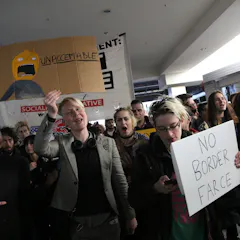
The government’s uncontested assessment of national interest and security often trumps the rule of domestic and international law, as well as Australia’s obligations under human rights treaties.
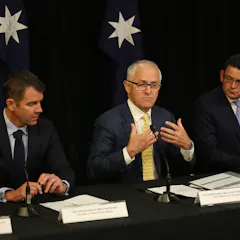
State and federal leaders seem as far away as ever from an agreement on the direction of tax reform.
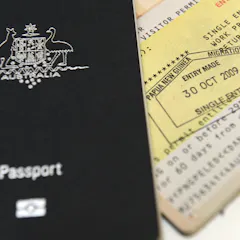
If we are content to sanction, disapprove and respond to sole nationals committing terror-related offences without revoking their citizenship, why is revocation necessary for dual nationals?
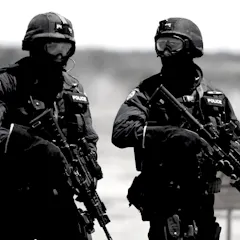
Australian society has become dangerously accustomed to our politicians using “national security” as an excuse for the obfuscation of sticky truths.
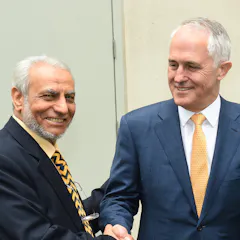
The divide within government ranks over handling the terrorism issue has been highlighted by the tough words at the weekend from Resources Minister Josh Frydenberg.
Top contributors
-

Professorial Fellow, University of Canberra
-
Associate Professor, Griffith Criminology Institute, Griffith University
-
Senior Research Associate, Andrew & Renata Kaldor Centre for International Refugee Law, UNSW Law School, UNSW
-
Associate Professor, TC Beirne School of Law, The University of Queensland
-
Visiting Fellow, Department of Political and Social Change, The Philippines Institute, Australian National University
-
Assistant Professor in Public Law and Human Rights, Durham University
-
Vice-Chancellor and President, University of Canberra
-
Professor, Strategic and Defence Studies Centre, Australian National University
-
Associate Professor, Law School, The University of Western Australia
-
Senior Lecturer in Politics and International Relations, University of Notre Dame Australia
-
Teaching Professor of Computer Science and Electrical Engineering, and Associate Director, UMBC Cybersecurity Institute, University of Maryland, Baltimore County
-
Senior Research Fellow, Centre for Advancing Journalism, The University of Melbourne
-
Chair in Global Islamic Politics, Alfred Deakin Institute for Citizenship and Globalisation, Deakin University
-
Research Fellow, Griffith University
-
Professor of the Practice of Political Science and International Relations, USC Dornsife College of Letters, Arts and Sciences