
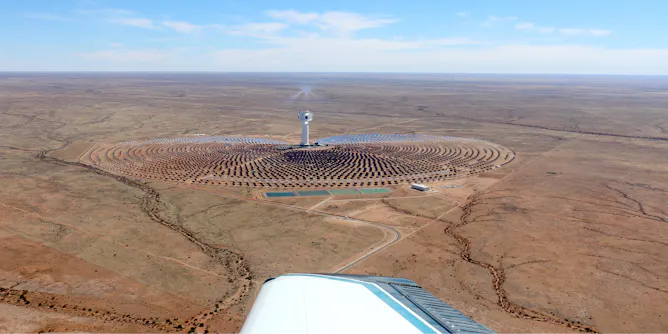
South Africa is struggling to move to renewable energy because of: Eskom’s dominance, weak planning, a poor grid, failing municipal networks and unused solar.
Articles on National grid
Displaying 1 - 20 of 24 articles
Unlike wind and solar which are weather-dependent sources of renewable energy, geothermal heat can produce energy steadily, day and night, all year round.
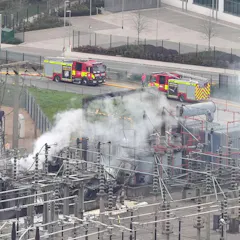
The airport is part of the UK’s critical national infrastructure.

If every car was electric, every single power station in the UK could be devoted entirely to powering them and it still wouldn’t be enough.
Increased investment in electricity generation, transmission and storage has led to a more positive outlook for the reliability of the system – if these projects are delivered on time.

The new government wants zero carbon power by 2030 – here’s what needs to happen.

Alberta’s experiment with voluntary ‘switching off’ was a success both in terms of saving electricity and in showcasing the power of proactive informed action to address the climate crisis.

A study of 230 electric vehicles found only 25% of charging happens during peak demand periods. Their patterns of use also mean spare battery capacity could be fed into the grid at these times.

The government is rolling out smart meters across the UK, but at present they are providing households with little benefit.
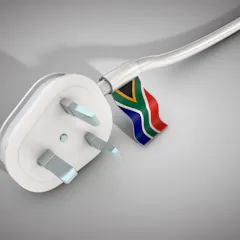
If South Africa fails to implement the 2019 Integrated Resource Plan, it will lead to the demise of Eskom as an energy producer as users turn to alternative electricity sources.
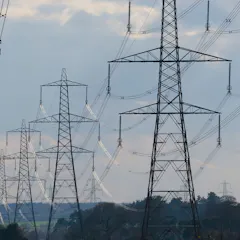
Failure to make the most of Britain’s abundant renewables will mean a costly and unreliable energy supply.
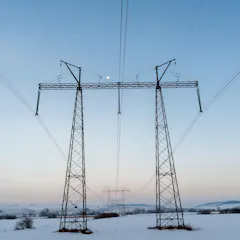
It’s evidence of political solidarity and a strengthening of ties between Ukraine and the EU.
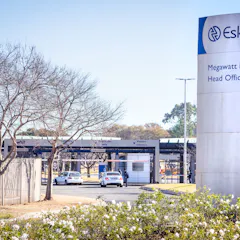
Eskom’s CEO talks debt, power cuts and green energy.
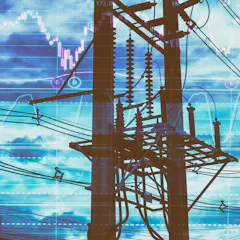
The cost of decarbonising the UK’s energy system is falling disproportionately on the poorest.
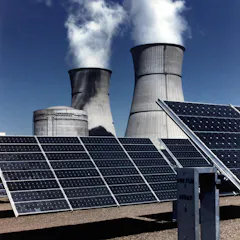
Low-carbon energy sources aren’t all equally well-suited to getting us to net-zero emissions.
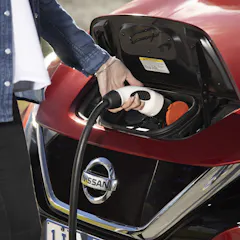
Electric vehicles are still relatively expensive but a trial to help them power the national grid in times of need could see owners being paid. That could make them a lot more attractive.

Consumers can play their part in reducing carbon emissions by choosing to shift their energy use to when renewable generation is at its daily peak.
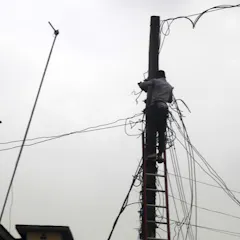
The centralised regulation of electric power in Nigeria is stalling progress in the sector. To achieve stable power supply, the country must obey its constitution and decentralise regulation.
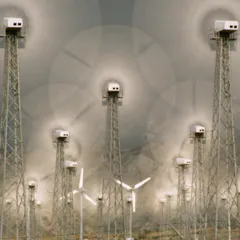
Wind and solar power can be intermittent. Should our usage be too?

How the internet has made us terrifyingly vulnerable.
Top contributors
-

Professor in Practice, Department of Engineering, Durham University
-
Associate Professor of Energy/Electricity Law, University of Lagos
-
PhD Researcher, University of Sussex
-
Head, The Cyber Academy, Edinburgh Napier University
-
Professor Global Energy and Resources, UCL
-
Professor of Climate Politics, Cardiff University
-
PhD student, Swiss Graduate School of Public Administration (IDHEAP), Université de Lausanne
-
Professor in the Department of Anthropology, Director of Durham Energy Institute, Durham University
-
Visiting Senior Industrial Fellow in Electrical Engineering, University of Bath
-
Postdoctoral Researcher on Flexibility in Energy Demand, University of Reading
-
Head of Energy Efficiency and Policy, Leeds Beckett University
-
Professor in Electrical Power and Energy Systems, University of Bath
-
Professor of Environmental Politics, University of Plymouth
-
Senior Research Fellow, Collaboration on Energy and Environmental Markets, UNSW
-
Professor of Energy Engineering, University of Glasgow