

Philadelphia police revoked the carry licenses of five members of the Black Lion Party for International Solidarity, citing ‘good cause.’ Is that constitutional?
Articles on Mutual aid
Displaying all articles

There are opportunities at every level of the US energy market to save consumers money – if governments, companies, communities and individuals choose to act.

When I talk about my anthropological fieldwork, many Americans are shocked to learn that “living on a nuclear test site” is even a logical statement.
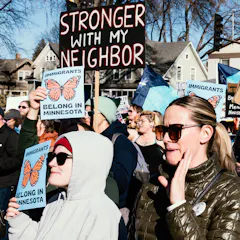
Minnesotans from all walks of life, including suburban moms, veterans and protest novices, have bucked their ‘nice’ stereotype to speak out.

Some Americans are discovering that monetary help they received from friends, neighbors or even strangers may be treated as taxable income.

Frank Capra’s dark vision of corruption and greed highlights both the dangers of concentrated power and the quiet effectiveness of collective action.

One of Latin America’s smallest nations has a robust network of housing cooperatives, which give access to permanent, affordable housing to citizens at a range of income levels.
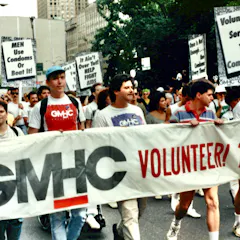
Despite funding cuts, political scapegoating and internal tensions, thousands of volunteers came together in the 1980s to provide care to a stigmatized community.
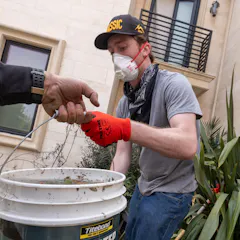
In emergencies, when every minute counts, research shows family, friends and neighbors are often saving lives. These local efforts go uncounted, yet they’re crucial.

This unofficial and invisible safety net is widespread and operates at all income levels. But no one knows the actual scale of this web of informal transactions.

Containing and extinguishing mega blazes like the one that reached Jasper is an all-hands-on-deck affair that draws upon expertise from around the world.
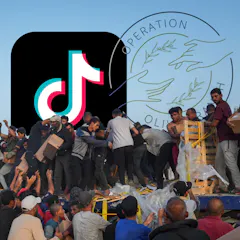
As the conflict continues, social media users are eschewing mainstream charities in favour of grassroots campaigns. It’s not without issues.

This isn’t the first time that US authorities have criminalized civil disobedience or framed grassroots organizing as a conspiracy.
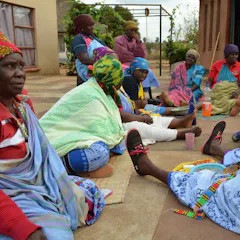
Crisis is a given for resource-poor households globally, but — in the absence of supportive policies — so are these careful strategies of self-provisioning and mutual aid.
Top contributors
-

Professor of Law, University of Wyoming; Institute for Humane Studies
-
Adjunct Lecturer of Law, University of Pennsylvania
-
Professor of Literary and Film Studies, University of North Texas
-
Assistant Professor of Sociology, Brandeis University
-
Research Fellow in the Australian Research Council Centre of Excellence for Automated Decision-Making and Society (ADM+S), and the Emerging Technologies Lab, Monash University
-
Professor of Colonial History, University of Victoria
-
Chair and Distinguished Professor of Environmental Studies, University of California, Santa Barbara
-
Assistant Professor, Disaster and Emergency Management, York University, Canada
-
Assistant Professor of Social Work, University of North Dakota
-
Professor of Sociology and Director, Disaster Research Center, University of Delaware
-
Director, Disaster Research Center and Professor, Public Policy & Administration, University of Delaware
-
Doctoral Student in Philanthropic Leadership, Indiana University
-
Associate Professor of Philanthropy, Indiana University; Vrije Universiteit Amsterdam
-
Ph.D. Candidate in Sociology, University of Minnesota
-
Research Assistant in Social Work, Binghamton University, State University of New York