
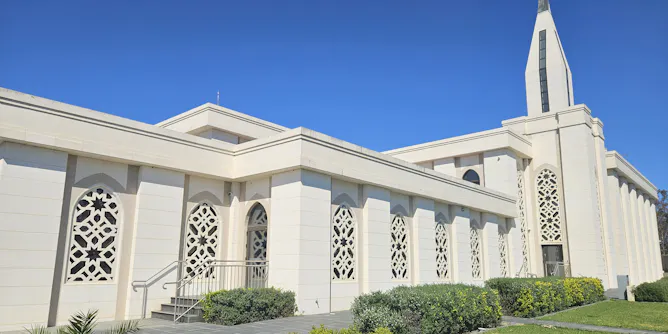
In some communities, cultural norms can make it hard for women to ask about sex, contraception, periods, pregnancy or birth in mainstream health-care settings.
Articles on Muslim women
Displaying 1 - 20 of 71 articles
One woman said her husband and his friends told her that, in Australia, police strip-search women who complain about domestic violence.

Research shows discrimination often reduces civic engagement among marginalized groups. These women are bucking that trend.
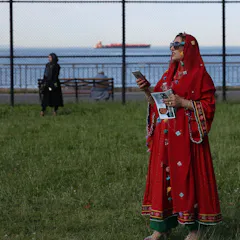
Civic engagement is more correlated with giving than religiosity, new research indicates.

Around the world, Muslim girls who wear hijabs are experiencing unique forms and heightened rates of gender and race-based violence.
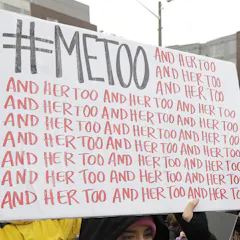
In minority faith groups that already face hate, women who have experienced harassment sometimes fear bringing negative attention to their community.
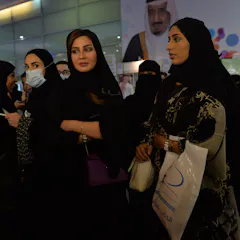
In some conservative countries, the abaya is part of expected dress. But in countries where Muslims are in the minority, the abaya can be a way for women to connect with their religious identity.
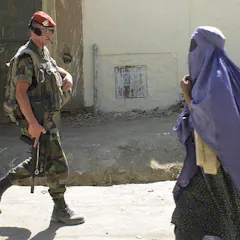
Pictures of women in war play a pivotal role in the battlefield of political ideas, argues a feminist historian who examines how images and attire are used and seen in war zones and occupied lands.

Bohra women’s use of social media to build businesses is an example of how religious communities can help women gain financial independence.

The Québec government thought it would Charter-proof its religious symbol law when it invoked the nothwithstanding clause. It was wrong.
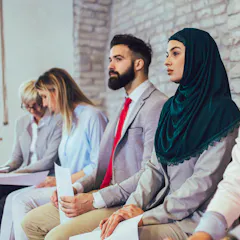
Study shows that so-called “socio-cultural attitudes” are not a plausible explanation for the Muslim penalty.
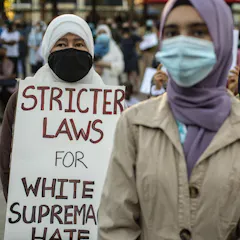
In today’s episode, we take a look at some ways lawmakers have legalized Islamophobia through niqab bans and other restrictive policies.
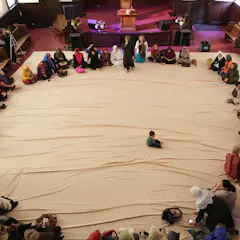
As Muslims congregate in their local mosques in communal prayer for Eid, the Women’s Mosque of America, located in Los Angeles, will provide an exclusive religious space for its female congregants.
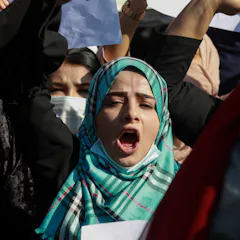
The age-old idea that Afghan women need rescuing from their men is a western construct that ignores the voices of Afghan women.

Day 5 our Understanding Islam series. For some Muslim women, wearing a hijab can be a religious act but Muslim women’s clothing isn’t entirely about faith. It has been used – and is still used – as an assertion of identity.
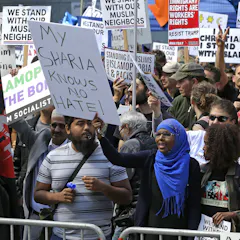
Day 6 of our Understanding Islam series. Sharia constitutes a broad set of rules that guide Muslims on how to lead an ethical life. The way Sharia is interpreted depends on who is using it and why.
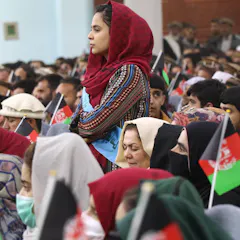
Burqas and male chaperones for women were features of the Taliban’s extremist rule of Afghanistan in the 1990s. Those policies are now back in some districts controlled by these Islamic militants.
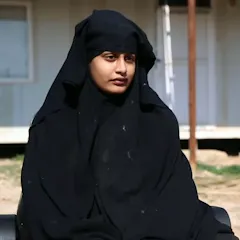
Comparisons between Begum’s Islamic garb and her new wardrobe suggest that Muslim women’s “liberation” depends on westernisation.
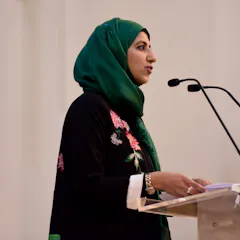
Complaints against BBC Radio 4’s Woman’s Hour over an interview about female leadership in Islam have revealed how complex the issue is

Muslim women say the practice of wearing masks has given them more confidence to wear face coverings in public.
Top contributors
-

Associate Professor of Psychology and Inclusion, University of Bristol
-
Visiting Scholar in Religious Studies and Gender, Northwestern University
-
Professor in Sociology, Loughborough University
-
Senior Lecturer & Head of the Europe Research Cluster in the Department of International Politics, City St George's, University of London
-
Assistant Professor of Sociology, UMass Amherst
-
Doctoral Candidate in Philanthropic Leadership, Indiana University
-
Senior Research Fellow, Sheffield Hallam University
-
PhD Candidate, Digital Media Research Centre, Queensland University of Technology
-
Professor of Philosophy of Education, Stellenbosch University
-
Professor of Sociology, Drew University
-
Assistant Professor of Sociology, University of Colorado Boulder
-
Associate Professor of Media and Communication at Monash University, Malaysia., Monash University
-
Senior Lecturer, Department of Sociology and Criminology, City St George's, University of London
-
Senior Lecturer in International Relations, York St John University
-
Reader, International Politics of the Middle East, University of Warwick