
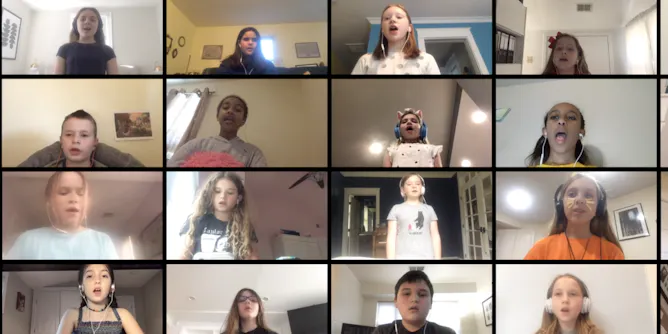
Much like what everyone in showbiz from Lady Gaga to Lang Lang seems to be doing, school-age music students are using apps and software to play instruments and sing together.
Articles on Music education
Displaying 21 - 40 of 49 articles

From livening up household chores to connecting kids with relatives who are far away, music can a play a vital role.
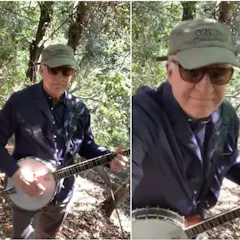
Through social media experiences, both professional and amateur musicians-in-isolation offer community expressions of human spirit, and audiences appreciate their gifts.

Penn State researchers who call themselves the ‘Happy Birthday Club’ suggest that we shouldn’t make judgments about our singing abilities based on familiar tunes that happen to be really hard.

Prince was a musical genius, but he didn’t come of age in a vacuum. A human geographer explains how Minneapolis’ unique musical culture nurtured and inspired the budding star.

NSW schools are losing senior music students in significant numbers. Teachers say they’re dropping the subject in year 12 to ensure a higher ATAR.
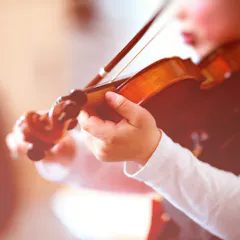
Kids can stop music lessons at any time, due to boredom or disliking practice. It’s OK to let them stop if they genuinely don’t enjoy it, but it’s best to test a few things out first.
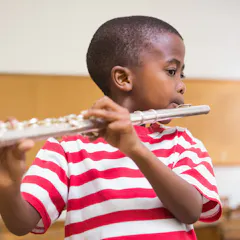
When children take up instruments they’re not passionate about, most don’t stick with music for long, and that’s a shame.
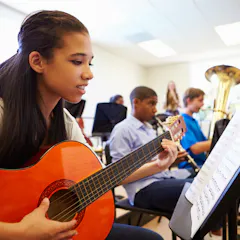
Researchers who looked at over 110,000 students found that learning an instrument in elementary school, and continuing music study into high school, significantly improves school achievement.
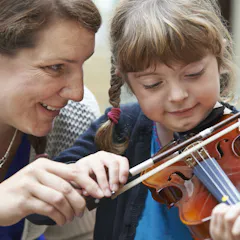
The Suzuki method can work, but requires a high level of parental involvement.

What kind of students are we raising when music is seen as a “frill?” The decision to drastically cut music education is a misguided policy.
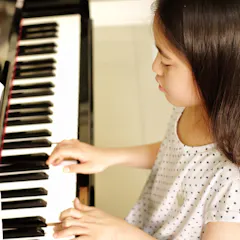
Nagging or bribing a child to practise their musical instrument only makes the activity feel like a chore. Here’s how to support your child and bring back harmony to the whole family.

Children with difficulty singing can be labelled as ‘nonmusical’ by parents, teachers and pop culture. This toxic idea of ‘talent’ can deprive people of music’s benefits for the rest of their lives.
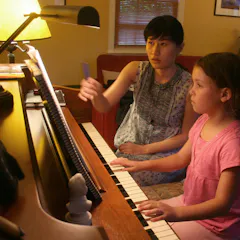
Several brain regions engage in an amazing symphony to produce music. What then are the benefits of music training on a child?
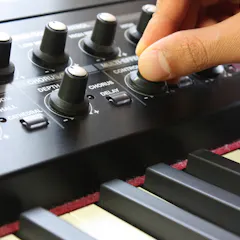
A focus on core subjects for 16-year-olds should not exclude arts, music or drama.
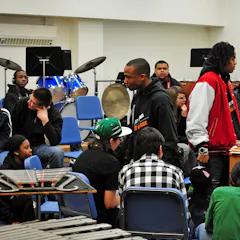
The majority of music education teachers in American schools are white, and education focuses on Western classical music. What impact does it have?
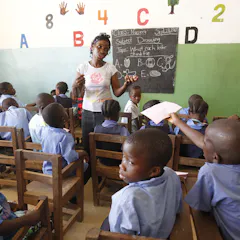
Even poor, badly resourced schools can perform well when teachers, the education department, parents and a school’s broader community work together.

A systematic review of 199 international studies suggests that arts education remains a moot point.

Technological advances in music production have all but obliterated the need for popular music to be transcribed into musical notation. So why is musical literacy still important?

Not all children move through the same range of processes when they compose music – but those processes, in themselves, nurture important human qualities.
Top contributors
-

Professor of Music, Australian Catholic University
-
Lecturer in Musicology, Dan School of Drama & Music, Queen's University, Ontario
-
Professor and Head of Creative Arts and Music Therapy Research Unit; Director of Researcher Development Unit, The University of Melbourne
-
Principal Fellow and Professor of Music, The University of Melbourne
-
Associate Professor at the School of Social Transformation, Arizona State University
-
Professor of Music Theory, Hunter College
-
Adjunct assistant professor, University of Canberra
-
Associate Professor of Music Education, Public Voices Fellow, DePaul University
-
Senior Research Associate, USC Dornsife College of Letters, Arts and Sciences
-
Professor of Culture and Communication, University of Leicester
-
Professor of Music Education, Northwestern University
-
Professor of Education Research, School of Education, University of Birmingham
-
Professor, School of Education, Thompson Rivers University
-
Professor of Music, Culture and Society, City St George's, University of London
-
NRF Accredited & Senior Researcher; Lead Coordinator of the South-South Educational Collaboration & Knowlede Interchange Initiative, Cape Peninsula University of Technology