
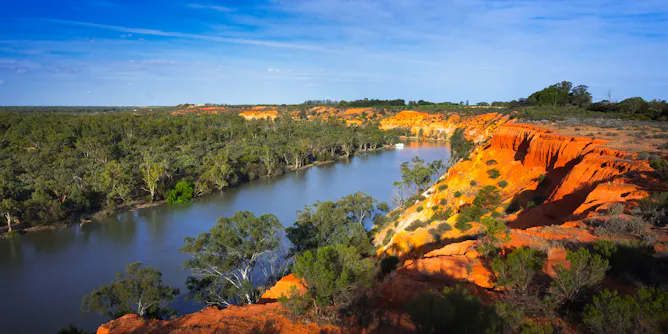
This year marks a decade since the Millennium Drought ended. The Murray-Darling Basin has endured a lot since, but two species are making an impressive comeback.
Articles on Murray Darling basin
Displaying 21 - 40 of 88 articles

The government has chosen a route not backed by evidence, and which will deliver a bad deal to taxpayers and the environment.
Marking farms more water-efficient pushes up prices twice as much as buying water back.
Researchers have collated measurements made by satellites, field sensors and people, to get a picture of the nature’s recovery while we’ve been in lockdown.
Across the NSW portion of the Murray-Darling Basin, Aboriginal people make up almost 10% of the population. Yet they hold a mere 0.2% of all available surface water.

China believed the Murray Darling Basin Plan was about more than the environment. It wanted to know how much more.
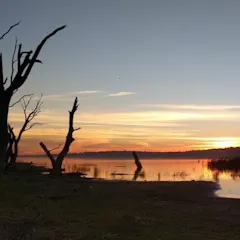
The number of visitors to the restored wetlands is increasing each year, as is the wildlife.
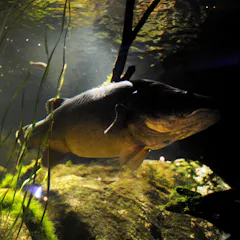
Fish must be released into good quality water, with suitable habitat and lots of food. These conditions have been quite rare in Murray Darling rivers in recent years.
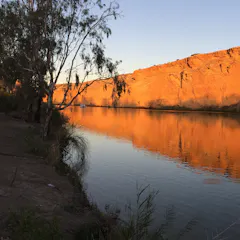
The findings point to how Australia’s most important river system might be altered by future sea level rise.
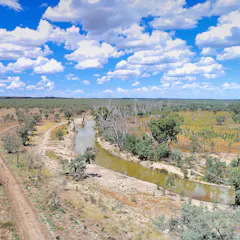
Over the next 50 years, the arid zone – containing the areas of true desert – is projected to expand well into the Murray-Darling Basin and almost entirely envelope the Lake Eyre Basin.
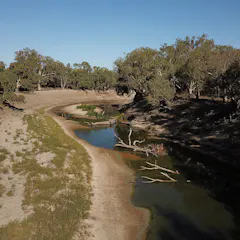
There’s little transparency or clarity about how much water states are allocated. This failure in communication and leadership across such a vital system must change.
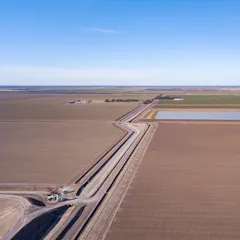
Knee-jerk responses to water insecurity won’t fix the basin. The harder and longer path is delivering real water reform, including transparent water planning enshrined in law.

Fish, frogs, turtles and platypus at major risk of extinction following the bushfires. So why aren’t they getting much attention?
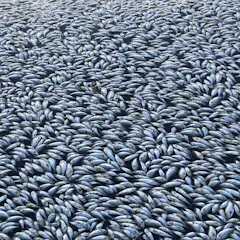
Recent rains have not eliminated the threat of a repeat of last summer’s mass fish deaths.
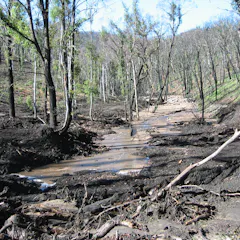
Fire debris flowing into Murray-Darling Basin will exacerbate the risk of fish and other aquatic life dying en masse in a repeat of the shocking fish kills of last summer.
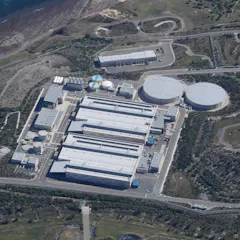
The Australian government is effectively spending A$95 million so it can sell water to farmers for A$10 million.

Buybacks by open tenders were a successful, cost-effective way of returning water to the Murray-Darling Basin. They should never have been abandoned.

The endangered Australasian bittern offers a way past the ‘farmers vs environmentalist’ debate in the Murray-Darling basin.
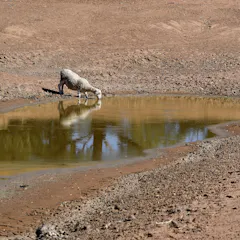
Billions of dollars have been spent on infrastructure schemes in the Murray Darlling Basin with no measurable improvement.
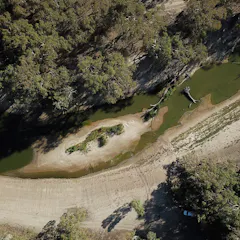
A federal program to help the Murray-Darling environment accidentally lowered water levels – but not as much as previous reports had feared.
Top contributors
-

Professorial Fellow, University of Canberra
-
Professor, School of Biological, Earth and Environmental Sciences, UNSW
-
Australian Laureate Professor of Economics, Crawford School of Public Policy, Australian National University
-
Matthew Flinders Professor in Water Economics, Flinders University
-
Professor, Fenner School of Environment & Society, Australian National University
-
Executive Director and Professor of Fisheries and River Management, Gulbali Institute (Agriculture, Water and Environment), Charles Sturt University, Charles Sturt University
-
Professor of Economics and Head of School, Adelaide University
-
Adjunct Professor, Charles Sturt University
-
Professor, Australian Rivers Institute, Griffith University
-
Adjunct Professor Environment and Natural Resources, Crawford School of Public Policy, Australian National University
-
Associate Professor in Ecology, Charles Sturt University
-
Emeritus Professor Water Science, Monash University
-
Senior Research Fellow, Institute for Climate, Energy and Disaster Solutions, Australian National University
-
Research fellow, Charles Sturt University
-
Professor, School of Economics, The University of Queensland