

The preferences of horror audiences change over time, much like the ebb and flow of the blood depicted in these movies.
Articles on Movies
Displaying 61 - 80 of 369 articles
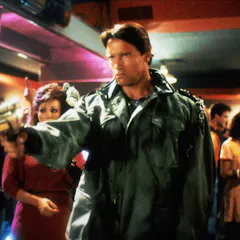
The original 1984 film’s vision of rogue AI turning on humanity remains hugely influential.
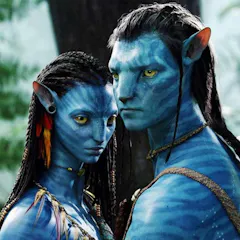
The technology holds huge potential for use in visual effects, but there are also risks for the industry.

Amid increased competition for viewers’ attention, cinemas may be returning to earlier histories by attending carefully to people’s multi-sensory experiences.
Choosing a top five from this year’s festival was not an easy task.

The choices of author and illustrator Crockett Johnson during the printing process – as well as his civil rights advocacy – make it entirely within the realm of possibility.
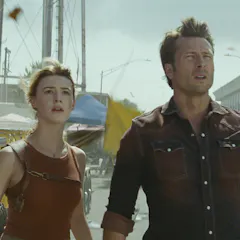
‘Twisters’ selectively depicts aspects of reality by showcasing the raw, destructive power of tornadoes – but don’t look to it for safety advice.
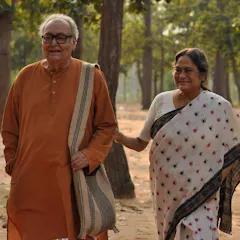
Indian cinema has portrayed dementia in various ways, with some films offering accurate and sensitive depictions, and others tending towards romanticization.
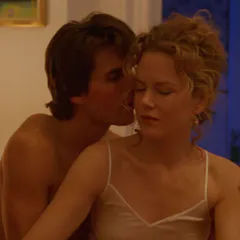
Eyes Wide shut was released shortly after the death of director Stanley Kubrick in 1999.

Science fiction and technological innovation feed off each other in an ongoing back-and-forth that can play out over decades.
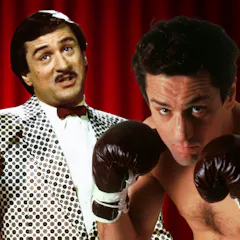
Here are six examples (among many) in which De Niro’s roles embody a sense of isolation, both visually and thematically.
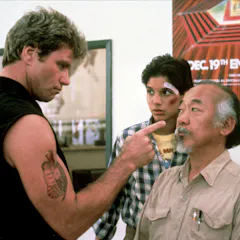
Did the beloved 1980s teen classic The Karate Kid perpetuate Orientalist stereotypes?

Some viewers seem to want Abela’s voice to be a carbon copy of Winehouse’s. But the art of vocal impersonation isn’t about perfect replication.
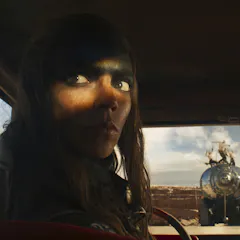
To understand how ‘Furiosa’ and other new films challenge car culture’s male-centric conventions, it’s useful to look closely at how car culture has favoured a certain kind of male hero.

With its occult themes, ’70s nostalgia and some AI controversy thrown into the mix, it’s easy to see why the film was a US box-office success.
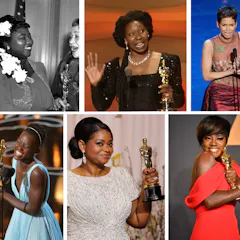
It’s been nine years since #OscarsSoWhite called out a lack of diversity at the Oscars. Has anything changed? Prof. Naila Keleta-Mae and actress Mariah Inger unpack the progress.

The success of ‘Oppenheimer’ at the Academy Awards presents an opportunity to think about critical criteria for viewing historical film — and what we are owed by historical filmmakers.

For all its praise, the film furthers the dominant narrative of the bombs as a morally fraught but necessary project, with American anxieties playing a starring role.
Plenty of movies have explicitly religious themes, but some of the most interesting examples of faith or transcendence on screen are much more subtle.
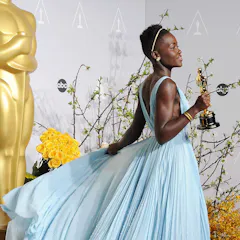
Through their media savvy, two consultants were able to make the Oscars as much about the attire as the gold statuettes.
Top contributors
-

Lecturer in Communications and Media, University of Notre Dame Australia
-
Associate Professor, Film Studies, University of Sydney
-
Professor of Film Studies, Bangor University
-
Professor of Film Studies, North Carolina State University
-
Associate Professor of Theatre, College of the Holy Cross
-
Professor of Media Studies, Penn State
-
Associate Professor and Cinema and Screen Studies Discipline Leader, Swinburne University of Technology
-
Senior Lecturer in Screen Studies, Adelaide University
-
Assistant Teaching Professor of Critical Sports Studies, University of Colorado Boulder
-
PhD Candidate, Humanities, York University, Canada
-
Professor of Religious Studies and Cinema and Media Studies, by special appointment, Hamilton College
-
Associate Professor of Religious Studies, Texas State University
-
Professor of Economics, Scripps College
-
Lecturer in Contextual and Critical Studies for Visual Effects and Motion Graphics, University of South Wales
-
Professor of History, Wesleyan University