
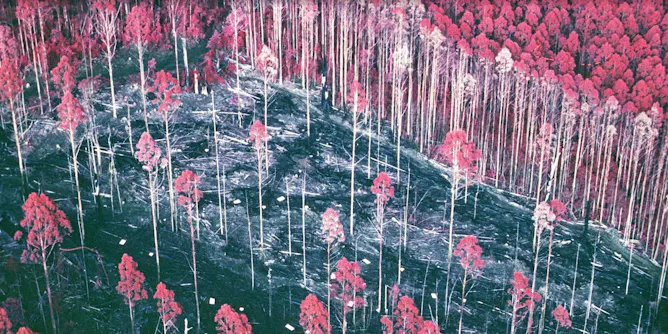
There is no silver bullet for managing forests, but this study answers some historic questions.
Articles on Mountain ash
Displaying all articles

Climate change is already reshaping the towering mountain ash forests of southeastern Australia, new research shows.
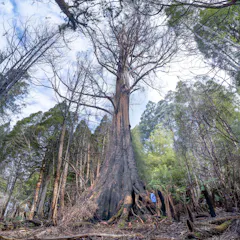
Research on Tasmania’s large old trees has given designers good reason to reflect on the many things about trees that humans don’t value enough. Here’s the top five.
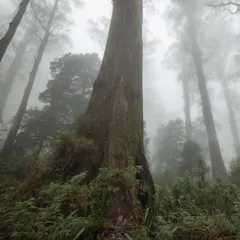
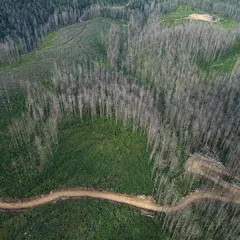
Forest logging records, satellite data, on-ground surveys and drone photography show nearly 20% of logged areas in Victoria failed to regenerate over the past 40 years.
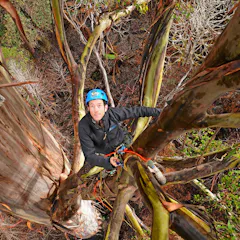
In 2019, the giant mountain ash Centurion narrowly escaped death by fire. But other giant trees were not so lucky. Gathering genetic material from giants is vital
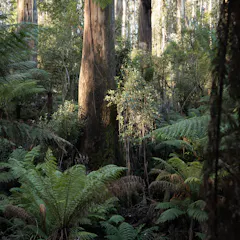
All the evidence – colonial accounts and records, First Peoples’ testimony and scientific data – points to the existence of widespread tall, dense forests 250 years ago.
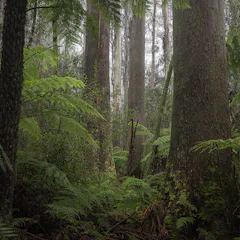
Victoria’s iconic mountain ash forests are reeling from decades of logging and fire. They’re not recovering on their own.

The mountain ash dominates as the tallest species of tree, but they did not win tree with the biggest girth.

These trees are too important to be destroyed in the name of the forestry industry. This is why my husband Steve Pearce and I climb, explore and photograph them.
Fires and logging changes forest soil structure for at least 30-80+ years, affecting everything from regrowth to carbon storage.
Top contributors
-

Distinguished Professor of Ecology, Fenner School of Environment and Society, Australian National University
-
Research Fellow, Fenner School of Environment and Society, Australian National University
-
Research Fellow, Fenner School of Environment and Society, Australian National University
-
Senior Research Fellow in Forest Dynamics and Statistical Modelling, The University of Melbourne
-
Professor in Forest and Landscape Dynamics, The University of Melbourne
-
Director of the AFWI Centre for Climate Smart Forestry and Professor of Silviculture and Forest Ecology, The University of Melbourne
-
Research Associate, University of New South Wales, and Adjunct Associate Professor, Curtin University
-
Associate professor, The University of Melbourne
-
Research Associate, University of Tasmania
-
Visiting fellow, Australian National University
-
Research associate, University of Tasmania
-
Senior Research Fellow, Fenner School of Environment and Society, Australian National University
-
Postdoctoral fellow, University of Northern British Columbia