

The favourite to become the next prime minister has never felt the need to apologise for his offensive remarks about Muslim women.
Articles on Moral panic
Displaying 21 - 36 of 36 articles
Some say the hysteria over screen time echoes parents’ worries that their kids were watching too much TV in the 1980s. But new studies show there’s nothing overblown about parents’ growing concern.

Media-driven panic about drugs can create a perception more people are using the drug than they actually are, and when teens think ‘everyone’ is doing it, they are more likely to want to do it too.

Just because people enjoy a recreational activity doesn’t mean they’re addicted to it, even if they spend lots of time doing it.
Consensual sex work, like non-commercial sex, mostly happens behind closed doors. Yet stigma toward and ignorance about sex workers makes people panic when we try to talk about reform.

Teaching fear and avoidance of technology may protect people from negative consequences. But it also prevents them from finding, and benefiting from, productive uses of new innovations.

Local neighbourhoods where Asians and Muslims form a majority are almost entirely concentrated in Australia’s two major cities – Sydney and Melbourne.

Objections from certain sectors of Malaysian society to the film neatly illustrates both the fear and lack of understanding of lesbian, gay, bisexual and transgender (LGBT) people in the country.
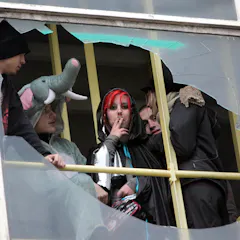
The 20th century saw battle lines drawn between music-driven youth movements and the state like none before.

Does including torture or other human rights violations in video games trivialize the actions? Or might it force us to think more critically about them?

Locavore, freegan, kangatarian, flexitarian … what we eat has become a moral minefield. Religions have long enforced food-related prohibitions, but in a secular context we could do with a little less moralising at the kitchen table.

A recent onslaught against gays and lesbians in Indonesia shows a fresh wave of moral panic over homosexuality in the world’s most populous Muslim country.
The hyperbole used to describe the dangers of new drugs can be counterproductive. Rather than containing their spread, the media can act as advertisers for emerging substances.
Baseless claims about the damage done to kids’ development create needless panic. And they distract from legitimate, evidence-based concerns with which parents need to engage.

When conspiracy theorists label games and literature “Satanic,” what does it say about their own imaginations and ability to engage in play?

It’s a well-worn political trick that you caricature and call your opponents names when you don’t want to engage with the substance of their claims. In debates about porn, pornography advocates often seek…
Top contributors
-

Senior Lecturer of Addiction, Edith Cowan University
-
Knight Chair in Interactive Media; Associate Professor of Communication, University of Miami
-
Associate Professor of Communication Studies, West Virginia University
-
Deputy Director, The Kids Research Institute Australia, Professor of Autism Research, The University of Western Australia
-
Senior Lecturer in Contemporary British and American History, Bath Spa University
-
Postdoctoral Researcher, University of Wisconsin-Madison
-
Lecturer in Gender Studies, School of Arts and Social Sciences, Monash University Malaysia
-
PhD candidate, Queensland University of Technology
-
Adjunct Research Fellow, Swinburne University of Technology
-
Founder of PAN Works and Research Scientist at the Marsh Institute, Clark University
-
Associate Professor of Religious Studies, Texas State University
-
Associate Professor in History, La Trobe University
-
Director, UWA Public Policy Institute, The University of Western Australia
-
Professor of Modern European History, Carleton University
-
Research Associate, Center for Gender and Sexuality Studies, Universitas Indonesia