

Apps, computer games and digital cameras are helping people discover more special space occasions.
Articles on Moons
Displaying 1 - 20 of 26 articles
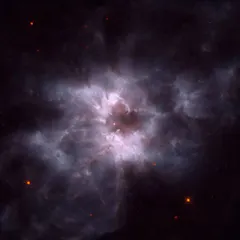
Could tiny stars a fraction the size of our solar system’s Sun have habitable planets orbiting them? A new study says it’s possible.
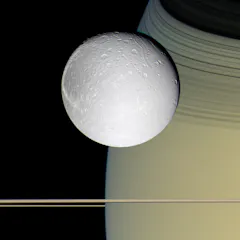
The number of known moons in our Solar System has been rising for centuries, but astronomers say it has probably peaked – for now.
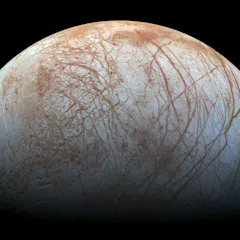
The mission will investigate the potential for life at the icy moon of Jupiter.
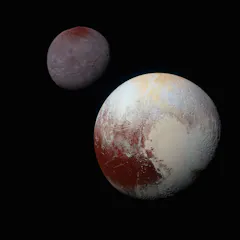
The discovery can also give clues not only about Charon, but other objects out near Pluto.
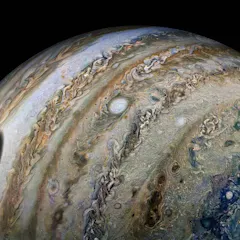
The manoeuvres will set up an encounter with Jupiter in 2031.
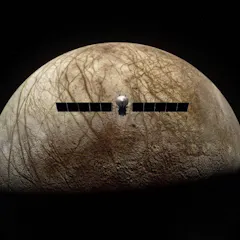
An instrument on the Europa Clipper mission might be able to detect biological cells from space.
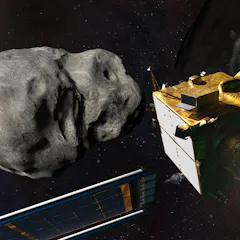
The mission provided details about how to deflect an asteroid should one threaten Earth in future.
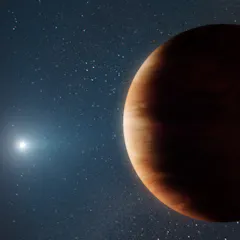
For the first time ever, astronomers have astrophysical evidence that Jupiter and many other planets will survive the death of the Sun.

From the tallest cliff in the solar system to its largest impact basin, geological processes on other worlds are very similar to those on our own planet.
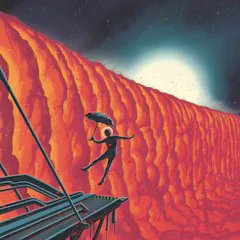
Weather on other planets and moons can be much more extreme than on Earth.
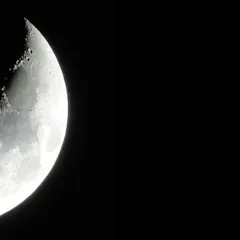
Earth currently has a second moon - but it won’t stay long.
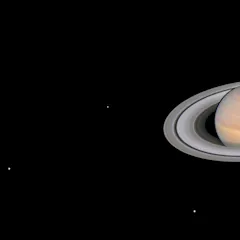
Astronomers have found 20 new moons around Saturn, and will keep finding more as technology improves.
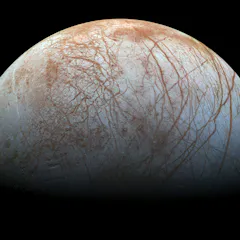
NASA’s Europa Clipper mission just got the green light - here’s what it could achieve.
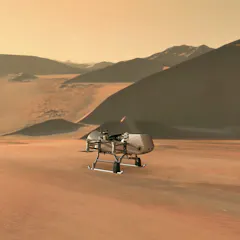
Titan may host primitive lifeforms and could tell us how life arose on our own planet.
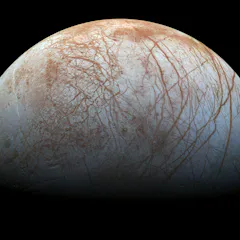
Whether anything could live in Europa’s subsurface ocean depends on what kind of salt it contains. Now scientists have found out.

Astronomers have found the first observational evidence for a disc of material around a giant young planet at a distant star. It’s a place they think moons can form.
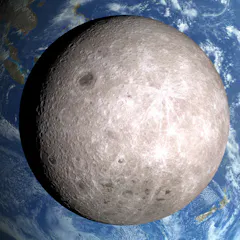
The far side of the Moon sees its share of sunlight – it’s dark only in the sense that it’s mysterious because it’s never visible from Earth. Here’s why.
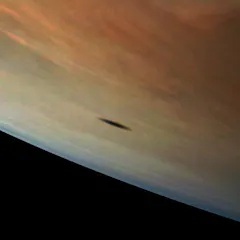
Jupiter now has at least 79 moons, the most for any known planet. But where did these newly discovered moons come from?
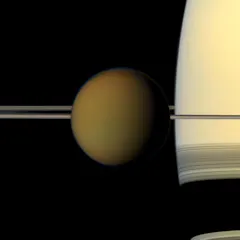
Titan is more than a billion kilometres from our Sun but occasionally it’s shadow can be seen here on Earth, with the right technology. That’s what scientists gathered in Western Australia to observe.
Top contributors
-

Professor of Planetary Geosciences, The Open University
-
Research Fellow/Reader in Planetary Physics, Lancaster University
-
Senior Lecturer in Physics, Nottingham Trent University
-
Associate professor, The University of Western Australia
-
Professor (Astrophysics), University of Southern Queensland
-
Dean of Science, University of California, Santa Cruz
-
Research Fellow in Astrophysics, Monash University
-
Director of the Arne Slettebak Planetarium, The Ohio State University
-
Postdoctoral research associate, University of Oxford
-
Associate Professor and STFC Ernest Rutherford Fellow of Astrophysics, University of Warwick
-
Program Manager / Adjunct Research Fellow, Swinburne University of Technology
-
Scientist, Max Planck Institute for Solar System Research
-
Professor of Astrophysics, Monash University
-
Space Projects Manager & Mission Design Lead, University of Portsmouth
-
Lecturer in Orbital Mechanics, Surrey Space Centre, University of Surrey