
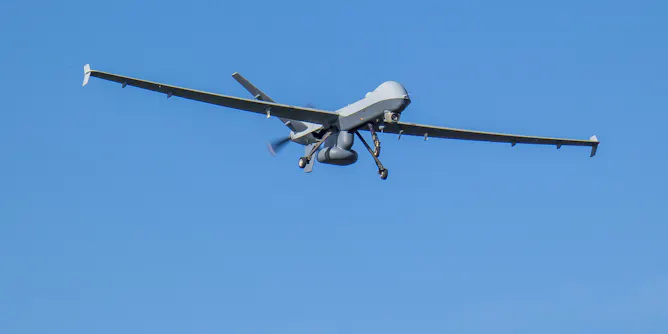
Avoiding drones’ prying eyes can be as complicated as donning a high-tech hoodie and as simple as ducking under a tree.
Articles on MIT Press
Displaying 1 - 20 of 197 articles

Because sarcasm is often difficult to discern and improperly used, it can operate as a linguistic mulligan. But deploy the excuse too much, and you might raise some eyebrows.
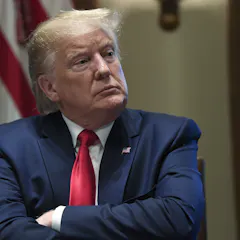
President Donald Trump and his supporters exhibit the methods of science deniers. Like anti-evolutionists and flat-earthers, they reject what they don’t want to believe and accept what they favor.
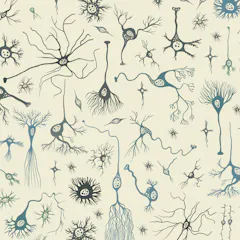
We have more neurons in our cortices than any other species, courtesy of an early technology – and along with them came our long, slow lives, with plenty of chances to gather around the dinner table.

InterContinental Hotels Group plans to switch miniature toiletries for bulk products, but it isn’t likely to do as much for the environment as activists might think.
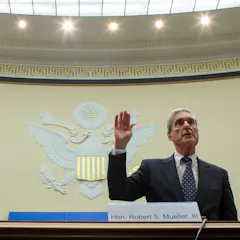
To one scholar of the post-truth era, tuning in to Robert Mueller’s testimony Wednesday was to hear a duel over the facts. Not what the facts imply – but what the facts are.
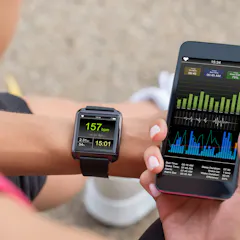
The people who get the most out of self-tracking tend to be ‘systematic thinkers’ who search for meaning in patterns.

What’s the role of someone who, like
Robert Mueller, speaks only facts in a tornado of partisan bombast? Is it a breath of fresh air or an abdication of responsibility to protect America’s interests?

Using an artistic eye when creating pictures of scientific phenomena and new technologies can elevate the resulting images in terms of both their beauty and how informative they are.
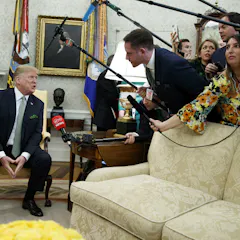
The president’s blame-the-press rhetoric is, to the news media, calculated to score political points. But are there real problems US journalists need to address in their work? Yes, says one scholar.
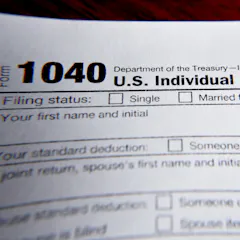
A country’s tax policies say a lot about what it values – and some of America’s tend to promote inequality.

Globalization is making it harder to identify and trace outbreaks of foodborne illness. Technology can help, but consumers may also have to rethink their food choices.

Tiny electronic items can identify pets, clothes and even people. Evangelical Christians aren’t the only people worried about what this technology might mean.

Computers were once considered high-end technology, only accessible to scientists and trained professionals. Today, almost everyone has one. Will quantum computing follow the same path?

From the French Revolution to #MeToo, social movements often burst into the mainstream with what seems like little warning. Cass Sunstein explains why.
A recent executive order from President Trump won’t do much to help the US stay ahead of Chinese innovation and investment in AI.
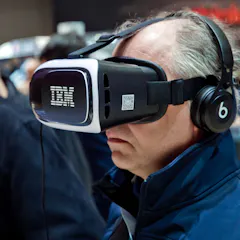
The history of IBM shows how a technology titan can grow and change, while still remaining focused on its core business.

The film wowed critics and fans. But its hidden power may be black lead characters who are accomplished scientists – just the thing to help inspire future generations to follow in their footsteps.
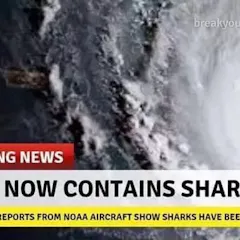
It’s easier than ever to create a fake image and spread it far and wide online. But there are steps that you can take to protect yourself from fishy photos.

Trying to optimize the search for love can be naive. Using statistics and measurements isn’t necessarily the best way to find a human partner.
Top contributors
-

Professor of Strategic Management, University of Toronto
-
Lynton K. Caldwell Professor of Public Affairs, Indiana University
-
Professor of Media Studies, Queensland University of Technology
-
Adjunct Research Fellow in Bioethics, Monash University
-
Associate Professor in the Frederick S Pardee School of Global Studies, Boston University
-
Professor of Strategic Design, Queensland University of Technology
-
Associate Professor of Public Policy and Women's Studies, University of Michigan
-
Associate Professor of Communication Studies, Northeastern University
-
Professor of Education Policy, Michigan State University
-
Lecturer in Positive Psychology, University of East London
-
Research Fellow, Center for Philosophy and History of Science, Boston University
-
Professor of Energy Policy, SPRU, University of Sussex Business School, University of Sussex
-
Associate Professor and Senior Research Fellow, Oxford Internet Institute, University of Oxford
-
Assistant researcher, University of Sydney
-
Professor and ARC Future Fellow, University of Sydney