
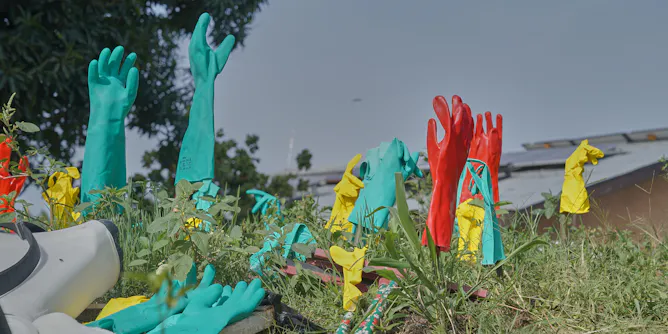
Distrust in health care during infectious disease outbreaks can have devastating consequences. Here’s what we can do about it.
Articles on Mistrust
Displaying all articles
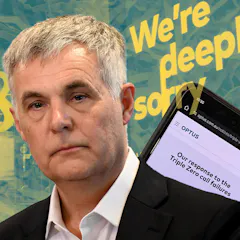
After two Triple Zero outages, a data breach and a $100 million fine for predatory sales in recent years, sorry is not enough. Here’s what Optus needs to do next.
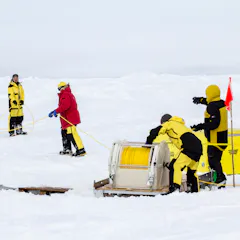
New research shows climate scientists are less trusted than other types of scientists. But there are big differences between countries and specific groups of people.
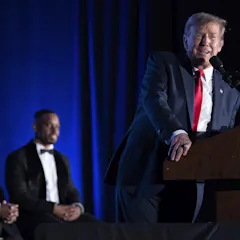
Former President Donald Trump has made some inroads with voters of color by appealing to law and order, conservative social values and mistrust of government.

The SADC mission shows how difficult it is to run a large-scale military intervention, especially if the host government is not taking full ownership and supporting the operation.

Researchers identified a connection between low levels of media literacy and COVID-19 vaccine hesitancy in people who consume their news via social media.
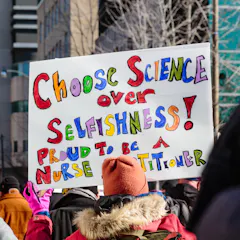
To communicate scientific findings that are relevant to the public, science communicators need to understand how to overcome attitudes that are anti-science.

Finland was recently ranked, for the fifth year in a row, as the world’s happiest country. Trust in others in society plays a large role in what makes people there – and elsewhere – happy.
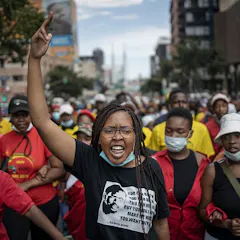
South Africans are increasingly dissatisfied with democracy because of its failure to address inequality.
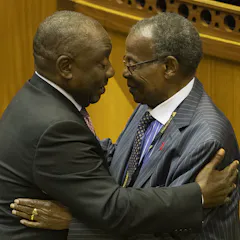
The failure of the 2021 post-election deal is a missed opportunity for the African National Congress and Inkatha to work together.

Now that restrictions are lifting and leisure travel is resuming, we need to be reminded that travel has positive effects on our health and wellness.

If bad or irrelevant news has you considering avoidance, a suggestion: just as we’ve been taught that moderation is the key to so many habits, it’s the same for news.

The strong disapproval of the South African government’s handling of the pandemic is a warning that crafting persuasive pro-vaccine messages is not enough.
On average, countries that adopt ethnic recognition experience less violence, more economic vitality, and more democratic politics.
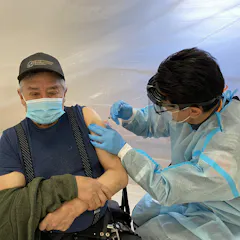
The media reporting on Indigenous vaccine hesitancy is as sensational as it is incorrect. Indigenous people, for the most part, are not more vaccine hesitant than non-Indigenous Canadians.
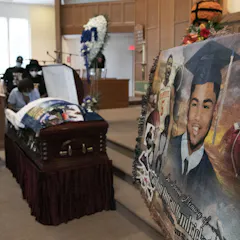
A new analysis shows that the many Americans who have experienced being threatened by a gun or suffering a gunshot wound are significantly less likely to believe most people can be trusted.
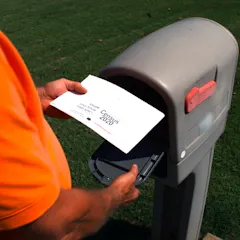
The United States is at risk of lacking data from more than 10 million undocumented immigrants in the 2020 census.
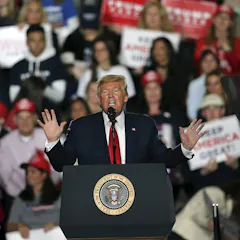
In a survey, Trump supporters showed the lowest faith in the Supreme Court, the federal government, the media and other pillars of society.
Top contributors
-

Associate Professor of Politics, New York University
-
Doctoral Student and Provost's Research Fellow, University of California, Davis
-
PhD Candidate, Political Science, Yale University
-
Professor of Political Science, University of the Western Cape
-
Assistant Professor, Marketing, Simon Fraser University
-
Associate Professor, Security Institute for Governance and Leadership In Africa (SIGLA), Stellenbosch University
-
Professor and Chair, Department of Journalism, Stellenbosch University
-
Chief Research Specialist in Democracy and Citizenship at the Human Science Research Council and a Research Fellow Centre for African Studies, University of the Free State
-
Professor of Communication, University of California, Davis
-
Associate Professor, Management and Psychology, University of Toronto
-
Research Fellow at the Amsterdam School of Communication Research, University of Amsterdam
-
Professor and former Director (2015-2025), Ted Rogers School of Hospitality and Tourism Management, Toronto Metropolitan University
-
Professor of Ethnicity, Race & Migration, Yale University
-
Postdoctoral Research Fellow, University of Amsterdam
-
Associate Professor of Social Work, University of Tennessee