

‘Sometimes I sit in the bedroom and I’m crying my eyes out like a child’
Articles on Miscarriage of justice
Displaying 1 - 20 of 22 articles
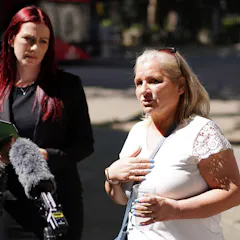
It is the longest miscarriage of justice experienced by a living inmate in the UK.

Why are so many innocent people still being convicted of crimes they did not commit?
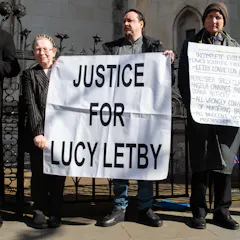
The panel’s findings put the case in uncharted territory given Letby’s very recent convictions and the continuing public inquiry into the case.

St Nicholas, the inspiration for Santa Claus, had an action hero side, historic documents show.

The wrongful conviction of the Birmingham Six not only devastated their lives but also deepened the anguish of the victims’ families, leaving a legacy of trauma and unanswered questions.
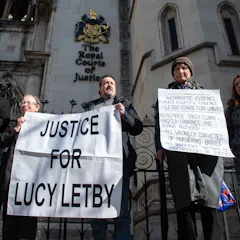
Unlike previous miscarriage of justice cases, the calls to review Letby’s conviction are being led by professionals rather than the family, making this an unusual challenge to the legal system.

The Post Office has exploited the slowness of legal and political institutions.
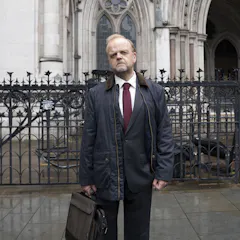
Our research has identified four main barriers that stopped hundreds of sub-postmasters speaking out for so long.

CCTV is a popular form of digital evidence but it can be unreliable and problematic.
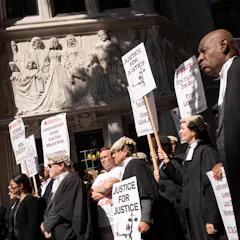
The inevitable consequence of a criminal justice system in crisis is people being wrongfully convicted. The media has a crucial role to play in monitoring the law.
The latest decision in the Civic Creche case highlights a gap in the Criminal Cases Review Commission’s ability to look at appeals from beyond the grave.

Research into contextual bias needs to be more rigorous so recommendations can be made about its effect on forensic analysis.

Analysing the words used to place blame or give evidence can change how we see a situation.

Iwao Hakamada was tried for quadruple murder in 1966, but the evidence that convicted him is regarded with widespread scepticism.
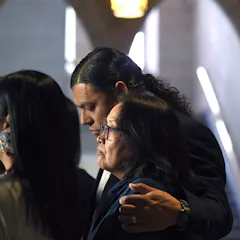
Indigenous people are seriously questioning whether Canada is truly changing following the acquittal of the man accused of killing Colten Boushie. A Mi'kmaq lawyer explains the despair.

The long-term effects are much worse for exonerees than for guilty prisoners.

For decades, the justice system has decided to live with ropey testimonies. Could that be about to change?

If even top judges can get it wrong when it comes to domestic abuse then perhaps it’s time we all tried to better understand the nature of coercive and controlling behaviour.
Your memory of an event can be manipulated – and miscarriages of justice can follow.
Top contributors
-

Senior Lecturer in Journalism, University of Winchester
-
Lecturer in Psychology, Glasgow Caledonian University
-
Lecturer in Criminology and Miscarriages of Justice, Aberystwyth University
-
Lecturer, Psychology, Edinburgh Napier University
-
Assistant Professor and Chancellor's Chair in Aboriginal Law and Policy, Dalhousie University
-
Professor of Psychology, Royal Holloway, University of London
-
Lecturer in Law, Liverpool Law Clinic, University of Liverpool
-
Professor, Director of the Institute for Crime and Justice Policy Research, Birkbeck, University of London, Birkbeck, University of London
-
Psychologist and Programme Leader, University of Salford
-
Senior Lecturer in Criminology, Leeds Beckett University
-
Assistant Professor, Department of Business-Society Management, Rotterdam School of Management
-
Professor of Law, Auckland University of Technology
-
Lecturer, School of Humanities and Social Science, University of Brighton
-
Professor of Law and Professional Ethics, University of Exeter
-
Assistant Professor, Department of Social and Political Sciences, Bocconi University