
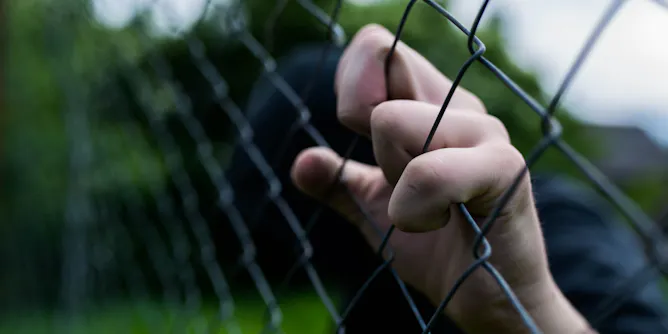
In attempts to curb youth crime, the NT government wants to lower the age of criminal responsibility, while the Coalition in Queensland wants to try children as adults for some crimes.
Articles on minimum age of criminal responsibility
Displaying all articles

Social rewards, emotions and the chance to experience something new all have a strong bearing on children’s decisions in the moment — possibly more than whether it is right or wrong.

To stop the over-representation of African Australian youth in the criminal justice systems, we need more prevention programs that are culturally responsive.

The UN committee against torture is concerned about the continued overincarceration of Aboriginal and Torres Strait Islander people and their deaths in custody.

The evidence shows most children who exhibit criminal behaviour will grow out of it by adulthood. But only if given the chance.

In New Zealand, you can be considered capable of criminal intent from the age of ten. But this is young by international standards, and many believe reform is overdue.

Raising the age is a response that removes responsibility for poor behaviour, but doesn’t necessarily address the causes underlying youth crimes.

Sam Uffindell experienced a form of forgiveness after assaulting a younger schoolboy 22 years ago. But this should be the norm under NZ’s child justice system, which is overdue for reform.

Australian governments play down the difference between child and adult offenders, and the costs are high

The evidence is clear: the age of criminal responsibility is far too young at present..

A significant proportion of teachers surveyed (36.8%) believed 16 was the minimum age of criminal responsibility.

Hundreds of Australian children aged ten to 13 are in juvenile detention. Legal and medical experts say we must raise the age of criminal responsibility to 14.

In one year, an average 566 children between 10 and 13 were in detention. Almost 70% were Indigenous children.
Top contributors
-

Professor of Criminology, University of Technology Sydney
-
Professor of Law, University of Waikato
-
Associate Professor in Law, University of Canterbury
-
PhD Candidate, University of Technology Sydney
-
Professor, School of Early Childhood & Inclusive Education, Queensland University of Technology
-
Associate Professor in Law, Australian National University
-
Lecturer in Criminology, Edith Cowan University
-
Associate Professor, Queensland University of Technology
-
Professor, School of Law and Department of Social and Behavioural Sciences, City University of Hong Kong
-
Professor of Criminology, University of South Wales
-
Associate Research Fellow, Alfred Deakin Institute for Citizenship and Globalisation, Deakin University
-
Associate Professor of Field Education, RMIT University
-
Senior Lecturer, Social Work and Human Services, RMIT University
-
Professor of Adolescent Health The University of Melbourne; Director, Royal Children's Hospital Centre for Adolescent Health; and Murdoch Children's Research Institute, The University of Melbourne
-
Research Fellow, School of Psychology, Deakin University