
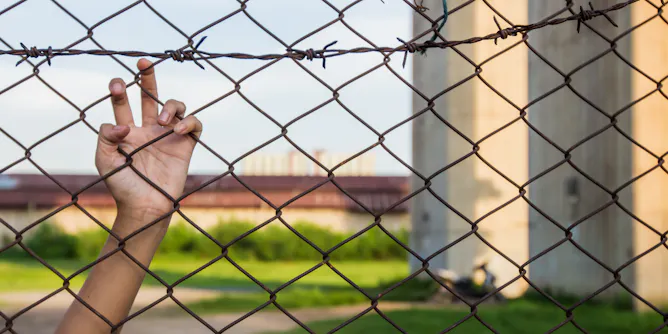
When children are denied bail, they’re often taken to police watch houses. But these don’t have the staff or facilities to keep children safe and well.
Articles on Juvenile detention
Displaying 1 - 20 of 21 articles

Allegheny County is pouring millions into a new juvenile detention facility, even as evidence mounts that alternatives to detention are more helpful.

Juvenile incarceration creates worse outcomes for young people and costs more than community-based treatment. So why does Philadelphia spend so much on it?

New research shows increased mental health support would help break the cycle of incarceration - and drive down recidivism.

Music can provide incarcerated youth with opportunities to build confidence, engage with learning, develop social skills, and and redefine themselves from young offenders to young artists.

In six months, the state’s parliament has voted to override its own Human Rights Act, not once but twice.

Practices used in detention in Australia such as spithoods and solitary confinement could amount to torture, according to international law.
Where is the justice for young people whose mental health is impacted by being incarcerated?

The evidence shows most children who exhibit criminal behaviour will grow out of it by adulthood. But only if given the chance.

Australian governments play down the difference between child and adult offenders, and the costs are high

In a survey, 56% of Americans aged 14 to 24 said they knew little to nothing about the juvenile justice system.

A neuroscientist explains how detention can affect a developing mind, as a new law in California sets the highest age limit in the US for minors to be held criminally responsible, at age 12.

In Alberta, an alternative initiative sees youth who commit non-violent crimes sentenced to 25 hours of chess instruction with a University of Lethbridge professor.
New research assessing young people in WA detention found 89% were severely impaired in at least one area of brain function. One in three had fetal alcohol spectrum disorder (FASD).

The reconviction rates of children put in institutions was lower than it is today, new research shows.
Architecture can affect behaviour and the choices we make. The brief is out for a centre to replace the Don Dale facility, but word is, it’s ‘a disgrace’. We can do much better.

Australian jurisdictions should enact permanent solutions to juvenile justice crises that replace large and ineffective youth prisons with a safer, more decent alternative.
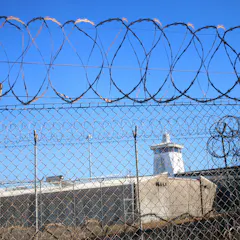
Few people are talking about how children in residential care and those in juvenile jail are essentially the same people.

What the Northern Territory’s experience with state interventions reveals is that rather than protecting young people, it has placed them at greater risk of mistreatment and trauma.

Important questions are being asked about why children were abused in juvenile detention in the Northern Territory. But we also need to ask why children are being detained at all.
Top contributors
-

Senior Principal Research Fellow in Epidemiology of Birth Defects, including Fetal Alcohol Spectrum Disorders, The Kids Research Institute Australia
-
Associate Professor of Education, University of Lethbridge
-
Professor of Law, University of Technology Sydney
-
Assistant Professor in Criminal Law/International Criminal Law, Bond University
-
Associate Professor of Nursing, University of Lethbridge
-
Researcher, University of Technology Sydney
-
Co-Director, Columbia University Justice Lab, Senior Research Scientist, Columbia School of Social Work, Columbia University
-
PhD Candidate and Researcher, The Kids Research Institute Australia
-
Vice-Chancellor's Postdoctoral Fellow in Law, UNSW
-
Assistant Professor of Educational Psychology, University of Lethbridge
-
Clinical Associate Professor and Paediatrican, The Kids Research Institute Australia
-
Director, Kath McFarlane Consulting & Adjunct Associate Professor, The Kirby Institute, UNSW
-
PhD Candidate, University of Technology Sydney
-
Deputy Director (Research), Queensland Conservatorium, Griffith University
-
Professor of Social Justice, University of Liverpool