
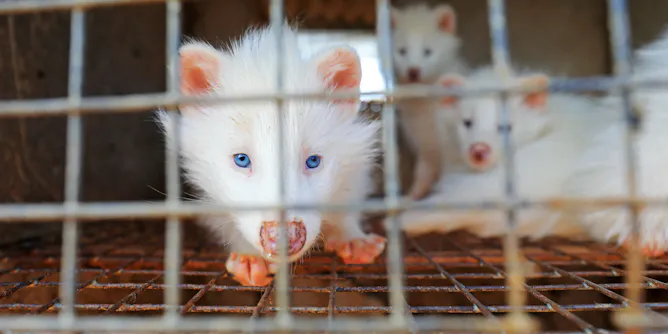
In China, the wildlife trade is thriving, driven by the increased demands for luxury goods and traditional medicine. But there is real concern about the threat of diseases that can cross over to humans.
Articles on Middle East Respiratory Syndrome (MERS)
Displaying 1 - 20 of 36 articles
Bat hosts, lab leaks – tracing SARS-CoV-2 to its origins involves more than just tracking down patient zero.
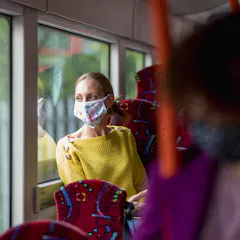
As ready as you are to be done with COVID-19, it’s not going anywhere soon. A historian of disease describes how once a pathogen emerges, it’s usually here to stay.

But will the new normal only be feasible for the well off?
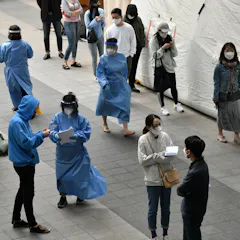
South Korea’s mass surveillance to curb the coronavirus pandemic uses technologies and techniques that are grounded in anti-LGBTQ discrimination.
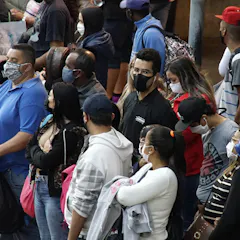
Epidemiological data suggests that 80% of COVID-19 cases can be traced to just 20% of those infected with SARS-CoV-2.
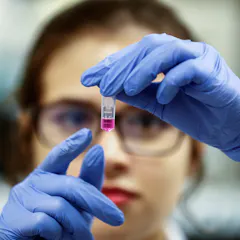
We don’t have vaccines for the Sars, Mers or the common cold. But that doesn’t mean scientists won’t crack it this time.

South Africa cannot afford to embark on a strategy of extended periodic lockdowns. It needs to shift to mass testing and contact tracing.

Ever heard of 229E, OC43, NL63 and HKU1?
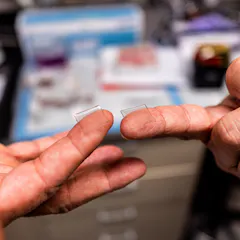
University of Pittsburgh researchers are developing a vaccine patch for COVID-19 that is as easy to apply as a Band-Aid.
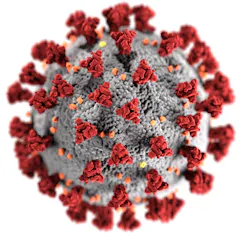
By isolating SARS-CoV-2, the virus responsible for COVID-19, researchers can now work on developing tests, treatments and vaccines in Canada.
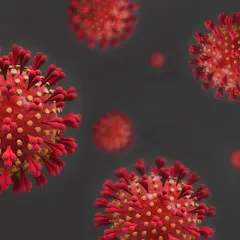
Scientists need to close the knowledge gap around COVID-19 and the virus that causes it.
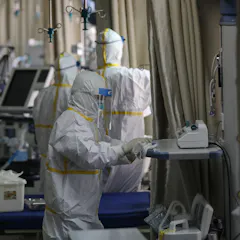
Several questions about the origin of the outbreak remain with no clear data on what this was or if it was an animal source.
There are many questions left unanswered because the outbreak is still in an early stage.

Experiences dealing with previous outbreaks of infectious disease can help countries with weak health systems prepare for new health emergencies.
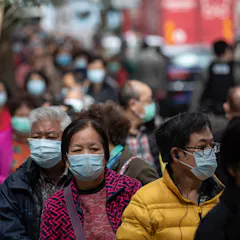
There’s no evidence the new coronavirus is airborne. It appears to spread by larger droplets, direct contact and contaminated surfaces or objects.
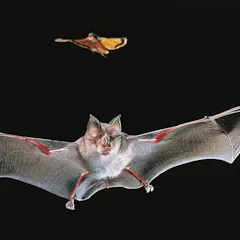
Some of the world’s worst diseases have come from animals. Bats, cows, camels and horses have all contributed. Now, scientists are working to know which animal introduced the new coronavirus.

The strong crisis management in Wuhan will probe the capacity of the Chinese government to prepare adequately for pandemic and may test Xi’s rule.
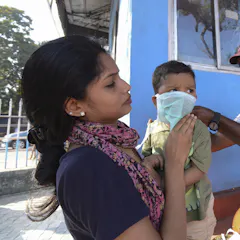
The World Health Organization declared the new coronavirus to be a public health emergency on Jan. 30, 2020. Does the action really change anything? An expert answers four questions.

Social media has allowed researchers around the world to collaborate and co-ordinate their efforts to fight the outbreak and contain its spread.
Top contributors
-

Virologist, The University of Queensland
-
Principal Scientist and Canada Research Chair in Zoonotic Virus and Animal Reservoirs at the Vaccine and Infectious Disease Organization and Co-Lead of One Health at the University of Saskatchewan, University of Saskatchewan
-
Adjunct Associate Professor, Faculty of Medicine
-
Professor of Medicine and Vice President, Research, McMaster University
-
Dean Faculty of Health Sciences and Professor of Vaccinology at University of the Witwatersrand; and Director of the SAMRC Vaccines and Infectious Diseases Analytics Research Unit, University of the Witwatersrand
-
John Curtin Distinguished Professor of Health Science, Curtin University
-
Professor of Entomology and Director of the Center for Infectious Disease Dynamics, Penn State
-
Research scientist, CSIRO
-
Doctoral candidate, Biology, Wesleyan University
-
PhD student in virology, University of Pennsylvania
-
Professor of Microbiology and Molecular Genetics, University of Pittsburgh
-
Associate Professor in Cellular and Molecular Sciences, Northumbria University, Newcastle
-
Professor and Director of Doherty Epidemiology, The University of Melbourne
-
Professor of Philosophy, University of the Witwatersrand
-
Fellow, Australian National University