
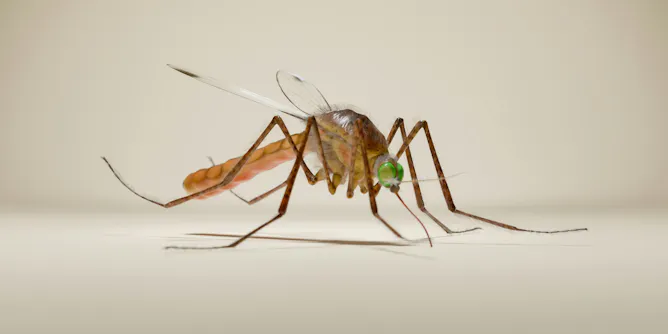
The team printed a honeycomb and a Canadian maple leaf, both roughly the size of a single grain of sand.
Articles on Microfluidic device
Displaying all articles

Pathogens have distinct electrical charges, shapes and sizes. Measuring how quickly they move through an electric field can help researchers separate different species in a sample in minutes.

A research team at the University of Victoria has created a new method for making oil-in-beer emulsions that could advance the science of brewing.
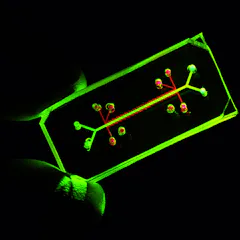
Successes in the lab mostly don’t translate to people. Research models that better mimic the human body could close the gap.
Artificial cells on tiny microfluidic chips can provide early insight into how new cancer drugs behave in cells, and why certain kinds of cancer are more resistant to chemotherapy treatment.
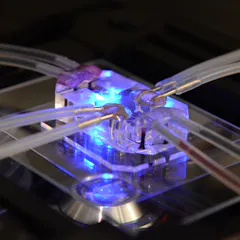
A so-called “organ-on-chip” device could speed up the way drugs are developed. And it’s just been named the London Design Museum’s design of the year.
A small plastic chip with the capacity to house various strains of bacteria may help successfully treat infection in cystic…
Top contributors
-

Associate Professor and Canada Research Chair, Department of Chemistry, University of Victoria
-
Founding Director of the Wyss Institute, Harvard University
-
Assistant Professor of Chemistry and Biochemistry, University of Maryland, Baltimore County
-
Assistant professor, bioengineering, University of Pennsylvania
-
Professor of Biomedical Engineering, Rochester Institute of Technology
-
Canada Research Chair and Associate Professor, Mechanical Engineering, McGill University
-
Graduate researcher, Mechanical Engineering, McGill University