

Our mobile phone’s location data could be a valuable tool to help track and trace the spread of the coronavirus outbreak. The government has the legal power to do it, given what’s at stake.
Articles on Metadata retention
Displaying 1 - 20 of 26 articles

Australia’s metadata laws offer weak protection to journalists, but they don’t offer any to academics conducting confidential interviews.

Under controversial national security laws, parts of your mobile phone data is accessible by federal police and counterterrorism agencies. But in reality dozens of other organisations can access it too.
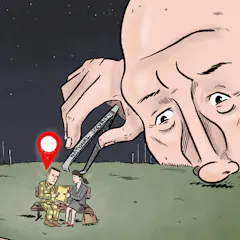
Ideally, Australia would introduce constitutional protections for media freedom. But, in the meantime, four laws need urgent reform to better balance those freedoms with national security.

Facebook seems to be shifting its focus more towards privacy. But this might have some unexpected repercussions, as highlighted by recent research on the encrypted messaging service WhatsApp.

If the next government is serious about protecting Australian businesses and families, here are seven concrete actions it should take immediately upon taking office.
The government can access your phone metadata, drivers licence photo and much more. And new research shows Australians are OK about it. But that might change.

It is hard to know whether metadata retention has been effective or necessary. We can only hope that the debate over accessing and analysing encrypted services is a little more enlightening.
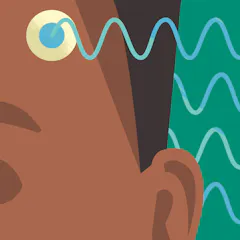
Brain-zapping, the curious case of the n-rays and other stories of evidence
The Conversation, CC BY70.4 MB (download)
You've had an x-ray before but have you had an n-ray? Of course not, because they're not real. But people used to think they were. Today, on Trust Me, I'm an Expert, we're bringing you stories on the theme of evidence.
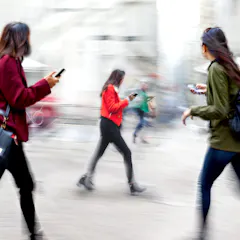
The Federal Court has narrowed the definition of what can be deemed “personal information” in any data stored about you.

The backlash against the Census suggests the Australian Bureau of Statistics didn’t do enough to convince Australians it needed to collect their private information or that it’d be kept safe.
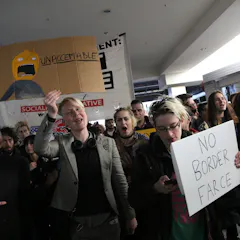
The government’s uncontested assessment of national interest and security often trumps the rule of domestic and international law, as well as Australia’s obligations under human rights treaties.

ISPs were supposed to start collecting our metadata today, but most are not ready due to the complexities of the legislation. Perhaps it’s not too early for a review.

US intelligence agencies can no longer collect and store the telecommunications data of US citizens but other countries are strengthening their efforts.
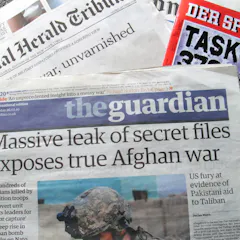
If confidential sources can still be exposed by the government’s new data retention legislation, why risk leaking anything to the media?

As governments gain greater access to private information there is a need to protect our freedoms. Artists can make a distinct contribution to this debate by offering alternative perspectives.
Metadata is only the beginning. The Big Data trend means there’s a lot more information about us out there that can be tracked or monitored.
Avoiding the metadata retention laws and sending messages entirely privately is harder than it might seem.
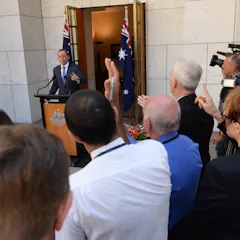
The Abbott government’s efforts to amend its data retention bill amid concerns about journalists protecting their sources is still a worry. And others should be concerned too, including MP.
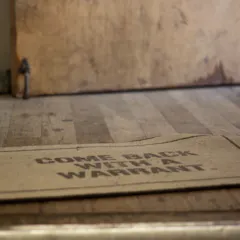
As the Australian government pushes on with its data retention bill there are still questions about what safeguards and protections are in place, and a look at similar moves that have failed overseas.
Top contributors
-

Associate Professor in Telecommunications Engineering, Swinburne University of Technology
-
Professor of Law, University of Newcastle
-
Senior lecturer, University of Twente
-
Lecturer, Criminology, Deakin University
-
Director, Centre for Cyber Security Research & Innovation (CSRI), Deakin University
-
Senior Lecturer in Communication, Deakin University
-
Honorary Lecturer in Sociology, Australian National University
-
PhD candidate in Visual Arts, and curator of art at Lawrence Wilson Art Gallery,, The University of Western Australia
-
Professor of Global Politics and Cybersecurity, UCL
-
Emeritus Professor, The University of Melbourne
-
Senior Lecturer, Curtin Law School, Curtin University
-
Professor of Psychiatry, UNSW & Black Dog Institute, UNSW
-
Professor, UNSW
-
Senior Lecturer, Australian National Centre for the Public Awareness of Science, Australian National University
-
Associate Professor of Information Systems, Curtin University