

The justice ministry had more than enough time to make the law constitutional. Failure to do so is an indictment on its leadership in the process.
Articles on Metadata
Displaying 1 - 20 of 63 articles

This isn’t the first time Australians’ Medicare numbers have been exposed.

Even a burner phone paid for with cash can reveal your identity and where you’ve been. A data privacy expert explains.

Even a burner phone paid for with cash can reveal your identity and where you’ve been. A data privacy expert explains.

Australia is a long way from New York and Washington DC, but 9/11 was a seismic event for our country. For one thing, it has reshaped our ideas about criminal responsibility

The Constitutional Court judgment is a huge victory, not only for journalists and lawyers who stand to benefit directly and immediately, but for broader society.

Our mobile phone’s location data could be a valuable tool to help track and trace the spread of the coronavirus outbreak. The government has the legal power to do it, given what’s at stake.

Australia still uses a law from 1979 to govern metadata, with more than 100 amendments. This leaves loopholes that various agencies can exploit and dodge safeguards.

Australia’s metadata laws offer weak protection to journalists, but they don’t offer any to academics conducting confidential interviews.

Under controversial national security laws, parts of your mobile phone data is accessible by federal police and counterterrorism agencies. But in reality dozens of other organisations can access it too.

Facebook seems to be shifting its focus more towards privacy. But this might have some unexpected repercussions, as highlighted by recent research on the encrypted messaging service WhatsApp.

If the next government is serious about protecting Australian businesses and families, here are seven concrete actions it should take immediately upon taking office.
The government can access your phone metadata, drivers licence photo and much more. And new research shows Australians are OK about it. But that might change.

It is hard to know whether metadata retention has been effective or necessary. We can only hope that the debate over accessing and analysing encrypted services is a little more enlightening.

Brain-zapping, the curious case of the n-rays and other stories of evidence
The Conversation, CC BY70.4 MB (download)
You've had an x-ray before but have you had an n-ray? Of course not, because they're not real. But people used to think they were. Today, on Trust Me, I'm an Expert, we're bringing you stories on the theme of evidence.
Many Australians are unaware of current police and intelligence powers when it comes to accessing our data.

Catalog data are a library’s most important map to knowledge. What does it mean that
the Library of Congress just released 25 million records to the public?
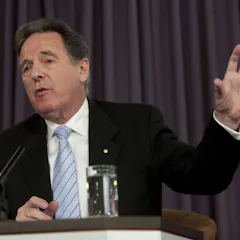
Politics podcast: Graeme Samuel on data governance
Data Governance Australia chairman Graeme Samuel hopes that a self-regulatory code of conduct will raise the standards among data-driven organisations.
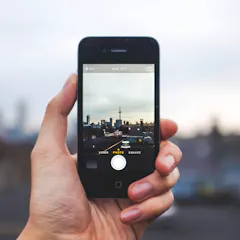
Photos are full of information, from your location to phone model, and digital forensics can help extract it.

Australia’s data retention law is one of the most comprehensive and intrusive data collection schemes in the Western world, and should be challenged.
Top contributors
-

Associate Professor in Telecommunications Engineering, Swinburne University of Technology
-
Professorial Fellow, University of Canberra
-
Senior lecturer, University of Twente
-
Professor of Law, University of Newcastle
-
Associate Professor, School of Law, University of Canberra
-
Director, Centre for Cyber Security Research & Innovation (CSRI), Deakin University
-
Professor of Digital Society, University of Glasgow
-
Professor of Cyber Security and Policy, Tufts University
-
Director of UWA Centre for Software Practice, The University of Western Australia
-
Lecturer, Adelaide University
-
Lecturer, Criminology, Deakin University
-
Lecturer, School of Law and Criminology, Murdoch University
-
Professor of Journalism and Social Media, Griffith Centre for Social and Cultural Research, Griffith University, Griffith University
-
Senior lecturer, Deakin University
-
Research Assistant, Faculty of Law, Queensland University of Technology